X Hedging: towards an eXplainable artificial intelligence option Hedging framework
Replaces neural networks in Deep Hedging with LightGBM tree ensembles, delivering comparable hedging performance with better explainability, efficiency, and robustness in data-limited settings.
Featured in No. 140 on 20 Nov 2026 · on release day
- Released
- 20 Nov 2026
- First featured
- No. 140 · 20 Nov 2026
- Published in
- Not yet, as far as Semantic Scholar knows
- Fanfare
- 2 of 5
- Identifier
- arXiv:2611.25870
- Authors
- Bjørn André Aaslund et al.
Abstract
From arXiv (CC0).
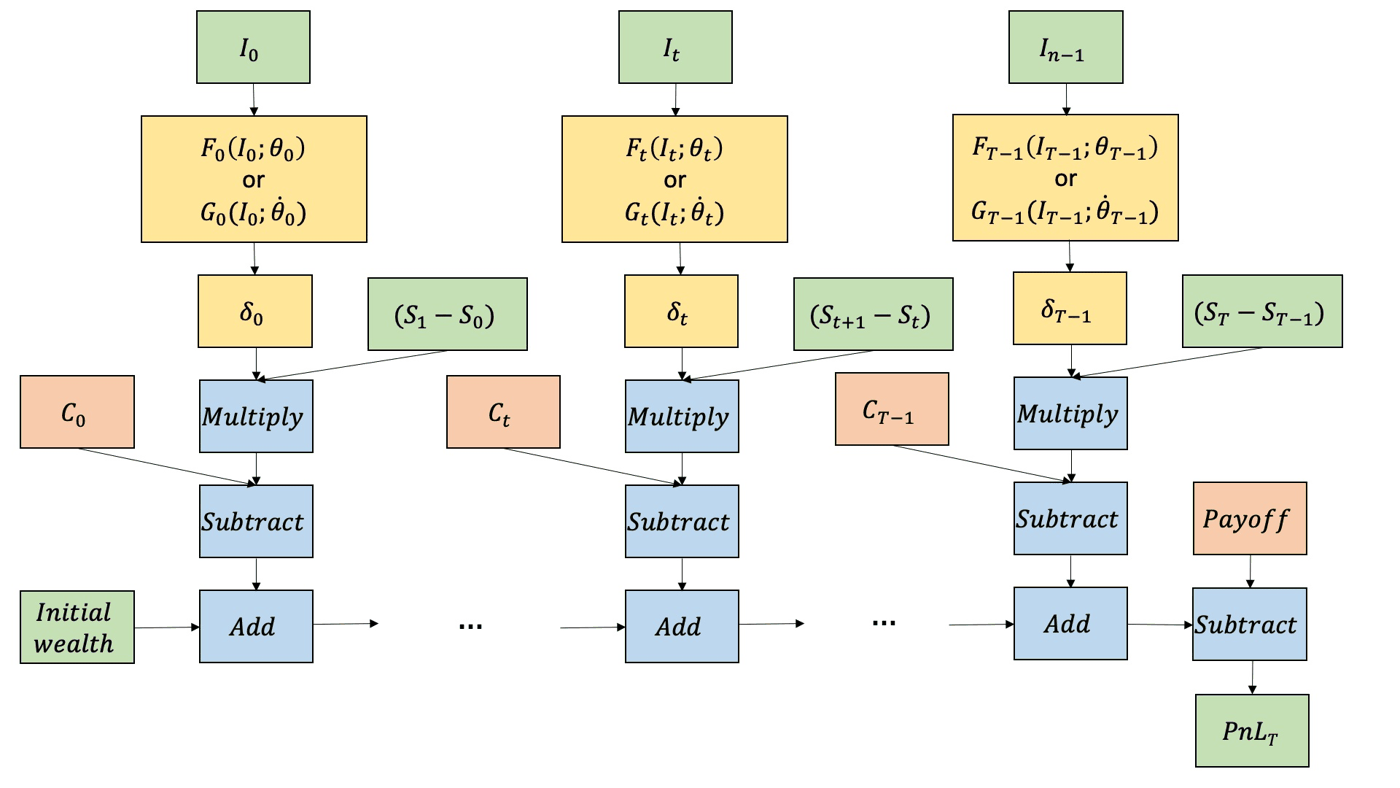
We propose X Hedging, an alternative to the Deep Hedging framework that addresses computational and explainability limitations of neural-network-based hedging strategies. Deep Hedging leverages neural networks to learn flexible hedging policies but relies on opaque models and typically requires large training datasets, which can complicate interpretation and limit its effectiveness in data-constrained settings. X Hedging takes a step toward addressing these limitations by replacing neural networks with tree ensemble methods, specifically LightGBM, to estimate hedging strategies. This design provides a computationally efficient alternative while preserving strong hedging performance and moving toward more user-centered explainability. To integrate LightGBM into a reinforcement-learning-style hedging framework, we introduce an optimization approach that sequentially trains tree-ensemble models while introducing stochasticity through random training orders. In controlled experiments, X Hedging achieves performance comparable to Deep Hedging while offering greater user-centered explainability, improved computational efficiency, and substantially higher robustness when training data are limited. The numerical results demonstrate that tree-ensemble methods provide an effective computational alternative to neural networks for data-driven dynamic hedging.
Citations and venue from Semantic Scholar (ODC-BY), refreshed weekly. Summary: Quant Letter (CC BY 4.0).