Huge If True: Learning from the Size of the Surprise
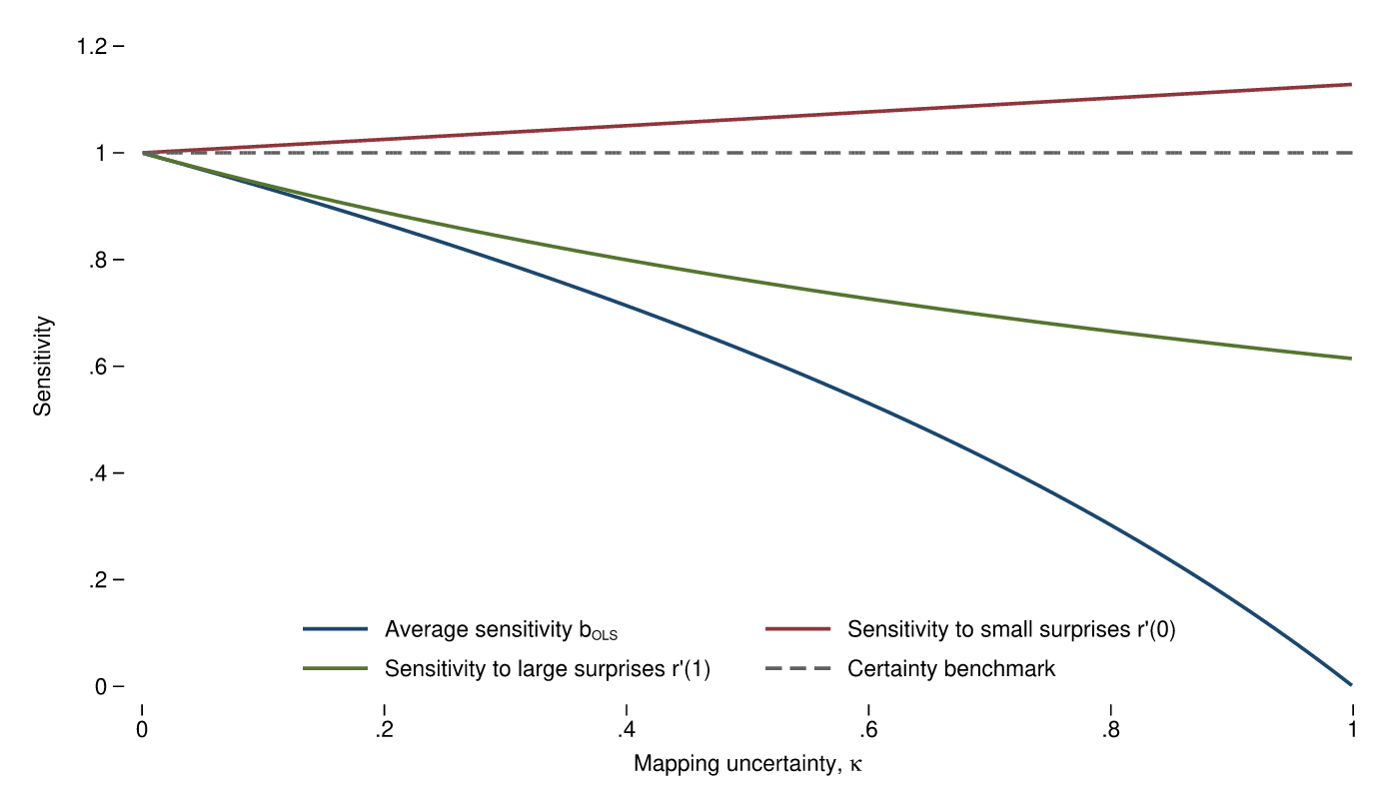
The study shows that investors learning about both news and valuation multipliers from earnings surprises respond less on average but more sharply near zero when multiplier uncertainty is high.
Featured in No. 139 on 13 Nov 2026 · on release day
- Released
- 13 Nov 2026
- First featured
- No. 139 · 13 Nov 2026
- Published in
- Not yet, as far as Semantic Scholar knows
- Fanfare
- 3 of 5
- Identifier
- arXiv:2611.15747
- Authors
- Thomas Graeber et al.
Abstract
From arXiv (CC0).
Responses to earnings surprises depend on an unknown multiplier mapping earnings to value. Investors, however, learn about the news and the multiplier from the same number. Large surprises may indicate small multipliers and tiny surprises large ones. We model how greater uncertainty about the multiplier attenuates responses on average but makes them steeper near zero surprises. In an incentivized experiment, we find that greater processing constraints lower average sensitivity but raise it near zero. We confirm this with real-world earnings announcements: stocks with higher valuation uncertainty, our proxy for multiplier uncertainty, respond less on average but more steeply near zero.
Citations and venue from Semantic Scholar (ODC-BY), refreshed weekly. Summary: Quant Letter (CC BY 4.0).