arXivTrading, Microstructure & Execution
Deep Learning for Operator Maps in Optimal Liquidation
Neural networks approximate the solution map of optimal execution under transient price impact, reducing financial costs from kernel misspecification.
Featured in No. 139 on 13 Nov 2026 · 2 days after release
- Released
- 11 Nov 2026
- First featured
- No. 139 · 13 Nov 2026
- Published in
- Not yet, as far as Semantic Scholar knows
- Fanfare
- 2 of 5
- Identifier
- arXiv:2611.14245
- Authors
- Ryan Donnelly et al.
Abstract
From arXiv (CC0).
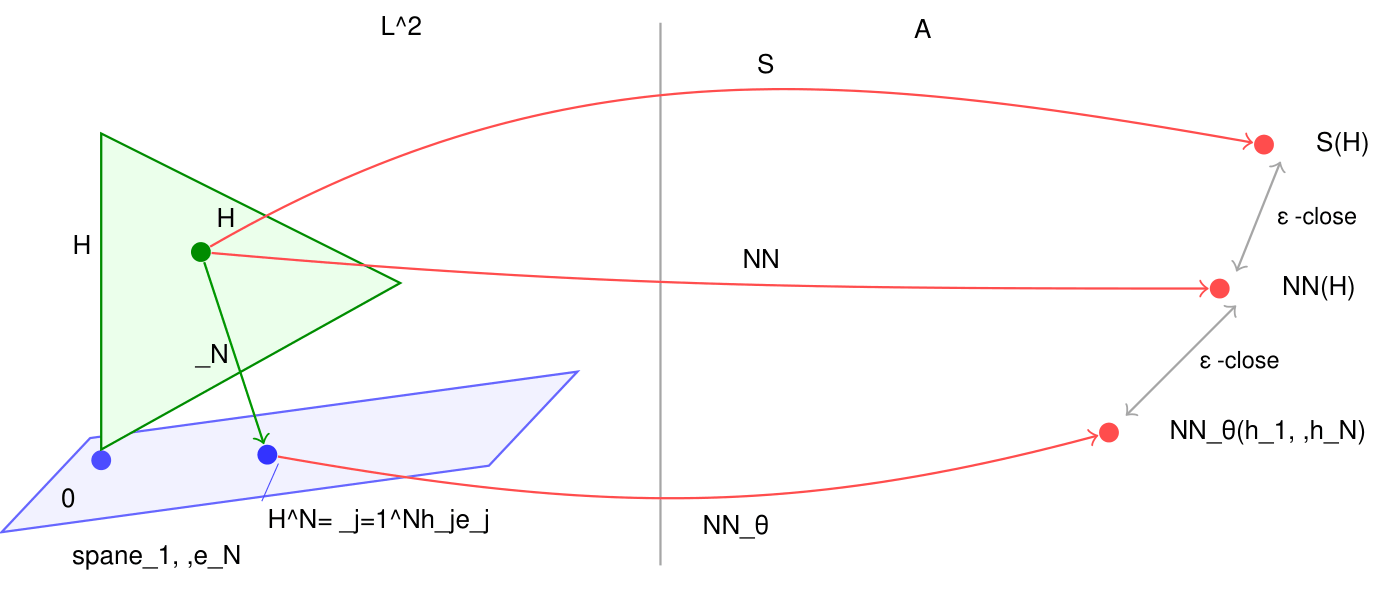
We analyze the solution map of a optimal execution problem in which price dynamics are subject to a general transient impact kernel. Given the structure of the optimal trading strategy derived by Abi Jaber and Neuman in \cite{https://doi.org/10.1111/mafi.12465}, we show that the strategy is locally Lipschitz continuous with respect to the underlying model parameters governing temporary and transient price impact as well as the fundamental price process. Continuity of this map justifies the application of neural-net based approximations which take model parameters as inputs. We propose a method generating samples of the transient price impact kernel for the purposes of creating training data, and a method of projecting the kernel to a finite dimensional representation appropriate for input to a neural net, and a dimensional reduction based on the relationship between inventory and trade signal. We demonstrate the effectiveness of the trained neural net and use it to quantify the potential financial costs associated with misspecifying the transient impact kernel.
Citations and venue from Semantic Scholar (ODC-BY), refreshed weekly. Summary: Quant Letter (CC BY 4.0).