arXivTrading, Microstructure & Execution
Is price-impact decay statistically identifiable by propagator estimation? Diffusive prices force the inferred kernel to be transient and fine-tuned
A no-go theorem proves that propagator estimation cannot identify asymptotic impact decay because diffusive prices force fine-tuned decay artificially.
Featured in No. 139 on 13 Nov 2026 · 3 days after release
- Released
- 10 Nov 2026
- First featured
- No. 139 · 13 Nov 2026
- Published in
- Not yet, as far as Semantic Scholar knows
- Fanfare
- 2 of 5
- Identifier
- arXiv:2611.10574
- Authors
- Shunta Fujiwara et al.
Abstract
From arXiv (CC0).
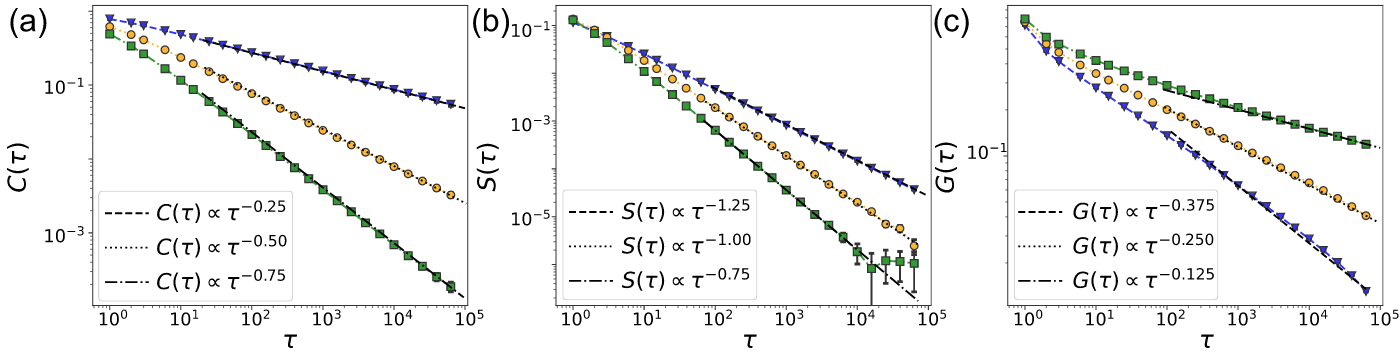
Despite the long memory of market-order flow, price dynamics remain diffusive---a seemingly paradoxical coexistence known in econophysics as the diffusivity puzzle. The propagator model has long been regarded as a promising solution: price impact decays in time, finely balanced against the order-flow memory, and propagators inferred from data have been reported to be consistent with this fine balance. Here we prove a no-go theorem: asymptotic impact decay is not statistically identifiable by propagator estimation, since for diffusive prices the fine-tuned decay is returned whether or not the true impact decays. It rests on universal theorems for the Wiener--Hopf deconvolution by which propagators are inferred under long-memory order flow: (i) the inferred propagator is necessarily transient, even when the true impact is permanent; (ii) under a mild condition, it decays with the fine-balance exponent, fixed by the order-flow autocorrelation alone. The fine-tuned decay is thus a property of the deconvolution, not evidence of impact decay. We demonstrate this with an exactly solvable null model that retains order splitting and the square-root law but whose impact is strictly permanent: the inferred propagator shows an artificial fine-tuned decay although the true impact never decays. Nonlinear propagator estimation, being of Wiener--Hopf type, is subject to the same theorems whenever true metaorders have long memory.
Citations and venue from Semantic Scholar (ODC-BY), refreshed weekly. Summary: Quant Letter (CC BY 4.0).