arXivML & AI Methods
TailDART: Compute-Efficient Foundation Models for Financial Time-Series Forecasting
A 2.68 million-parameter model with grouped-query attention reduces inference latency and matches larger baselines on financial time-series forecasting across multiple assets.
Featured in No. 139 on 13 Nov 2026 · 4 days after release
- Released
- 9 Nov 2026
- First featured
- No. 139 · 13 Nov 2026
- Published in
- Not yet, as far as Semantic Scholar knows
- Fanfare
- 2 of 5
- Identifier
- arXiv:2611.09176
- Authors
- Chiang Qin Zhi et al.
Abstract
From arXiv (CC0).
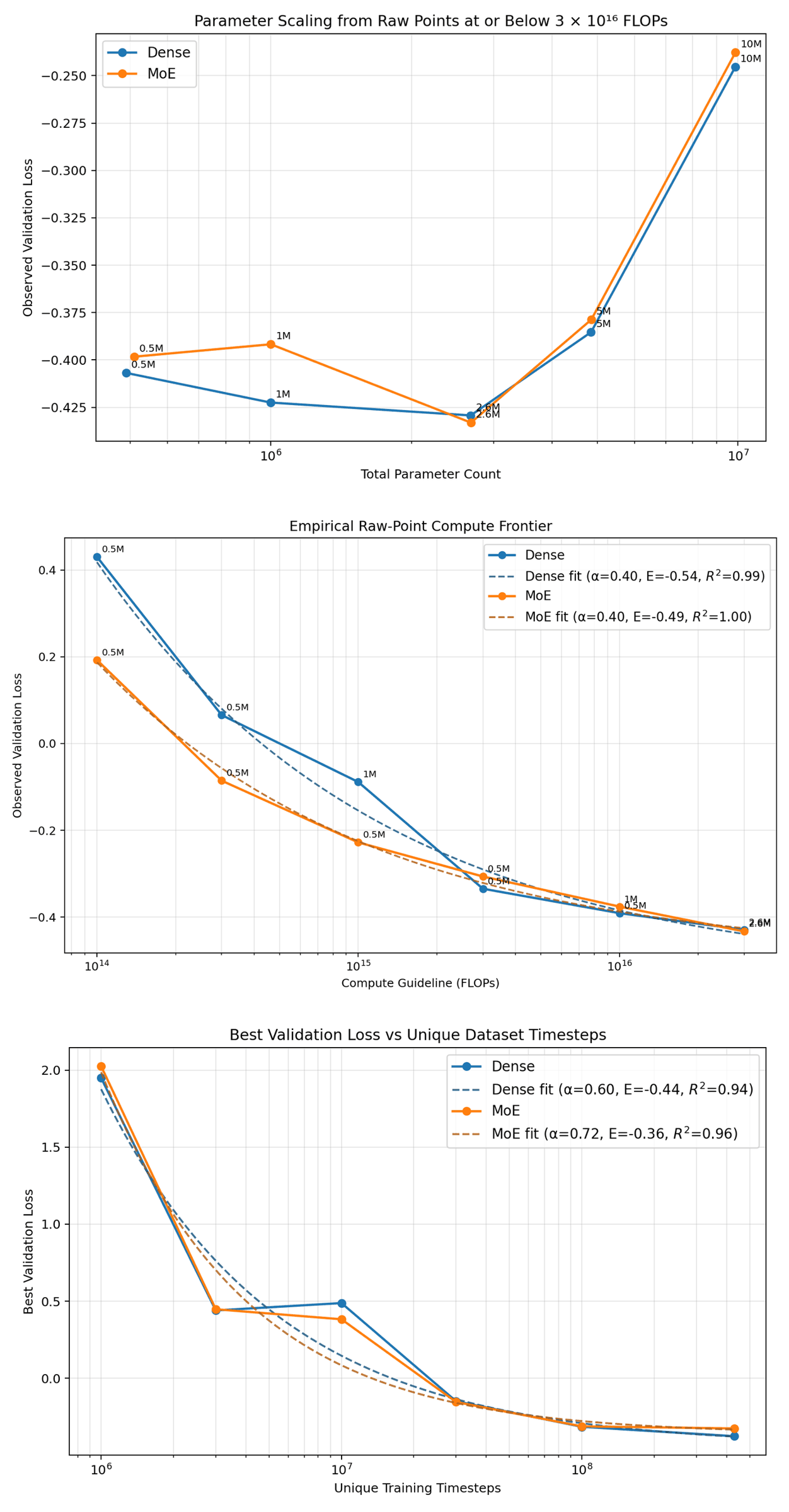
Although time-series foundation models (TSFMs) achieve strong zero-shot transferability across high-information-density physical systems, applying overparameterized TSFMs to quantitative finance is fundamentally constrained by low signal-to-noise ratios, non-stationarity, and prohibitive autoregressive decoding latency. To reconcile representation learning with institutional operational constraints, this study presents TailDART, a dense 2.68 million-parameter foundation model engineered for financial time-series forecasting. By integrating grouped-query attention into a lightweight backbone, the architecture drastically reduces Key-Value cache memory bandwidth overhead, achieving major inference acceleration (up to 48.1%) over prevailing state-of-the-art TSFMs to enable low-latency, high-throughput streaming execution. Furthermore, multi-asset benchmarks across varying temporal resolutions show that a compact model can remain competitive for market forecasting: TailDART matches the predictive fidelity of substantially larger baselines while demonstrating superior error resilience in high-volatility regimes.
Citations and venue from Semantic Scholar (ODC-BY), refreshed weekly. Summary: Quant Letter (CC BY 4.0).