The Financing of Debt Relief: Intermediary Liquidity and the Value of Borrower Information
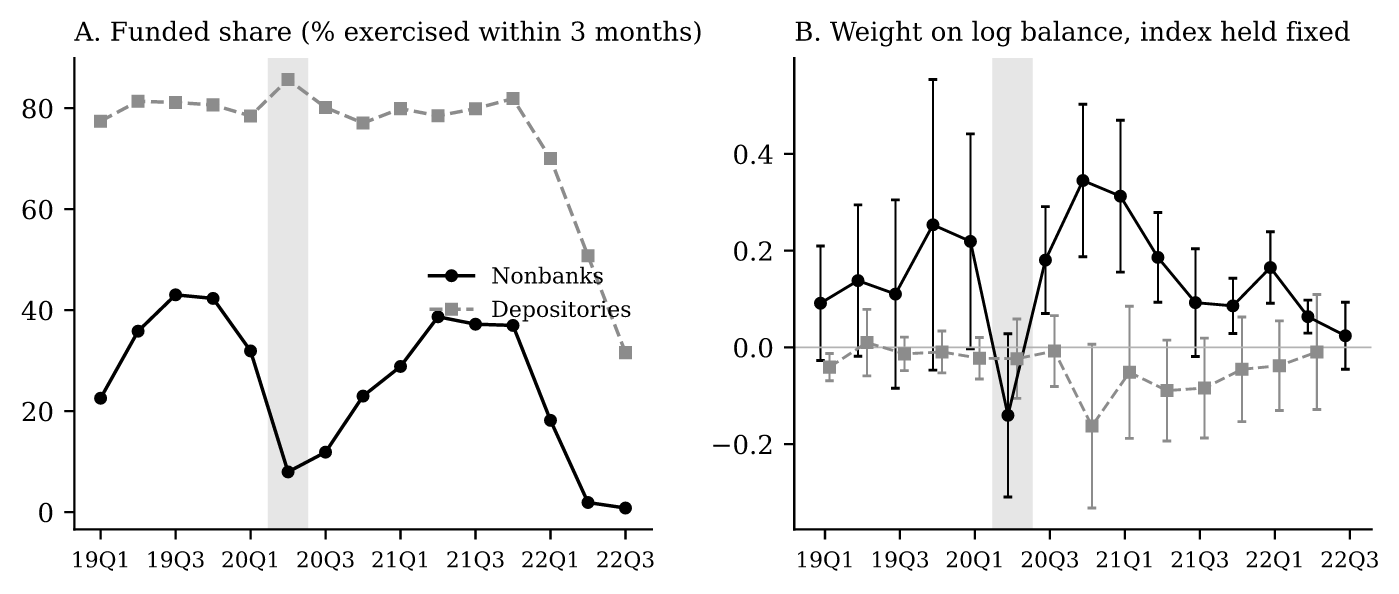
Using Ginnie Mae buyout options, the study finds that nonbank issuers repurchase fewer delinquent loans when funding markets freeze, delaying about $19 billion in mortgage resolution compared to depositories.
Featured in No. 135 on 16 Oct 2026 · 4 days after release
- Released
- 12 Oct 2026
- First featured
- No. 135 · 16 Oct 2026
- Published in
- Not yet, as far as Semantic Scholar knows
- Fanfare
- 2 of 5
- Identifier
- arXiv:2610.12875
- Authors
- Arka P. Bandyopadhyay
Abstract
From arXiv (CC0).
I study how intermediary liquidity affects mortgage resolution using 1.9 million Ginnie Mae buyout options from 2019 to 2022. When funding markets froze in 2020, nonbank issuers repurchased far fewer delinquent loans than depositories servicing loans in the same pools and, within the same issuer and month, shifted repurchases away from large balances, the loans that require the most cash. About $19 billion of repurchases were delayed, and most were completed later. A model of rationing by value per dollar of cash explains this pattern and shows that borrower information is most valuable when funding is intermediate.
Citations and venue from Semantic Scholar (ODC-BY), refreshed weekly. Summary: Quant Letter (CC BY 4.0).