ML-QuantSubscribe

Quant Letter

October 2026, Week 3

The week in quantitative finance research: 90 papers from arXiv, SSRN and RePEc, screened and ranked, 10–16 Oct 2026.

Papers
90
New this week
90
With figures
50
High fanfare
10

From the editor

This week pivots toward machine learning in discovery and execution. Foundation models learn market regimes from order flow; genetic programming and RL agents discover alpha factors across assets and frequencies. But a survey of 47 LLM trading systems finds reported margins vanish on retest, and a massive pre-registered sweep of 18,630 crypto strategies finds none viable. See Foundation Models Learn Market Regimes, EvoQuantLab, and LLM-Based Trading Systems Survey.

Top picks

If you read five papers this week, read these.

  1. Foundation Models Learn Market Regimes

    Autoregressive transformers trained on limit-order-book message streams learn amortized Bayesian inference over market regimes, matching optimal prediction and enabling accurate parameter calibration.

    Fanfare 4ML & AI Methods
    Diversity ablation: S1 models, fixed 400M-token budget, K distinct regimes in training (two seeds; bands span seeds)
  2. A survey of 47 LLM trading systems across six markets finds that reported margins shrink or vanish when rerun, with best evidence placing language models upstream of execution.

  3. A review of LLM applications finds that contextual interpretation improves some tasks but measurement error persists, and trading signals do not always generate profits.

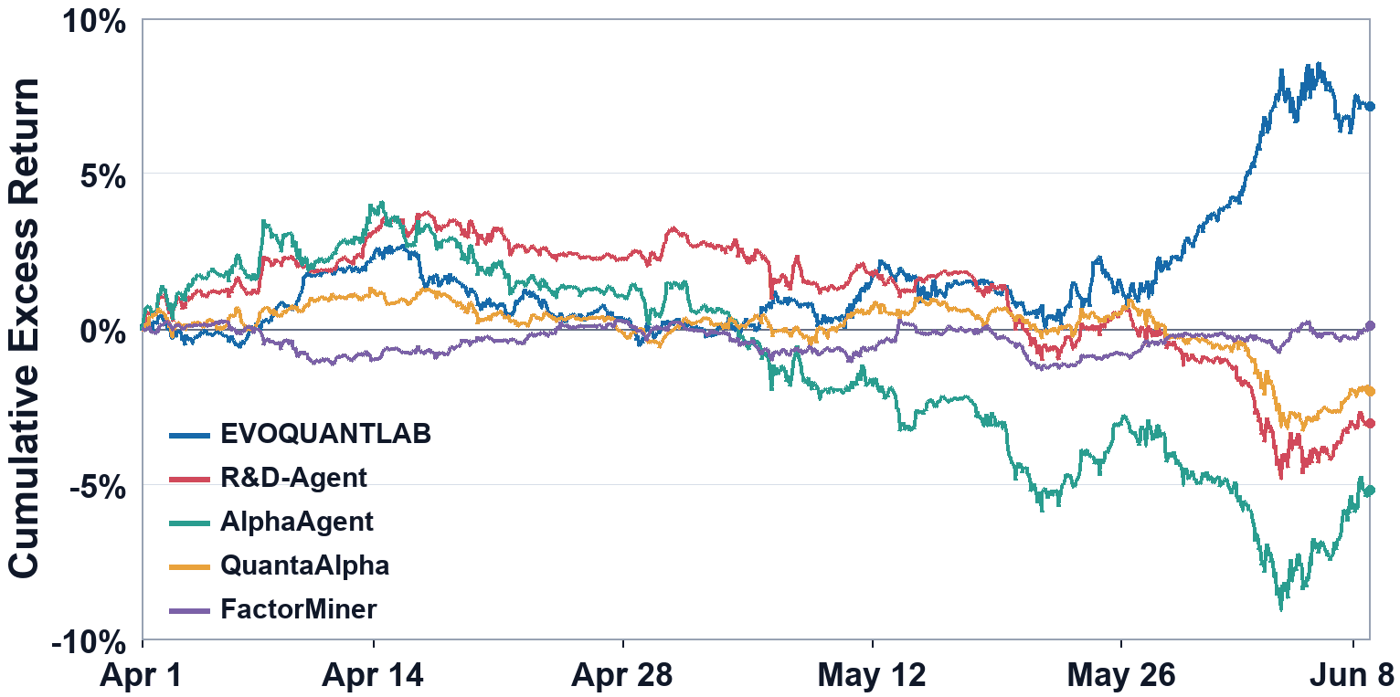
  4. Cumulative excess return comparison of EvoQuantLab versus competing factor discovery methods over time
  5. Rejected factors earn 1.30 Sharpe in their home market versus 0.85 overall, yielding 3.8% six-factor alpha per year through venue reallocation constrained by signal-to-noise limits.

What's rising

Topics drawing unusually many papers this week.

  1. Text as data

    2.2×

    2.4% of this week's 755 new papers, 2.2x its share over the previous 3 weeks (1.1%).

  2. Crypto assets

    1.4×

    5.8% of this week's 755 new papers, 1.4x its share over the previous 3 weeks (4.1%).

  3. Random forests

    1.9×

    1.7% of this week's 755 new papers, 1.9x its share over the previous 3 weeks (0.9%).

GitHub radar

What the quant community starred on GitHub this week, from a panel of 10,589 developers who follow financial machine learning (297 of the 860 we checked starred something). Counts only: we never publish who starred what.

Quant repos rising

  1. getnao/nao3 quants

    Open source analytics agent for agentic analytics and chat-with-data.

    ★ 1,937TypeScript

  2. MCP server with 139 tools for real-time global intelligence data.

    ★ 959Python

  3. Production-grade Rust-native trading engine with event-driven architecture.

    ★ 30.2k+399 this weekRust

  4. Terminal-style trading dashboard built on free public market data.

    ★ 1,764+342 this weekTypeScriptNew repo

  5. Agent memory with episodic retrieval for financial decision-making.

    ★ 3+2 this weekPythonNew repo

  6. GPU-accelerated quantitative finance library.

    ★ 24+15 this weekJupyter Notebook

  7. Financial services tools and libraries.

    ★ 40.0k+863 this weekPython

  8. Backtesting engine for thousands of trading ideas.

    ★ 9,394+78 this weekPython

What quants are playing with

  1. morluto/rea83 quants

    Reverse engineer anything with agents, from app behavior down to native binaries.

    ★ 283k+229k this weekTypeScript

  2. Agent skill for creating detailed, interactive isometric illustrations of systems.

    ★ 13.5k+13.5k this weekJavaScriptNew repo

  3. Open-source, clean-room reimplementation of Microsoft Word in pure Rust.

    ★ 13.5k+11.3k this weekRustNew repo

  4. Tool for automatic PS5 executables porting to Linux and Windows.

    ★ 39.3k+16.0k this weekC++New repo

  5. Intentional crafting engine for artists, designers, and filmmakers.

    ★ 29.9k+17.7k this weekRust

  6. Search your computer by file contents: photos, PDFs, documents, recordings, videos.

    ★ 4,220+4,219 this weekSwiftNew repo

  1. Now publishedMerchants of vulnerabilities: How bug bounty programs benefit software vendors

    Now published in Production and Operations Management · featured 1 May 2024, 5 days after release; 6 citations

  2. Now publishedCross-Currency Basis Swaps Referencing Backward-Looking Rates

    Now published in SIAM J. Financial Math. · featured 23 Oct 2024, 12 days after release; 2 citations

  3. Now publishedWhen Do AI Gains Become Broadly Shareable? A Policy Threshold for AI-Driven Automation

    Now published in Proceedings of the AAAI/ACM Conference on AI, Ethics, and Society · featured 30 May 2025, 6 days after release; 1 citations

All papers

Filter by venue, topic or fanfare.

Venue
Topic
Fanfare
90 papers

arXiv

Quantitative finance and ML-for-finance preprints

30 papers · 26 figures

ML & AI Methods11

01

Foundation Models Learn Market Regimes

Autoregressive transformers trained on limit-order-book message streams learn amortized Bayesian inference over market regimes, matching optimal prediction and enabling accurate parameter calibration.

Fanfare 4ML & AI MethodsFernando AceroPDF
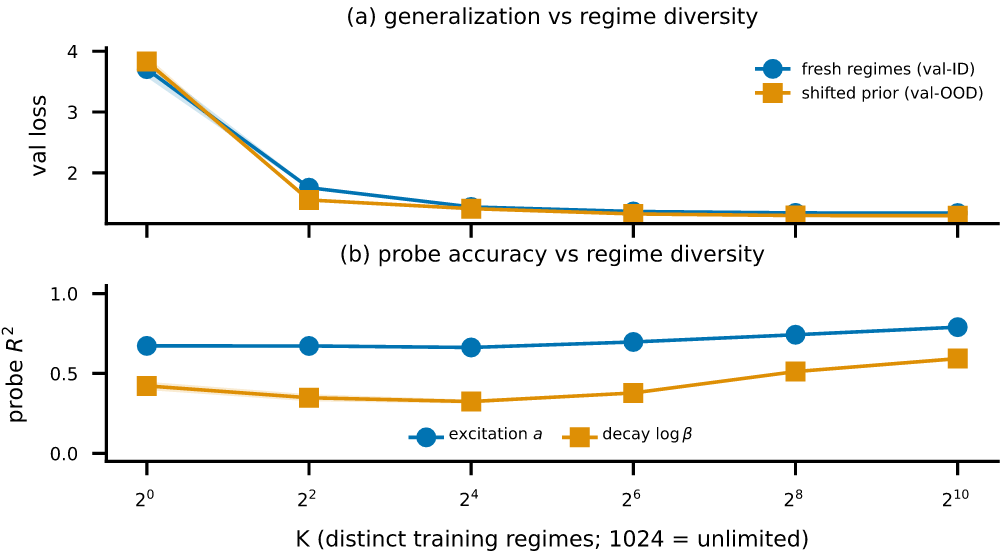
Diversity ablation: S1 models, fixed 400M-token budget, K distinct regimes in training (two seeds; bands span seeds)
Figure 6. Diversity ablation: S1 models, fixed 400M-token budget, K distinct regimes in training (two seeds; bands span seeds). (a) Loss on unseen regimes and under a sh…
02

EvoQuantLab: Genetic Programming for Factor Discovery

A training-free framework combines genetic programming and LLM diagnosis loops to discover robust alpha factors across daily and hourly frequencies in equities and cryptocurrency.

Fanfare 4ML & AI MethodsHaolin Yang et al.PDF

Cumulative excess return comparison of EvoQuantLab versus competing factor discovery methods over time
Figure 4: Performance comparison on Crypto. Left: predictive and portfolio metrics of each method. Right: cumulative excess-return trajectories over the OOS period.
05

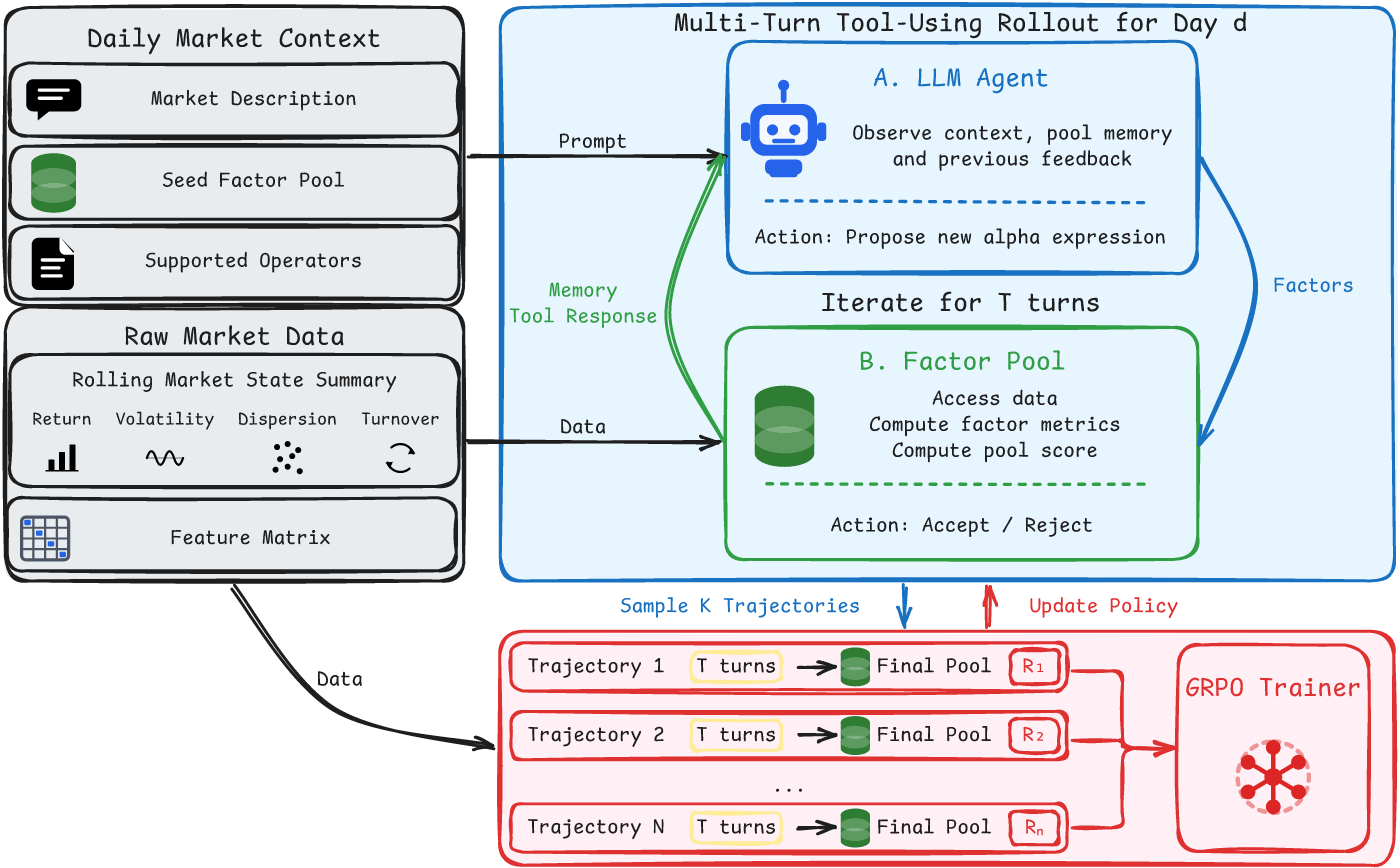
AlphaPilot: Multi-Turn LLM Agents for Alpha Mining

A reinforcement-learning framework trains multi-turn tool-using LLM agents to discover factor expressions by conditioning on market descriptions and querying real-data feedback.

Fanfare 3ML & AI MethodsPeiqi Jiang et al.PDF

Overview of the AlphaPilot training pipeline
Figure 2: Overview of the AlphaPilot training pipeline. The agent observes daily market context and pool memory, proposes formulaic alpha expressions through a DSL, rece…
06

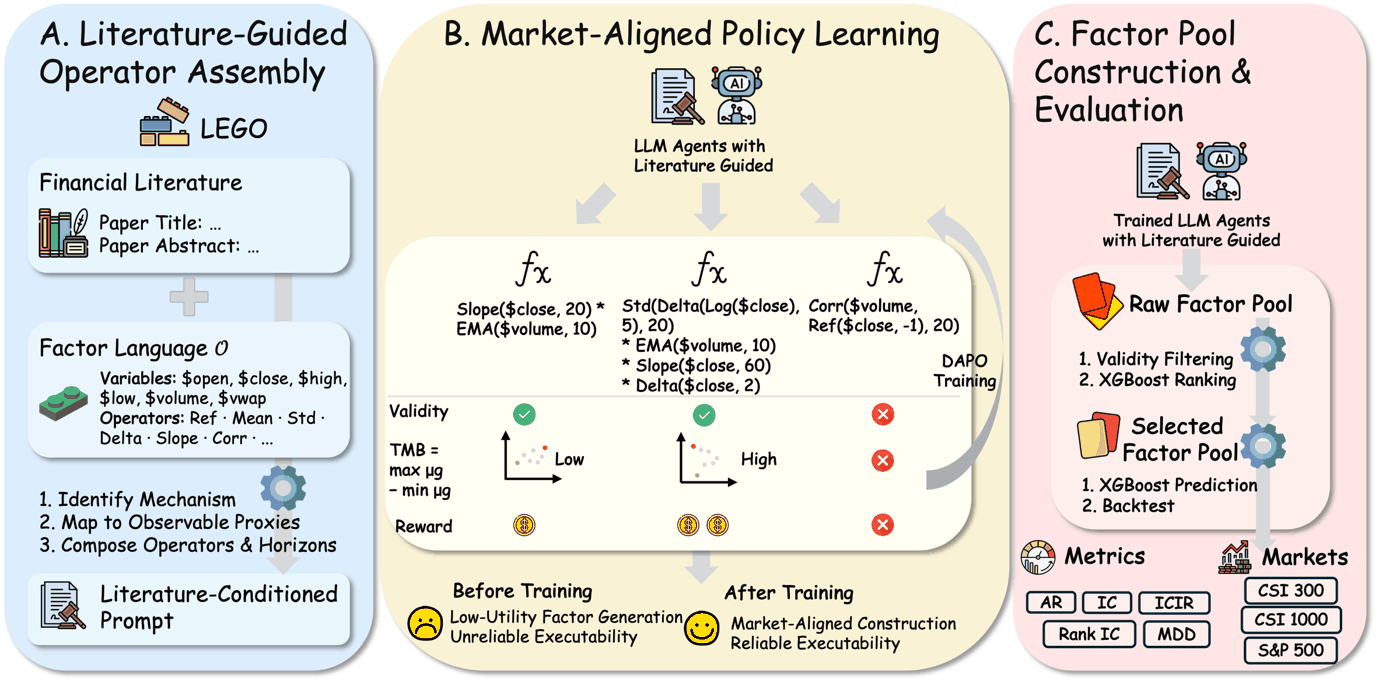
AlphaRLM: Literature-Grounded Factor Discovery

An reinforcement-learning framework trains language models to construct executable symbolic factors from financial literature, aligned via market feedback, outperforming baselines on Chinese and U.S. equity indices.

Fanfare 3ML & AI MethodsJie Huang et al.PDF

AlphaRLM framework overview showing literature-guided factor assembly, market-aligned policy learning, and factor pool const…
Figure 1: Overview of AlphaRLM. (A) Literature-Guided Operator Assembly (LEGO) combines paper titles and abstracts with permitted market variables and operators to guide…
08

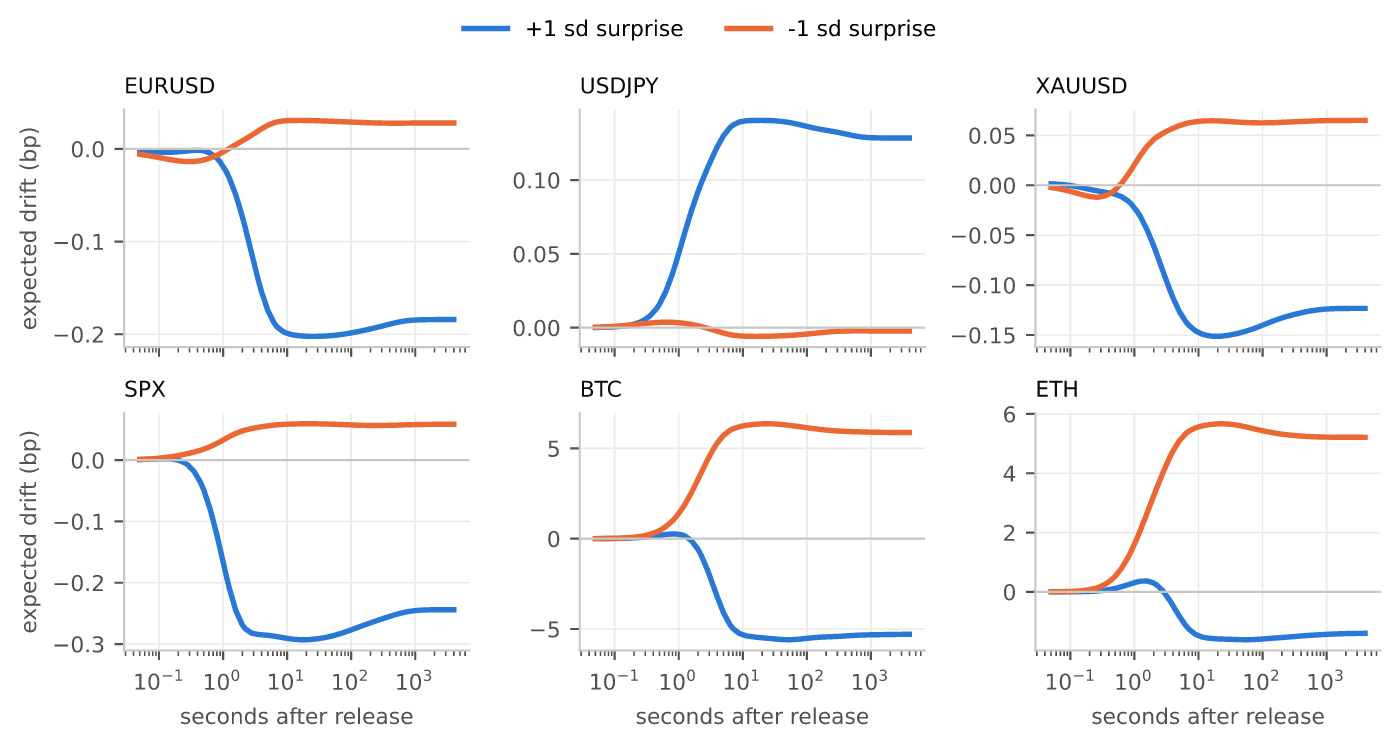
Phase-Type Point Processes for Event Streams

A multiscale phase-type Hawkes model measures how fast prices absorb macroeconomic news versus self-exciting echoes, showing direct absorption in about one second and extended responses up to 137 seconds.

Fanfare 3ML & AI MethodsSayak DuttaPDF

Expected cumulative price change, in basis points, after a CPI surprise of +1 (blue) or -1 (orange) standard deviation,
Figure 5: Expected cumulative price change, in basis points, after a CPI surprise of +1 (blue) or -1 (orange) standard deviation, from the pooled model. Time axis logari…
11

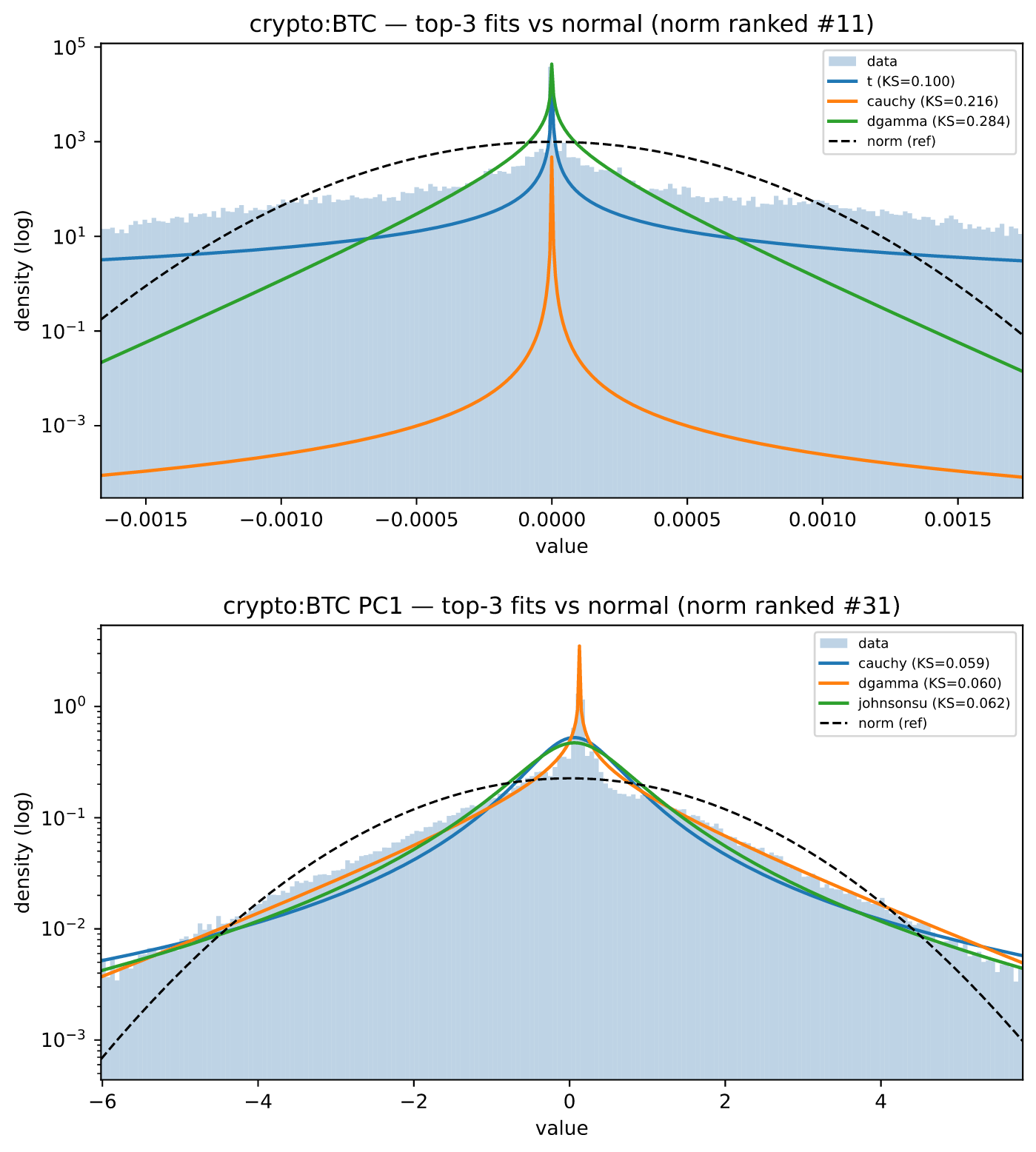
Heavy-Tailed Score Matching for Limit Order Books

StochLOB replaces Gaussian noise with jump-Lévy and stable-noise corruptions to capture bursty limit-order-book flow, improving tail-window stress diagnostics on held-out LOB data.

Fanfare 3ML & AI MethodsArshia Abolghasemi et al.PDF

Heavy-tailed distribution fits for crypto-BTC showing normal vs. fitted distributions on log scale.
Figure 4 : Heavy-tail distribution-fit diagnostics. The dashed normal reference is not the leading fit: it ranks 11th for BTC increments and 31st for the first principal…
12

LLM Stock Forecasting with Event Graphs

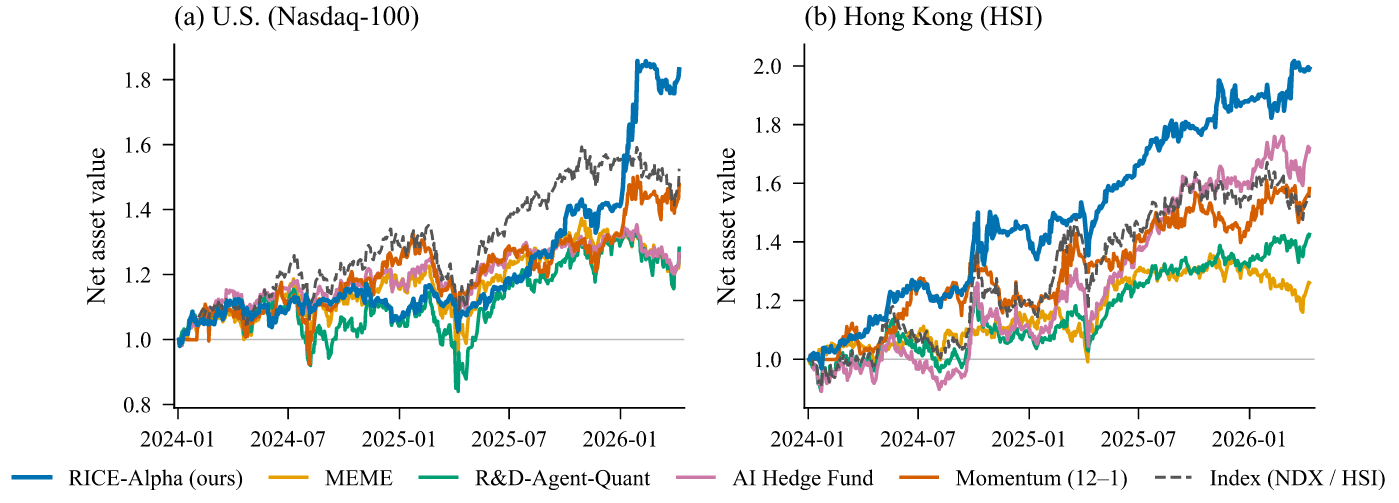
RICE-Alpha uses event graphs and historical reliability to improve LLM-based stock forecasting, achieving stronger results on Nasdaq-100 and Hang Seng panels than competing LLM agents.

Fanfare 3ML & AI MethodsTong Liu et al.PDF

Net asset value of Rice-Alpha , the baselines, and the index in (a) the U.S. and (b) Hong Kong from 2024-01-03; models
Figure 4: Net asset value of Rice-Alpha , the baselines, and the index in (a) the U.S. and (b) Hong Kong from 2024-01-03; models are net of costs, indices exclude costs.
13

XForecast News-Grounded Stock Prediction

XForecast introduces a benchmark combining stock prices with curated financial news to predict four-week-ahead returns, using weighted metrics that emphasize news-driven opportunities.

Fanfare 3ML & AI MethodsJaehoon Lee et al.PDF

17

CorrFlow: Equivariant Correlation-Matrix Generation

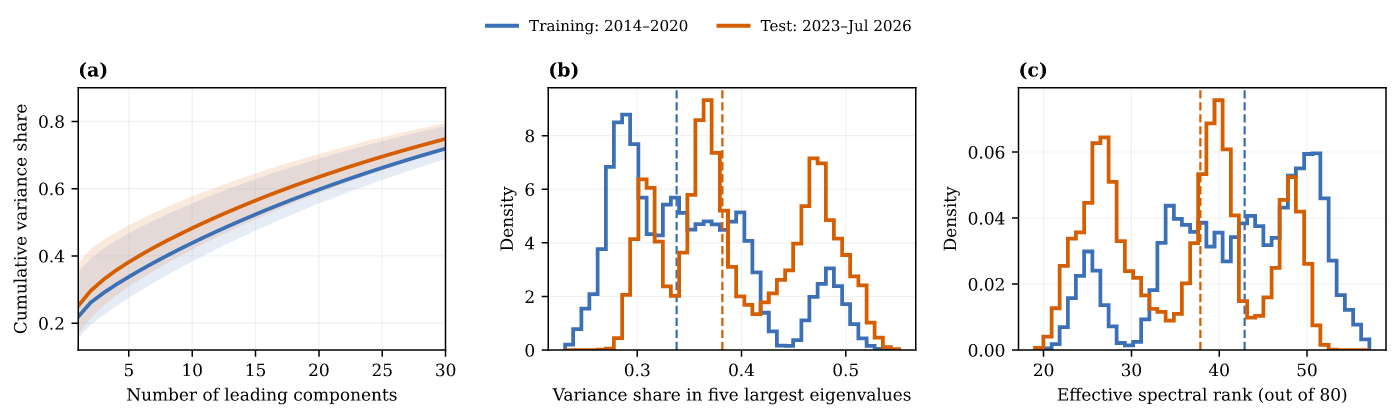
A generalized Fisher transform and permutation-equivariant flow-matching network generate valid correlation matrices with 100% validity and superior feature distances versus GAN and diffusion baselines.

Fanfare 3ML & AI MethodsGautier MartiPDF

The spectral change between the full, naturally weighted training and test splits
Figure 3: The spectral change between the full, naturally weighted training and test splits. (a) Median cumulative variance explained by the leading eigenvalues; bands s…
18

Monte Carlo Tree Search for Feature Selection

A Monte Carlo Tree Search framework selects predictive features by out-of-sample validation rather than training error, improving stability and interpretability under multicollinearity.

Fanfare 3ML & AI MethodsCameron Mouangue and Tristan CazenavePDF

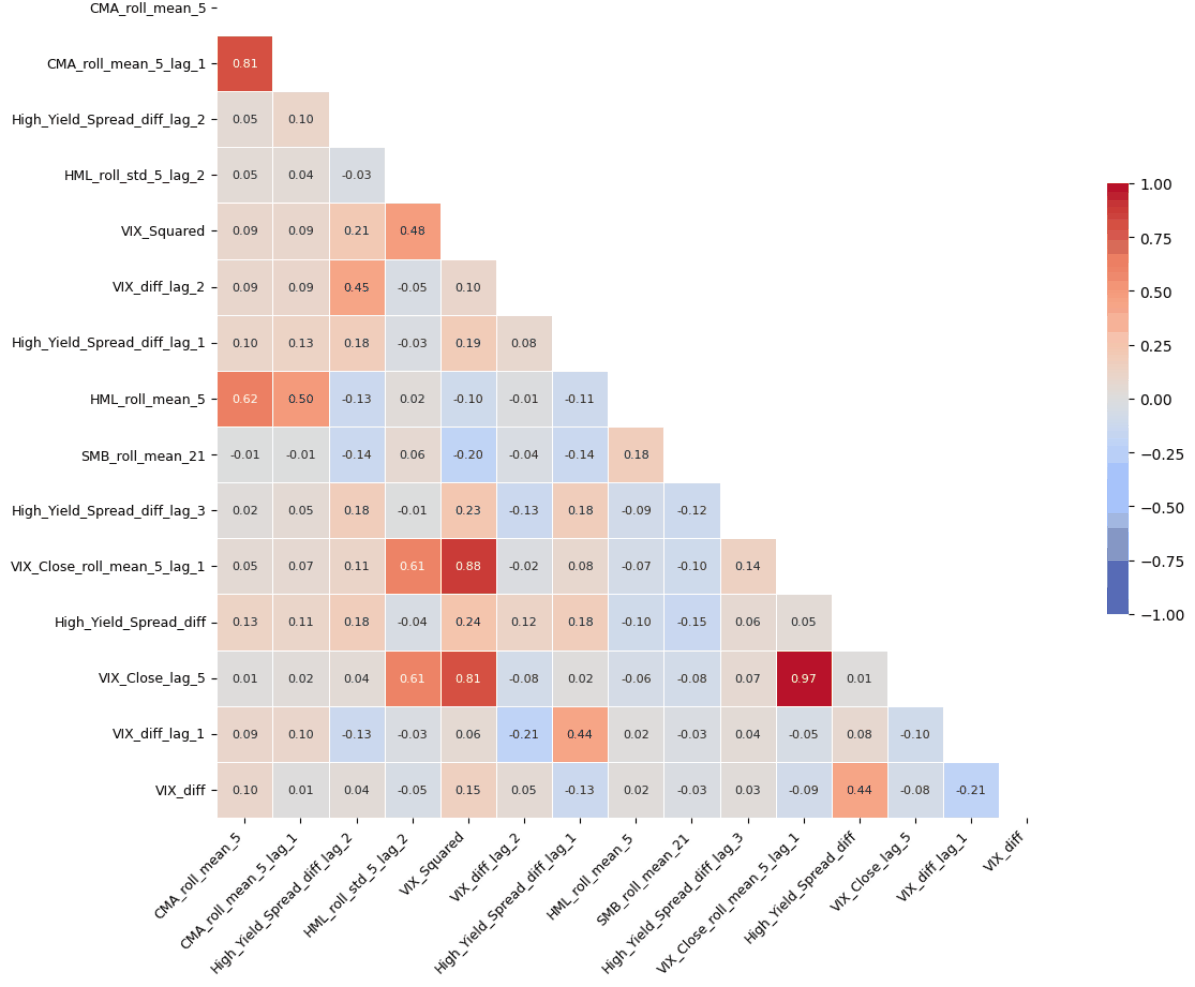
Correlation matrix of the best performing individual 15-feature GNRPA subset
Figure 2. Correlation matrix of the best performing individual 15-feature GNRPA subset.
21

Bayesian Optimization of CVaR with Unknown Kernels

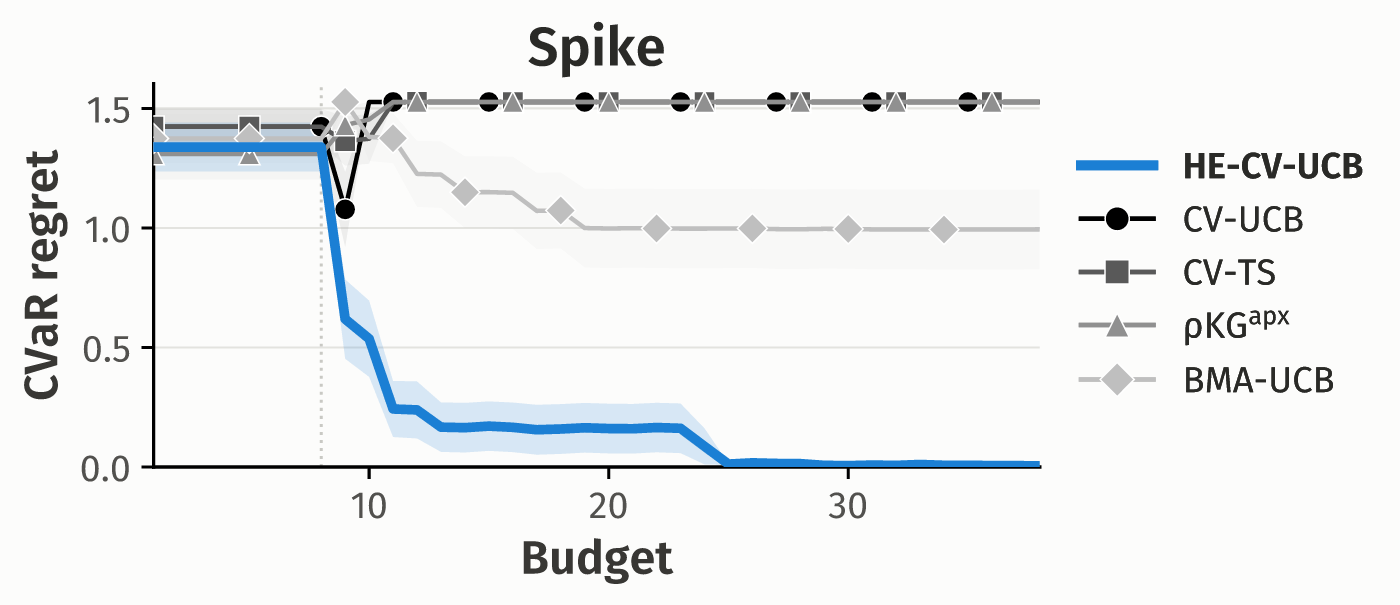
HE-CV-UCB adaptively eliminates misspecified surrogate models and achieves no-regret Conditional-Value-at-Risk optimization when kernel hyperparameters are unknown.

Fanfare 3ML & AI MethodsValentin Margraf et al.PDF

CVaR regret comparison showing HE-CV-UCB achieving zero regret versus baseline methods on synthetic spike function
Figure 3 : CVaR regret on the synthetic spike function averaged over 10 seeds. The baselines select or average high-likelihood source GPs that are tail-blind, HE-CV-UCB…

Trading, Microstructure & Execution6

04

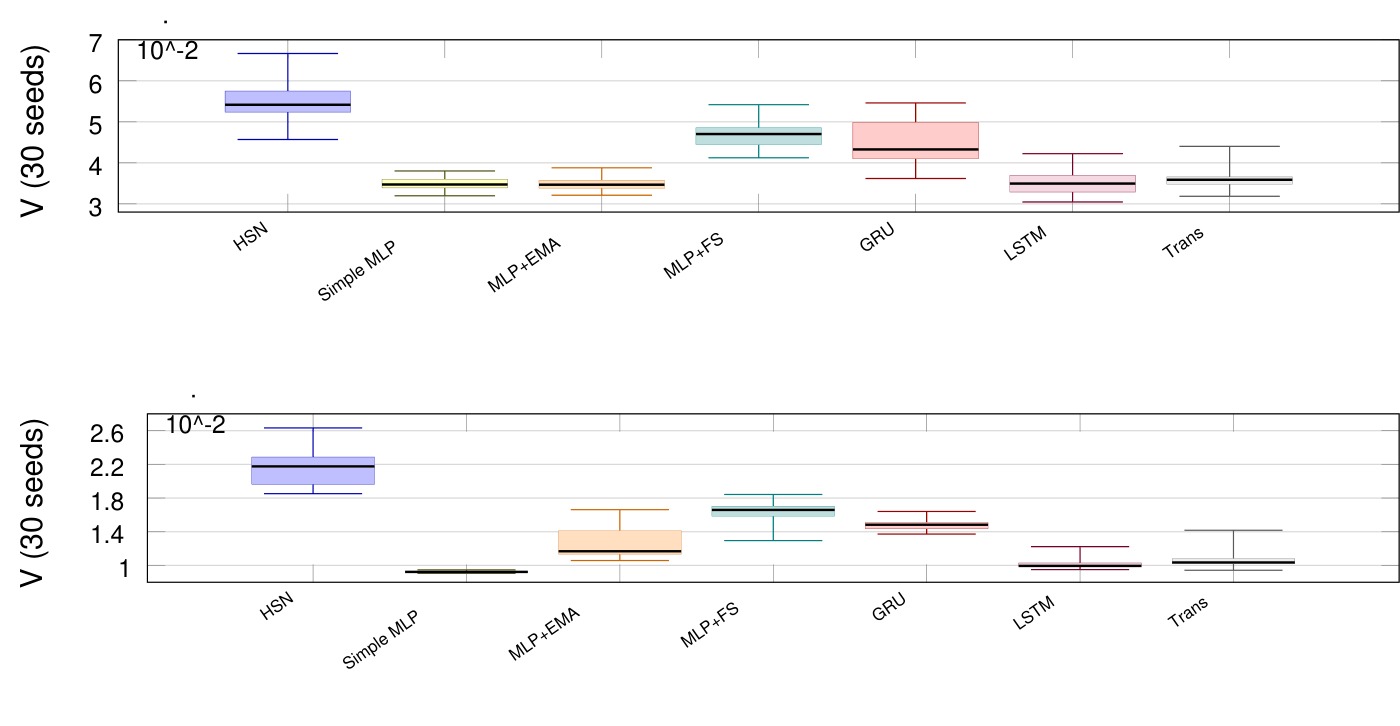
Reinforcement Learning for Hawkes Market Making

The study proposes a neural network architecture for market making that models self-exciting order arrivals through learnable exponential features and trains via reinforcement learning to optimize quoting policy.

Fanfare 3Trading, Microstructure & ExecutionFernando Acero et al.PDF

Distribution of final \hat{V} across 30 seeds for two intensity-sensitive configurations of Table 1 . Boxes span the
Figure 1 . Distribution of final \hat{V} across 30 seeds for two intensity-sensitive configurations of Table 1 . Boxes span the interquartile range (median line) and whi…
09

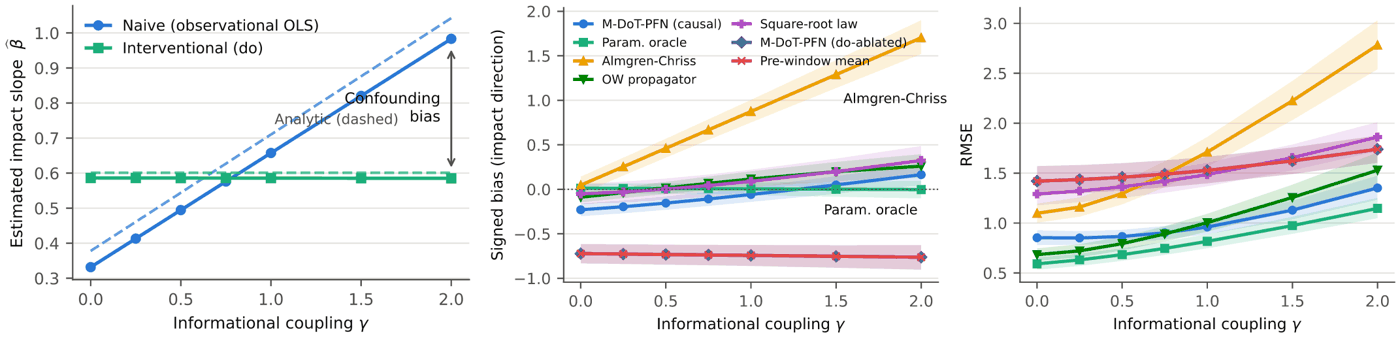
Market Impact Estimation via Causal Networks

A causal prior-data fitted network trained on synthetic market priors estimates true market impact by isolating price movement from trading flow versus information, addressing bias in classical models.

Fanfare 3Trading, Microstructure & ExecutionDennis Thumm and Ying ChenPDF

Confounding bias in market impact: observational vs interventional slopes across information coupling
Figure 2. Synthetic proof of concept (transformer pair, native prior units). Left: the confounding law, measured. Naive observational OLS slope (blue) and interventional…
19

Backtesting Defects in Live Intraday Systems

Six defects from data, code, and configuration caused live intraday trading to diverge from backtest replay, none visible in summary statistics, each requiring specific controls.

Fanfare 2Trading, Microstructure & ExecutionAlex Vidovich and Zivana ZerjalPDF

26

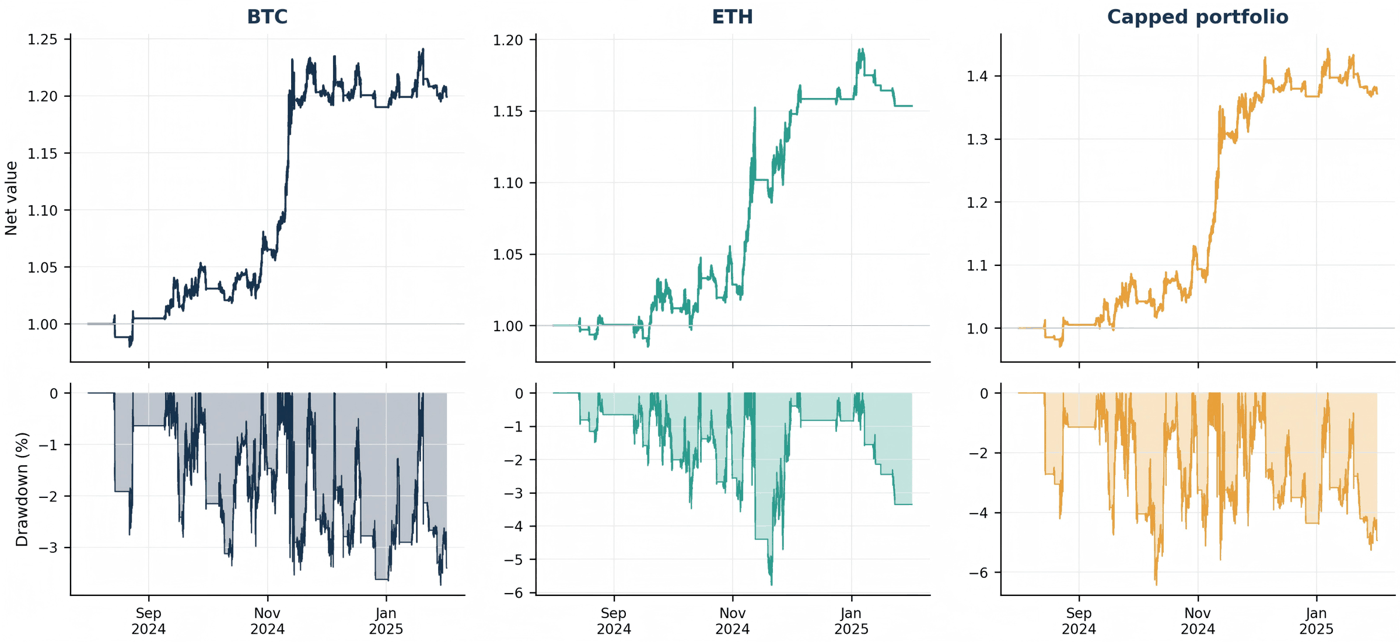
SwingGuard: Risk-Conditioned Swing Trading Agents

A dual-timescale multi-agent framework generates trading strategies conditioned on current risk and maintains ongoing position governance between strategy revisions on cryptocurrency, preserving returns after transaction costs.

Fanfare 2Trading, Microstructure & ExecutionJunzhou Su et al.PDF

BTC, ETH, and capped portfolio performance with cumulative returns and drawdown paths.
Figure 4: Cost-adjusted five-minute net value and drawdown paths for SwingGuard on BTC, ETH, and the exposure-capped joint portfolio.
27

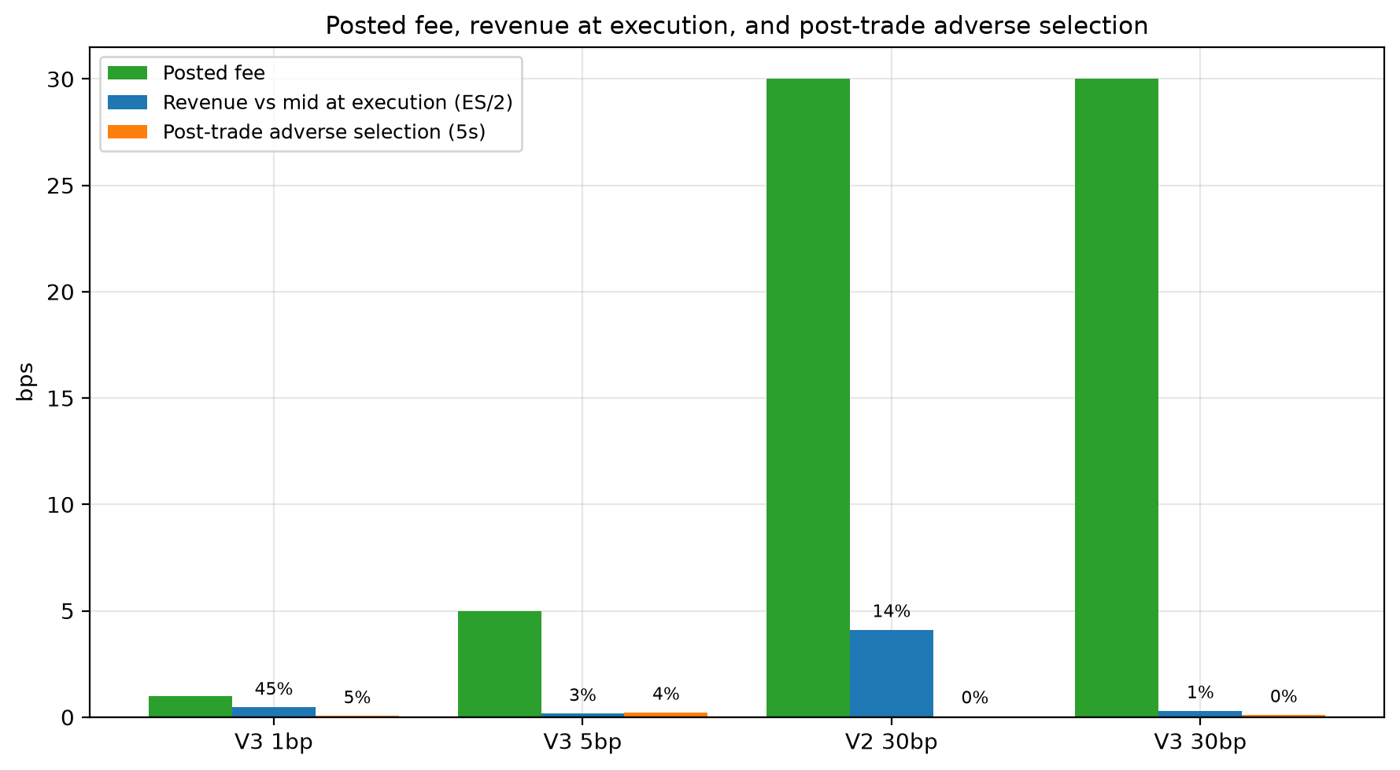
Screening, Speed, and Maker Spreads

The research derives break-even screening rates for liquidity providers defending against stale quotes, showing that one-second repricing requires far less screening than Gaussian models predict.

Fanfare 2Trading, Microstructure & ExecutionAleksei Adadurov et al.PDF

Posted fee, revenue at execution, and five-second adverse selection across the Uniswap pools
Figure 7: Posted fee, revenue at execution, and five-second adverse selection across the Uniswap pools. Post-trade adverse selection absorbs 0.2-5.3% of the posted fee,…
30

Liquidity Provision and Transaction-Cost Benchmarks

The study shows that automated market maker pools matched to transaction-cost-aware benchmarks have zero loss-versus-rebalancing, clarifying the investment interpretation of pool design.

Fanfare 2Trading, Microstructure & ExecutionMasaaki FukasawaPDF

Derivatives & Volatility4

07

GROMM: Arbitrage-Free Option Market Models

The research develops a statically and dynamically arbitrage-free model for European option prices with smooth interpolation, fitting market data within bid-ask spreads for over 95% of relevant options.

Fanfare 3Derivatives & VolatilityMagnus Wiese et al.PDF

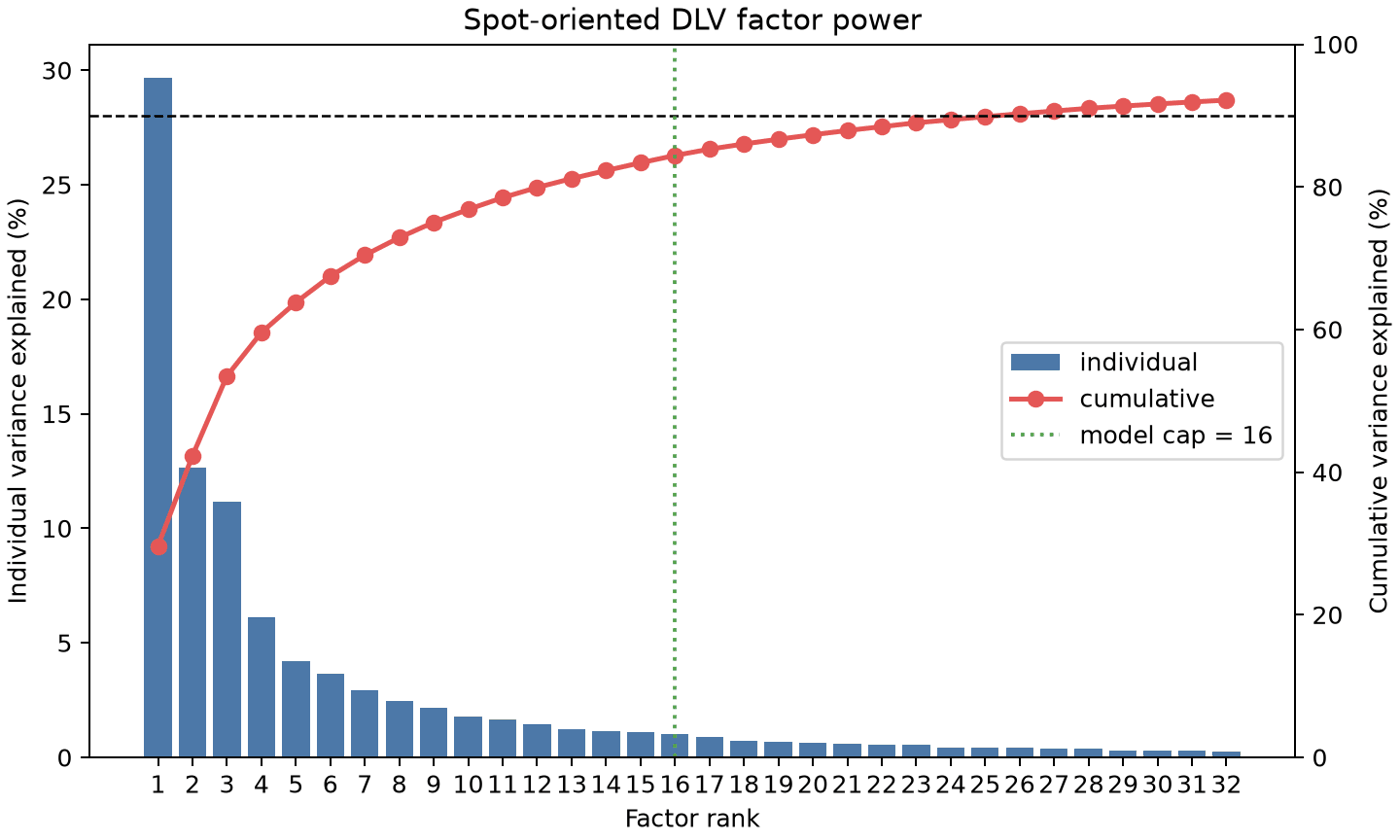
Individual and cumulative variance explained by the spot-oriented DLV factor system
Figure 3: Individual and cumulative variance explained by the spot-oriented DLV factor system. The vertical line is the rank-16 model cap; 26 factors are required to exc…
14

Semi-Static Hedging in Rough Heston Model

The paper shows that combining dynamic trading in the underlying with static positions in three vanilla options reduces variance-swap hedging error by more than 95% across different market roughness regimes.

Fanfare 3Derivatives & VolatilityPaolo Di Tella et al.PDF

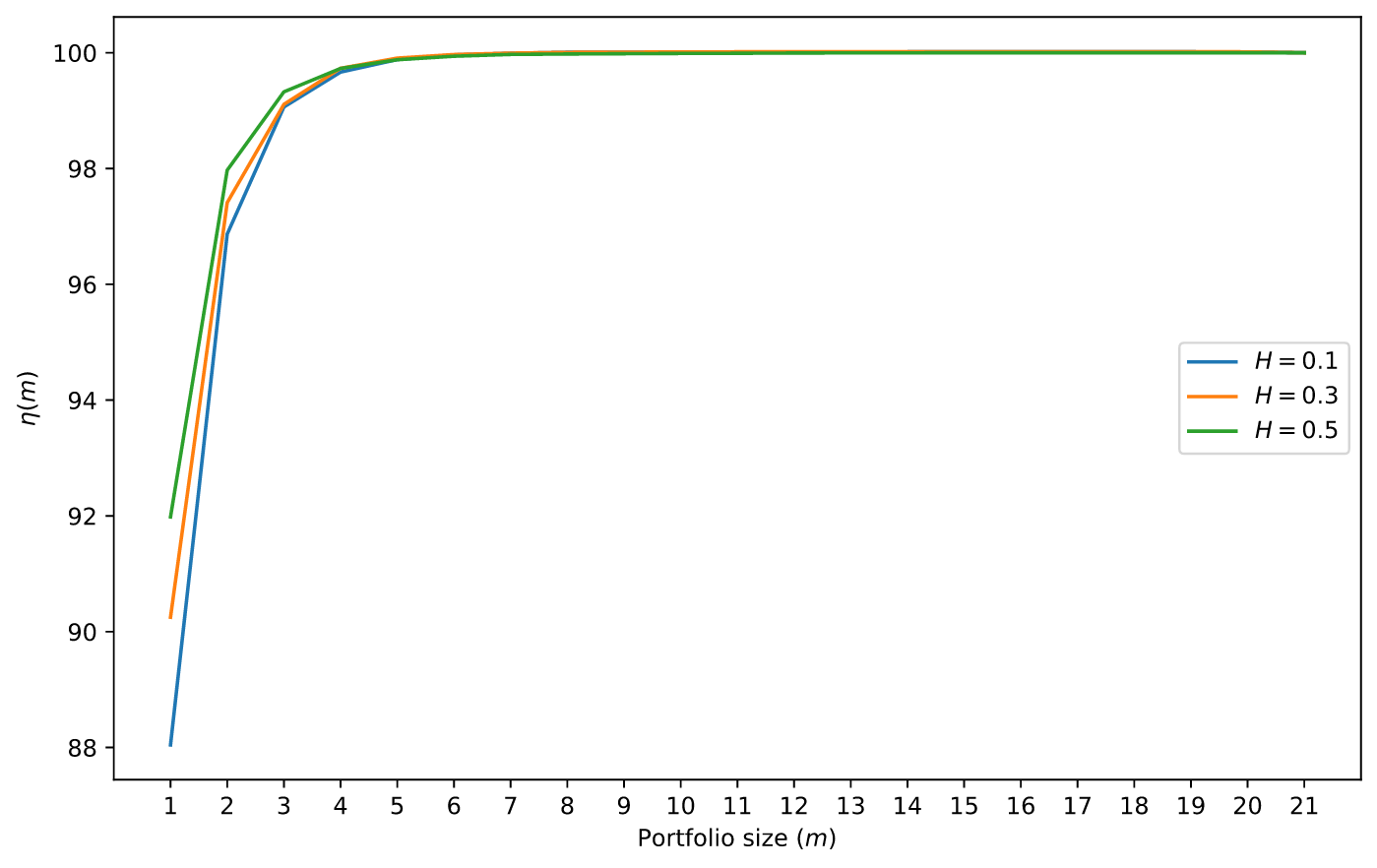
Hedging effectiveness η(m) reaching 99% with m=3 across three Hurst regimes
Figure 5: Normalized hedging effectiveness \eta(m) , equation ( 5.6 ), for the three Hurst regimes.
15

Exit Timing for SPX Short-Straddle Portfolios

An MLP-initialized reinforcement-learning framework optimizes exit timing for short-straddle options, achieving 37.54% cumulative return and a Sharpe ratio of 1.705 out-of-sample over 2024-2026.

Fanfare 3Derivatives & VolatilityJianning Wang et al.PDF

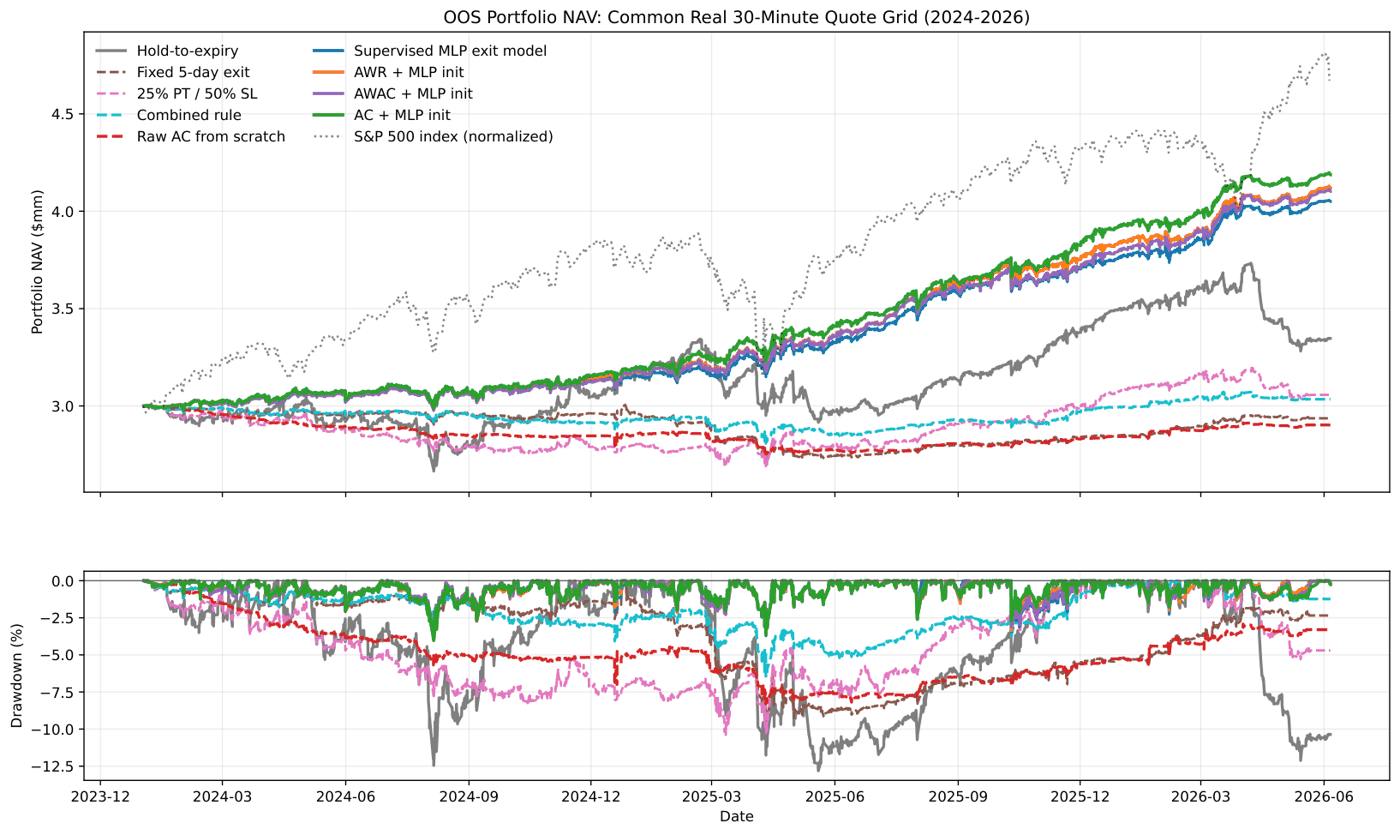
Out-of-sample portfolio NAV and drawdown for the deterministic strategies, representative reinforcement-learning runs,
Figure 3. Out-of-sample portfolio NAV and drawdown for the deterministic strategies, representative reinforcement-learning runs, and the normalized S&P 500 market refere…
23

Structured SDEs for Realized GARCH Forecasting

A continuous-time volatility model incorporating realized measures forecasts one-day-ahead integrated variance, showing strong out-of-sample performance relative to GARCH and related benchmarks across 17 equity indices.

Fanfare 2Derivatives & VolatilityHongyu Yao et al.PDF

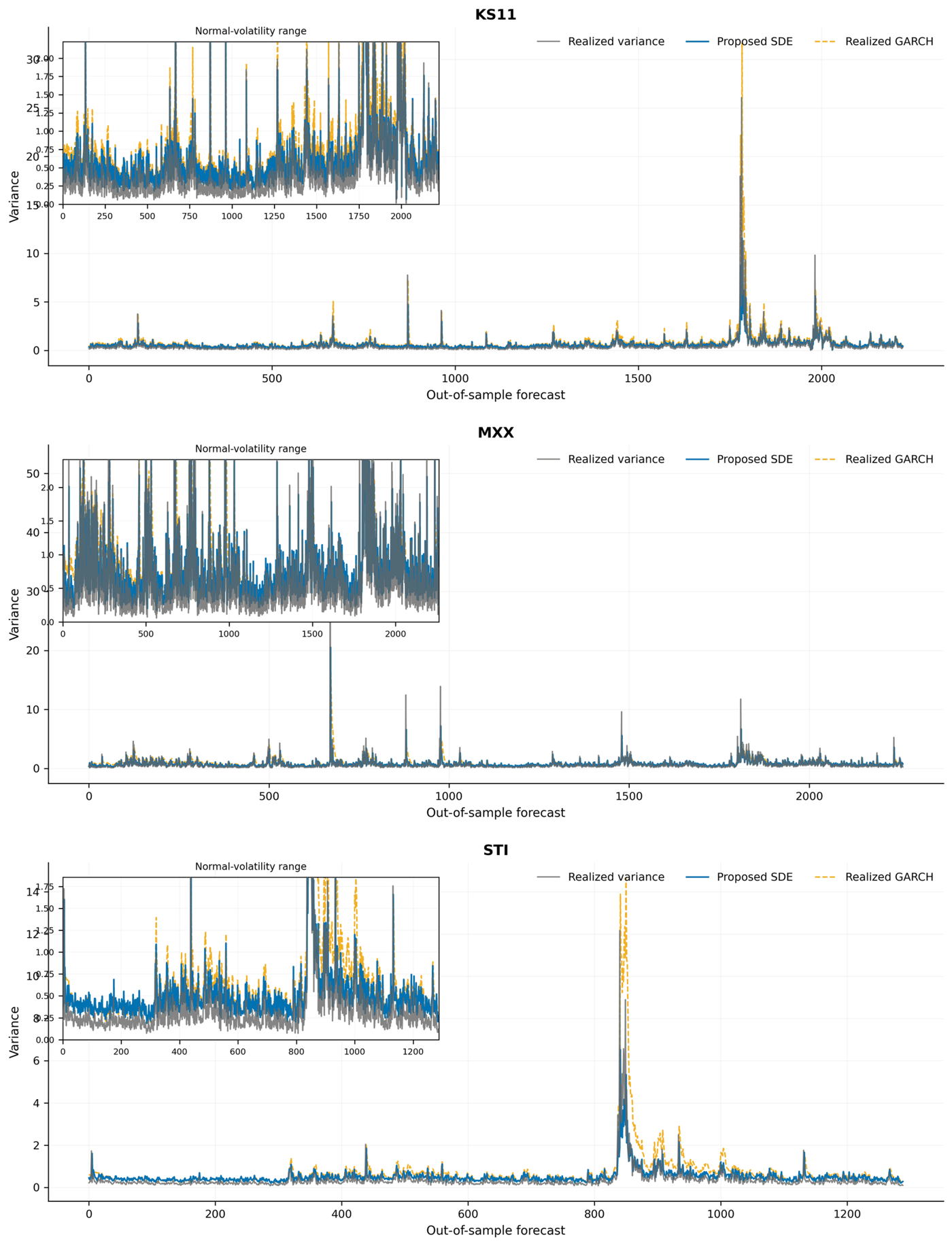
One-step-ahead variance forecasts of the proposed SDE and Realized GARCH for representative equity indices
Figure 1 : One-step-ahead variance forecasts of the proposed SDE and Realized GARCH for representative equity indices.

Portfolio & Allocation2

16

Attribution-Propagation for ML Portfolio Adaptation

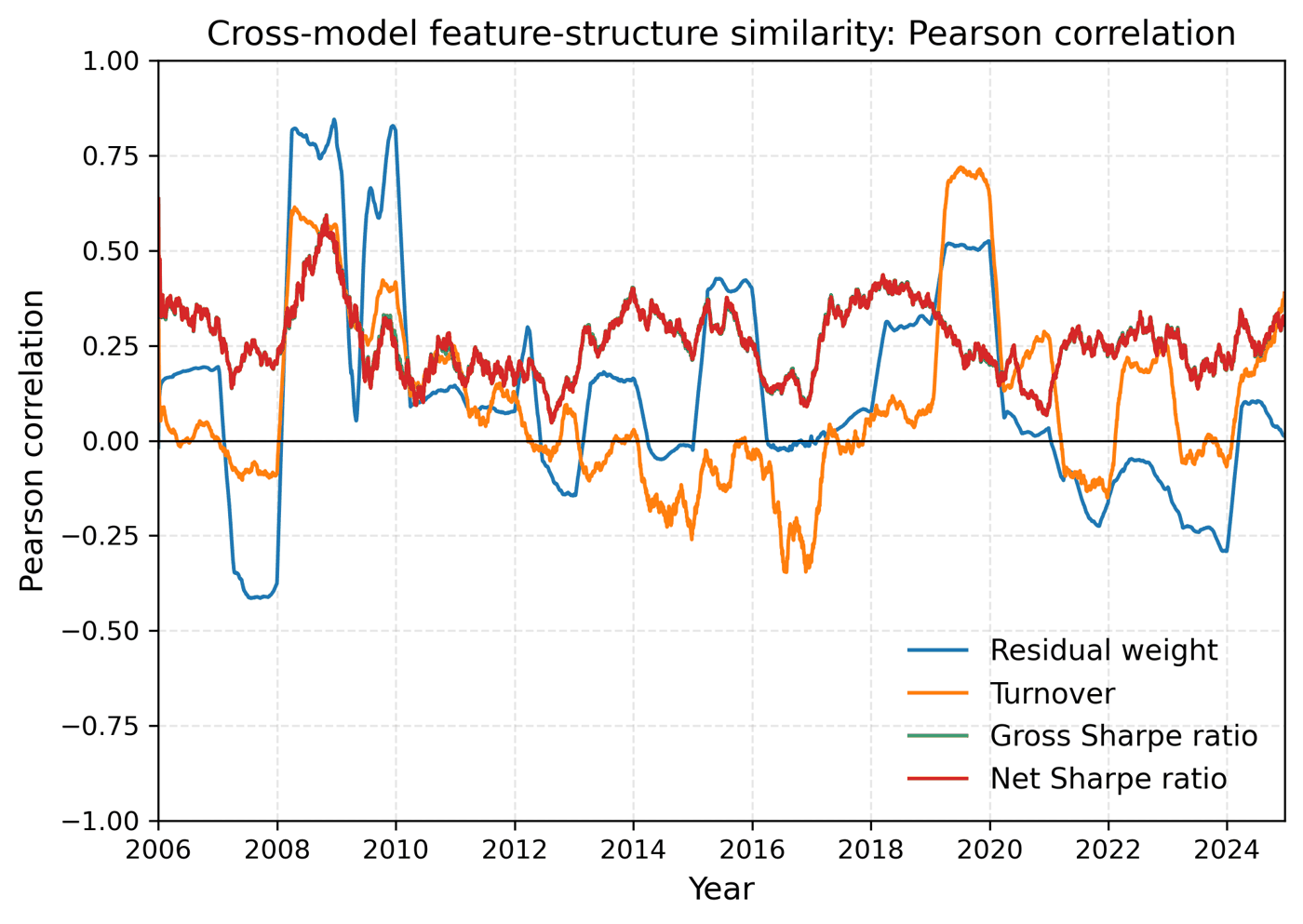
A first-order attribution framework maps feature exposures to portfolio-performance sensitivities, enabling post-training intervention that improves net Sharpe ratios without retraining.

Fanfare 3Portfolio & AllocationYunqi Liang et al.PDF

Evolution of cross-model feature-structure similarity between XGB and FFN. Each curve is a 63-day moving average
Figure 12: Evolution of cross-model feature-structure similarity between XGB and FFN. Each curve is a 63-day moving average computed from the daily similarity between th…
28

Vine Copula Simulation with Reinforcement Learning

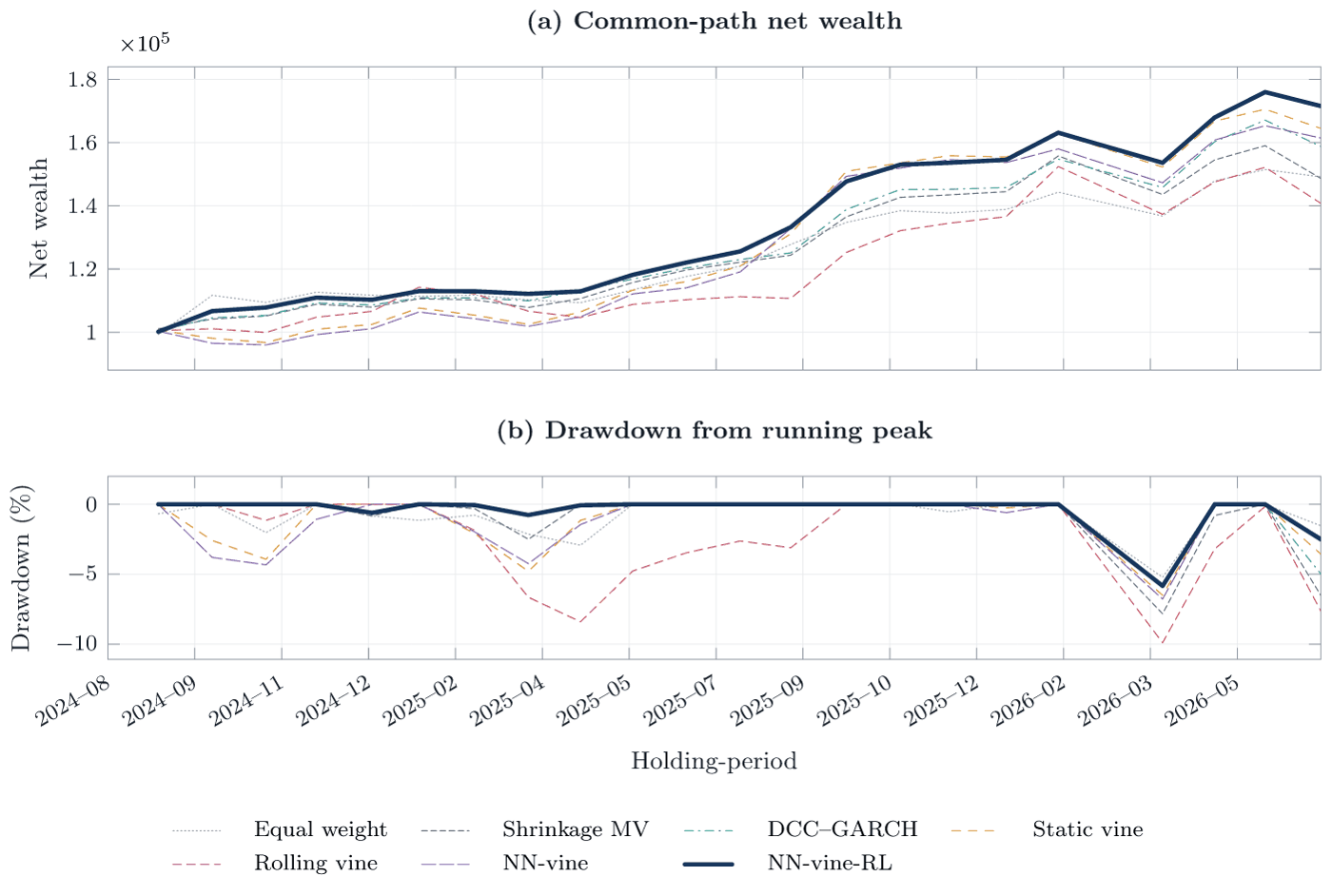
A data-driven approach combines vine-copula simulation with reinforcement learning to optimize dynamic portfolio selection across equities and gold with CVaR penalties.

Fanfare 2Portfolio & AllocationGabriël M. J. Gelissen and Fengyi YuanPDF

Net wealth and drawdown re-compounded from the 22 retained net returns, with initial wealth of 100,000
Figure 3: Net wealth and drawdown re-compounded from the 22 retained net returns, with initial wealth of 100,000. The two incomplete holding periods do not enter either…

Risk, Credit & Banking3

20

Early Detection of Pension Sponsor Distress

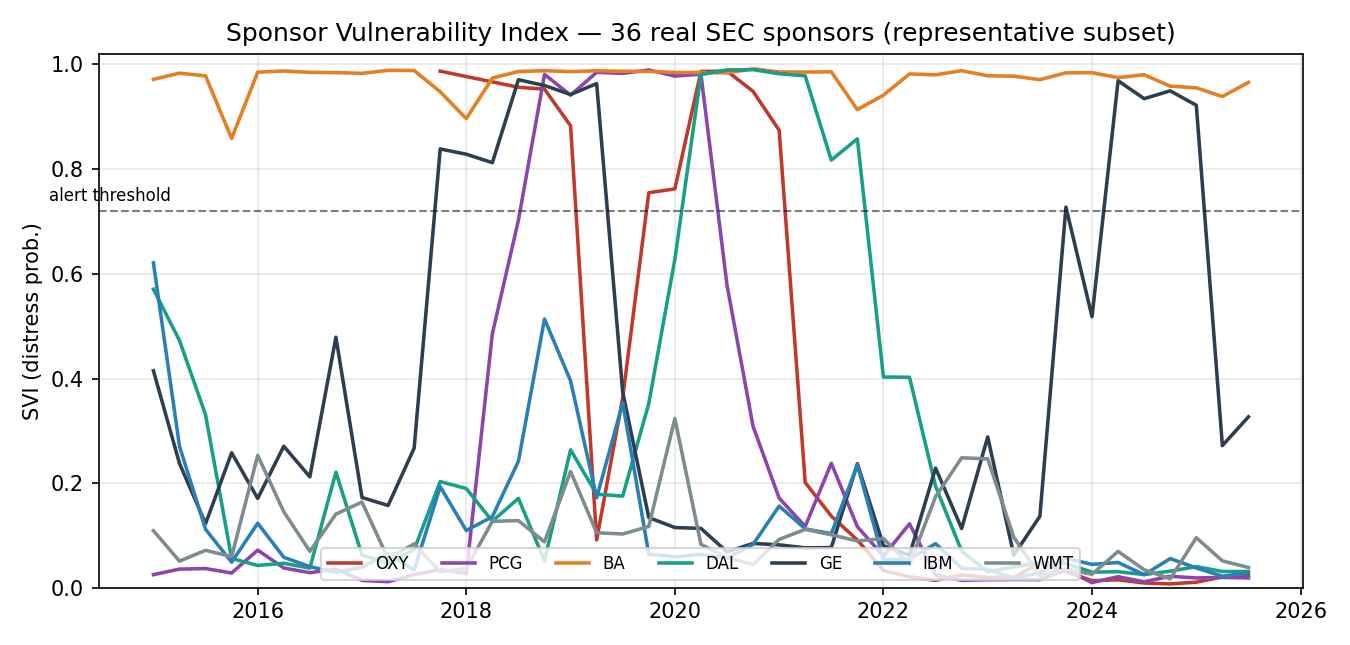
A gradient-boosted classifier predicts pension sponsor distress one to two quarters ahead from SEC filings, reaching 0.887 AUC-ROC, with application to dynamic self-investment caps in sponsor securities.

Fanfare 3Risk, Credit & BankingRavil AkhtyamovPDF

SVI (full-sample refit) for a subset of sponsors, 2015–2025
Figure 2: SVI (full-sample refit) for a subset of sponsors, 2015–2025. Distress episodes at PG&E (2018–20), Delta and Occidental (2020–21) and General Electric (2018–19)…
22

E-Backtesting Expected Shortfall Without VaR

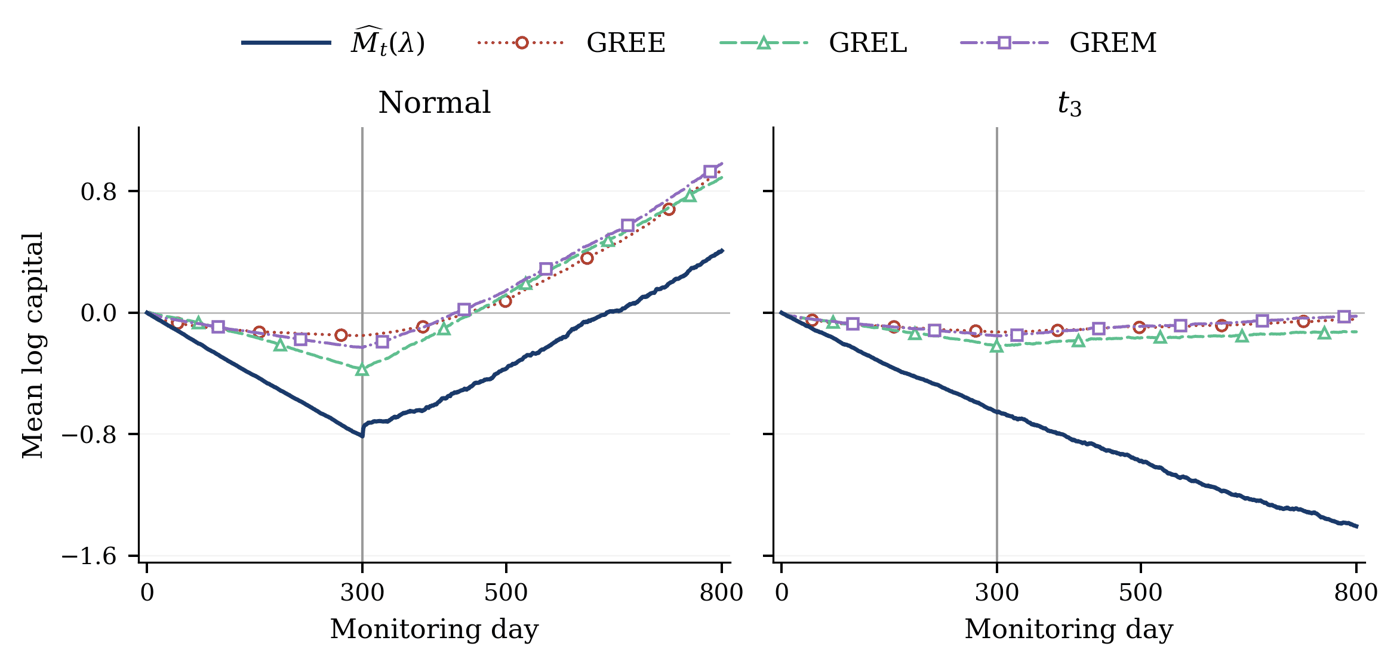
Sequential backtests for Expected Shortfall using only observed losses and ES forecasts control false rejections, with time-series extension under AR-GARCH structure proving convergent under grid refinement.

Fanfare 2Risk, Credit & BankingRuodu Wang and Jingcheng YuPDF

Mean log capital before and after the reporting change ( N=1000 )
Figure 1: Mean log capital before and after the reporting change ( N=1000 ). The vertical line marks the change after day 300.
29

Intermediary Liquidity and Debt Relief Financing

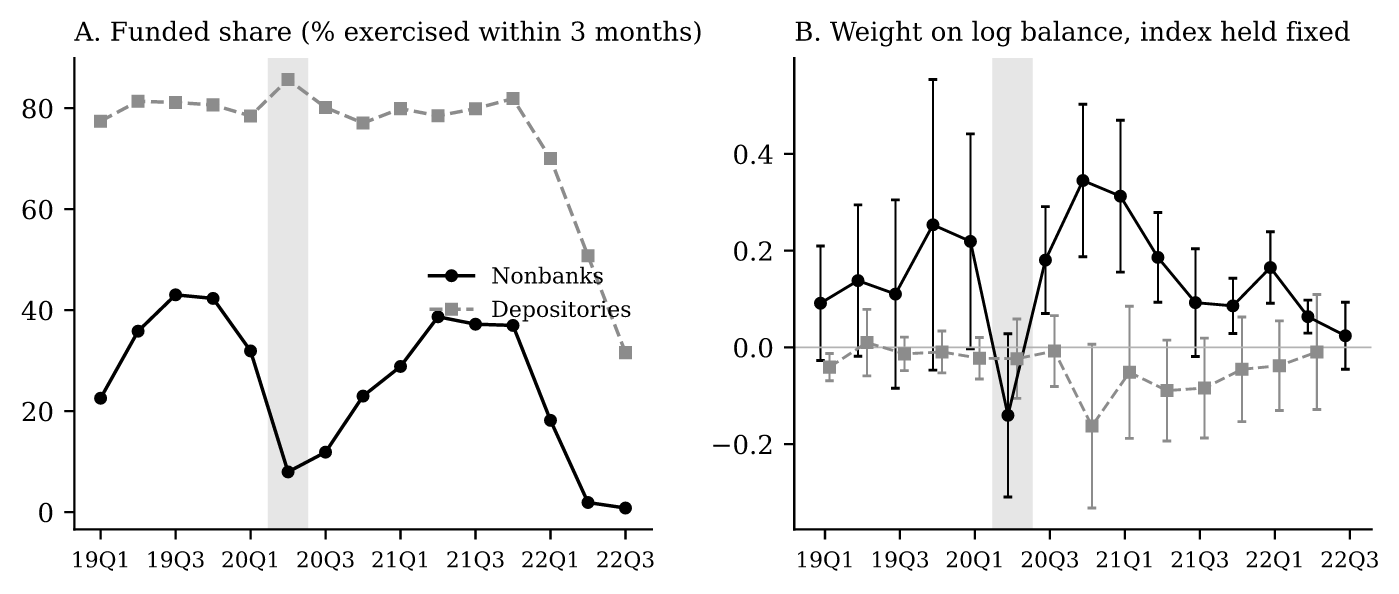
Using Ginnie Mae buyout options, the study finds that nonbank issuers repurchase fewer delinquent loans when funding markets freeze, delaying about $19 billion in mortgage resolution compared to depositories.

Fanfare 2Risk, Credit & BankingArka P. BandyopadhyayPDF

Nonbank exercise temporarily shifted away from large balances
Figure 1: Nonbank exercise temporarily shifted away from large balances.

Econometrics & Forecasting2

24

Tail-Risk Conditional Autoregressive Expectile Models

A realized tail-risk model using high-frequency intraday data forecasts value-at-risk and expected shortfall with competitive performance across U.S. stock returns and multiple tail levels.

Fanfare 2Econometrics & ForecastingKeisuke Sasaki and Yasuhiro OmoriPDF

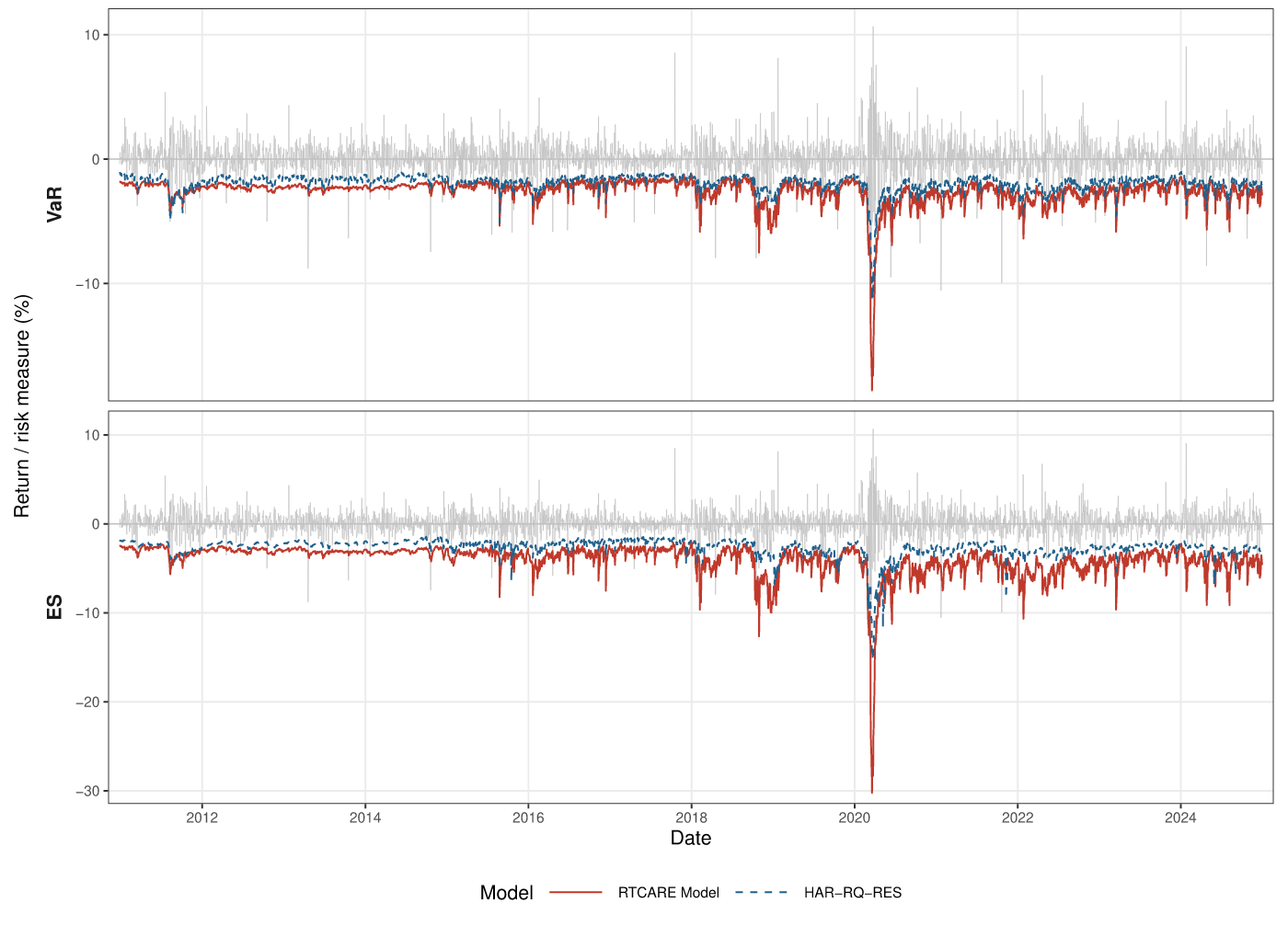
VaR and ES forecasts overlay returns, showing model performance capturing tail risk dynamics.
Figure 4 : One-day-ahead VaR and ES forecasts at \alpha=2.5\% (out-of-sample). The upper and lower panels show VaR and ES, respectively. Solid gray: daily return series.…
25

Identification in Multivariate Hawkes Processes

The study characterizes how latent common signals generate spurious cross-excitation in Hawkes models and uses third-order cumulants to identify true excitation mechanisms, with applications to cryptocurrency data.

Fanfare 2Econometrics & ForecastingJiwon Jung and Kiseop LeePDF

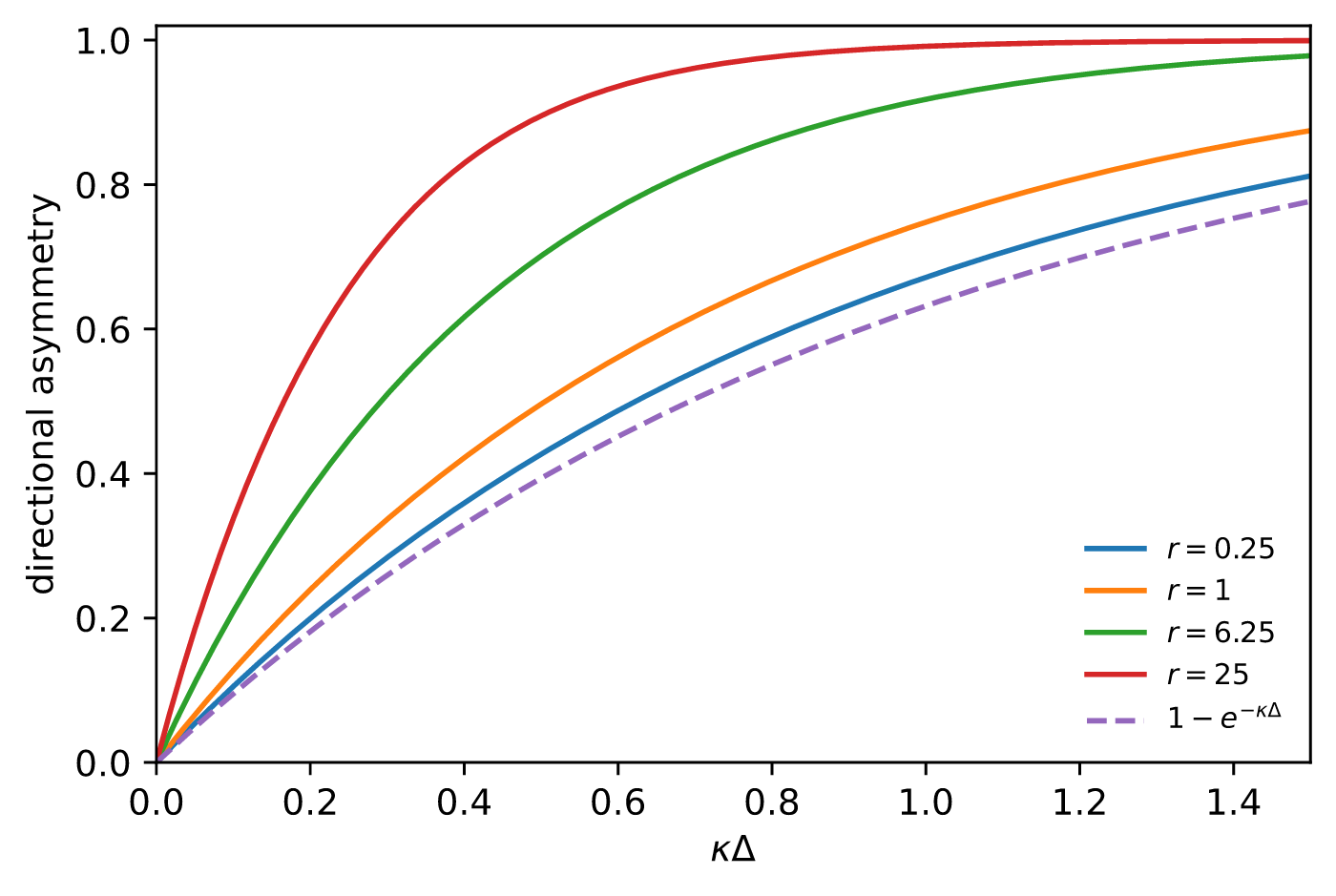
Exact directional asymmetry (\bar{\Psi}_{21}-\bar{\Psi}_{12})/(\bar{\Psi}_{21}+\bar{\Psi}_{12}) in the symmetric
Figure 2: Exact directional asymmetry (\bar{\Psi}_{21}-\bar{\Psi}_{12})/(\bar{\Psi}_{21}+\bar{\Psi}_{12}) in the symmetric pure-delay model against \kappa\Delta , for si…

Also notable2

03

LLMs Assess Correctness but Not Contribution

GPT-4o evaluates research correctness with predictive value for publication but cannot judge originality or significance, suggesting technical peer review can delegate to models while contribution assessment requires people.

Fanfare 4LLMs & TextHai Lu et al.PDF

10

Earnings-Call Passiveness and Stock Returns

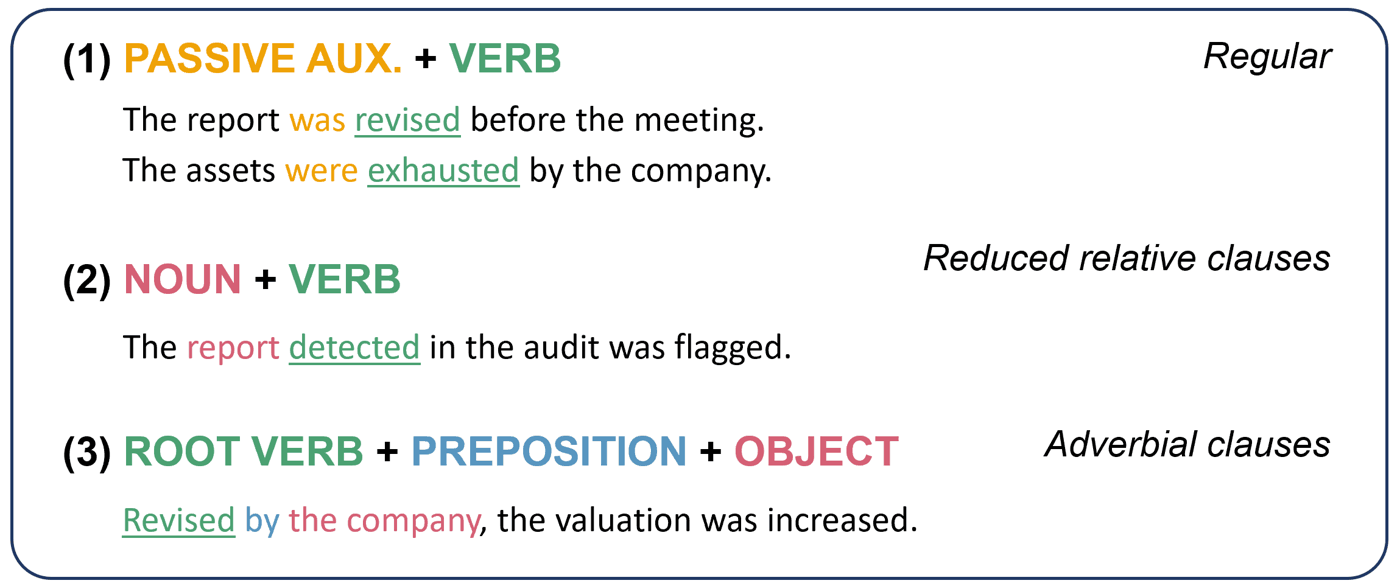
Passive-voice fraction in earnings calls predicts temporary mispricings for good news and longer-run underperformance for bad news, independent of standard sentiment measures.

Fanfare 3Asset Pricing & FactorsLynn Tao et al.PDF

Simplified matching rules Example
Figure 4 . Simplified matching rules Example

SSRN

New working papers in finance, economics and ML

30 papers

LLMs & Text3

01

LLM-Based Trading Systems Survey

A survey of 47 LLM trading systems across six markets finds that reported margins shrink or vanish when rerun, with best evidence placing language models upstream of execution.

Fanfare 4LLMs & TextYebo Feng et al.

11

Analyst Sentiment Predicts M&A Deal Failure

Language models analyzing analyst tone in M&A calls reveal that fear and anxiety about deals predict completion delays, failure, and long-run underperformance even when markets initially react favorably.

Fanfare 3LLMs & TextRuiyuan Chen et al.

29

NoLBERT News Topics and Stock Returns

A news reader trained only on pre-1995 text produces stable topics but earns 1.12 monthly Sharpe via ensemble with other readers, significant before multiple-testing adjustment.

Fanfare 2LLMs & TextShivesh Prakash et al.

Asset Pricing & Factors6

02

Factor Zoo Reallocation Across Market Segments

Rejected factors earn 1.30 Sharpe in their home market versus 0.85 overall, yielding 3.8% six-factor alpha per year through venue reallocation constrained by signal-to-noise limits.

Fanfare 4Asset Pricing & FactorsHuannian Jin

06

Infinite Factor Structure in Asset Pricing

The research reveals that pooling returns across market states creates an infinite-factor structure unconditionally, meaning infinitely many priced components and no finite principal-component basis for expected returns.

Fanfare 4Asset Pricing & FactorsMikhail Chernov et al.

08

Tail Risk and Equity Premium Prediction

Using partial least squares on 18 tail-risk proxies, the study constructs an index that strongly predicts the equity premium both in- and out-of-sample.

Fanfare 3Asset Pricing & FactorsYakun Liu and Lei Zhang

17

Consumption-Implied Stock Valuation Cycle

Stock prices and consumption share a long-run trend whose deviations mean-revert and predict market returns over one to two years, identifying consumption as a macroeconomic anchor for asset values.

Fanfare 3Asset Pricing & FactorsCarlo A. Favero et al.

19

Size Premium in Brazilian Equity and Credit

The study finds no equity size premium in Brazil, but an unexplained 6.8 to 8.8 percentage point credit spread for small firms that rises sharply with corporate delinquency.

Fanfare 3Asset Pricing & FactorsRuben Xavier De Freitas

26

Shiller CAPE Predictive Power Over 140 Years

The CAPE ratio significantly predicts ten-year real stock returns across 1881–2023 even after rigorous statistical tests, with out-of-sample predictive power highly dependent on market regime.

Fanfare 3Asset Pricing & FactorsSanay Kotian

Derivatives & Volatility2

03

Pre-Registered Rates and Currency VaR

A frozen Gaussian VaR model, pre-registered and anchored in Bitcoin, passed coverage tests but showed clustering in 2020, 2022 and 2023, while exponentially weighted variance improved.

Fanfare 4Derivatives & VolatilityRishith Sharma

25

Synthetic Leverage Costs in Leveraged ETFs

Single-stock leveraged ETFs incur excess financing costs averaging 6.2% annually through total-return swaps, fully passed to investors and substantially larger than disclosed expense ratios.

Fanfare 3Derivatives & VolatilityJinming Xue et al.

Trading, Microstructure & Execution7

04

Pre-Registered Trading Strategy Search Results

A blockchain-verified sweep of 18,630 cryptocurrency and FX trading variants found no strategies exceeding a Deflated Sharpe of 0.95, with median detectable Sharpe of 3.49 and collective underperformance versus random selection.

Fanfare 4Trading, Microstructure & ExecutionMobin Moharami Gargari

13

Liquidity Reweighting for ML Return Forecasts

Trading-cost aware portfolio construction that reweights holdings by liquidity and trades only when forecasts exceed the bid-ask spread lifts net Sharpe from negative to positive on machine learning predictions.

Fanfare 3Trading, Microstructure & ExecutionDaniele Bianchi and Teng Jiao

14

Arbitrage in Logically Related Prediction Markets

Integer programming identifies arbitrage across linked prediction-market contracts where prices violate logical constraints, recovering 1.9 million relations and earning 2.2% guaranteed profit after spreads and fees.

Fanfare 3Trading, Microstructure & ExecutionDaojing Zhai and Hongjian Shi

16

Index Rebalancing Price Pressure in Bonds

Month-end index rebalancing that increases duration generates predictable demand and 1.19 basis points of monthly return concentrated on the rebalancing day in government bond futures.

Fanfare 3Trading, Microstructure & ExecutionAmar Soebhag et al.

20

High-Frequency Trading Quality in China

Order-level latency variation at China's exchange shows that HFT raises short-horizon price noise and adverse-selection costs but slightly improves pricing efficiency.

Fanfare 3Trading, Microstructure & ExecutionLi Guo et al.

23

Repo Haircuts and Dealer Constraints

The study shows that dealer balance-sheet constraints, collateral convenience yields, and client outside options jointly determine repo haircuts, with leverage ratios reshaping market functioning and monetary policy transmission.

Fanfare 3Trading, Microstructure & ExecutionBenedikt Ballensiefen et al.

27

Currency Risk in Remittance Markets

Exchange-rate hedging costs explain about 16 percent of remittance fees, especially in thin currency markets, and induce operators to adjust variable fees while raising exit risk.

Fanfare 3Trading, Microstructure & ExecutionLeonardo Flori and Nicola Limodio

Econometrics & Forecasting2

05

Itô Formula for Rough Volatility Inference

A new calculus framework for rough volatility below the semimartingale regime enables bias-corrected estimation of leverage effects and roughness with central limit theorems, rejecting semimartingale assumptions for recent S&P data.

Fanfare 4Econometrics & ForecastingHaijian GUO et al.

09

Machine Learning Forecasts Systemic Crises

Random forests and gradient boosting forecast financial crises across 147 years and 17 countries with 77 percent accuracy, using real-sector predictors as the dominant source.

Fanfare 3Econometrics & ForecastingEmile du Plessis and Ulrich Fritsche

ML & AI Methods4

07

Machine Learning Methods in Asset Pricing

A survey reviews machine learning methods for predicting stock returns in time series and cross-section, covering LASSO regularization, deep learning, genetic programming, and LLM applications.

Fanfare 3ML & AI MethodsDavid Rapach and Guofu Zhou

10

Transformer Stock Prediction Across Horizons

Transformer-based models capture pricing signals via self-attention that boost out-of-sample Sharpe ratios across one-, three-, six-, and twelve-month stock return forecasts, outperforming standard machine learning approaches.

Fanfare 3ML & AI MethodsTobias Cramer et al.

18

CNN Term-Structure Surfaces for Commodity Carry

Encoding commodity futures curves as time-maturity surfaces and applying convolutional networks extracts carry information that predicts returns beyond standard factors and improves the mean-variance frontier.

Fanfare 3ML & AI MethodsYuecheng Jia et al.

22

Model Capacity and Signal-to-Noise Tradeoff

Comparing predictive models across US and Indian equity markets shows that additional capacity helps when signal is strong but not when it is weak, with simplest models matching complex ones in high-noise regimes.

Fanfare 3ML & AI MethodsYash Vats

Portfolio & Allocation3

12

Pooled ML for International Multi-Asset Allocation

Machine learning forecasts of equity, bond, bill and housing returns from 1870-2020 across 16 countries improve Sharpe ratios substantially when trained on pooled cross-country data rather than country-specific samples.

Fanfare 3Portfolio & AllocationRay Friedenberger and Felix Reichenbach

28

Regimes to Portfolios via Gradient Boosting

An interpretable machine-learning framework linking regime identification to cross-asset portfolio construction earns 0.60 net Sharpe, not significantly different from a 60/40 benchmark.

Fanfare 2Portfolio & AllocationChalam Raja Ankam

Crypto & DeFi2

21

Jump Risk Premiums in Cryptocurrency

Cryptocurrencies sensitive to positive market jumps earn lower returns, a negative premium unexplained by coskewness and strongest when retail sentiment is high.

Fanfare 3Crypto & DeFiSuzanne S. Lee and Minho Wang

24

Electoral Risk and Crypto Connectedness

Elections in major democracies raise cryptocurrency correlation, reducing portfolio diversification, with the effect driven by shifting expectations about future regulatory environments.

Fanfare 3Crypto & DeFiYuan Tian and Yao Zheng

Also notable1

15

Fed Deposits and Bank Lending Through Primary Dealers

The study shows deposit inflows from quantitative easing at primary dealers predict subsequent lending and employment growth in exposed counties, revealing a concentrated channel for monetary transmission.

Fanfare 3Macro-Finance & RatesTuo Yang

RePEc

Working papers curated by RePEc's NEP field reports

30 papers · 24 figures

LLMs & Text2

01

Large Language Models in Economics Research

A review of LLM applications finds that contextual interpretation improves some tasks but measurement error persists, and trading signals do not always generate profits.

Fanfare 4LLMs & TextZongwu Cai et al.PDF

05

Transformer Models for Financial Sentiment

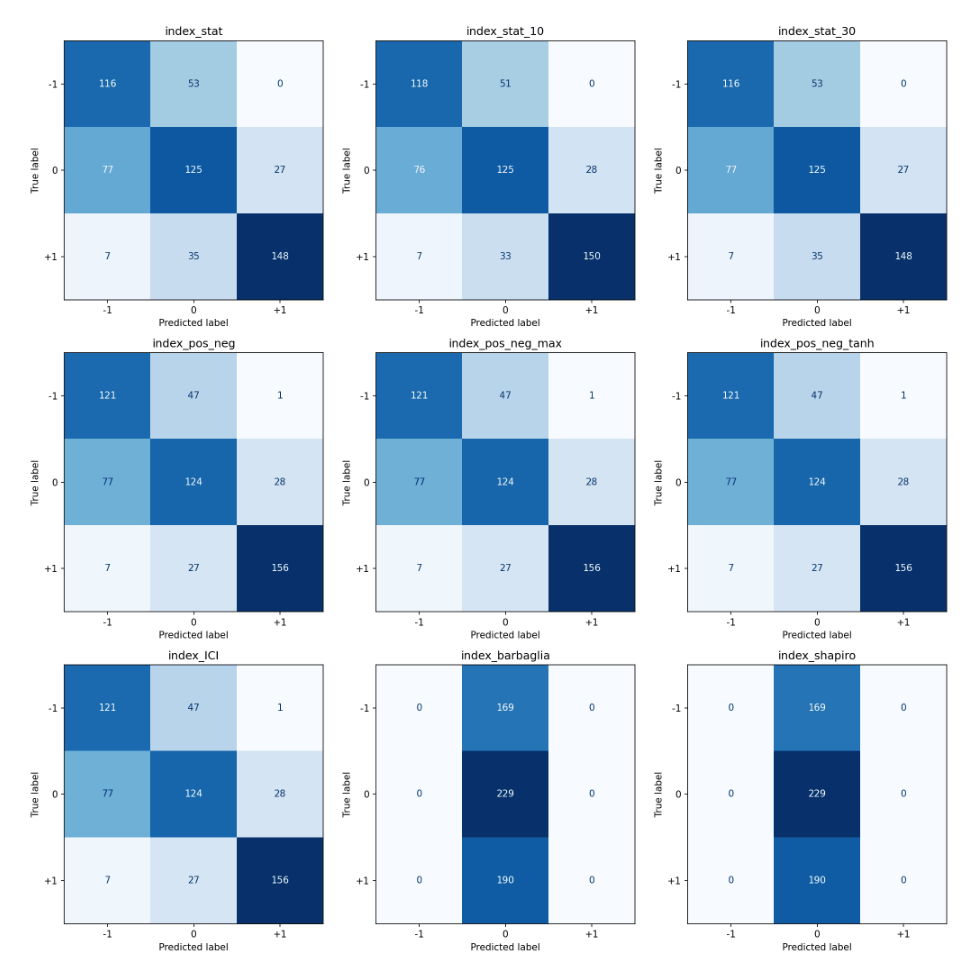
FinBERT-based sentiment measures agree more closely with human raters than dictionary methods and better distinguish positive, neutral, and negative financial news articles.

Fanfare 3LLMs & TextStefano Borgioli et al.PDF

Confusion matrices comparing transformer-based and dictionary sentiment measures against human labels
Figure 5: Confusion matrices by sentiment measure. Rows correspond to human sentiment la- bels and columns to predicted labels. Transformer-based measures show substanti…

Crypto & DeFi3

02

Whale Trades and Cryptocurrency Market Dynamics

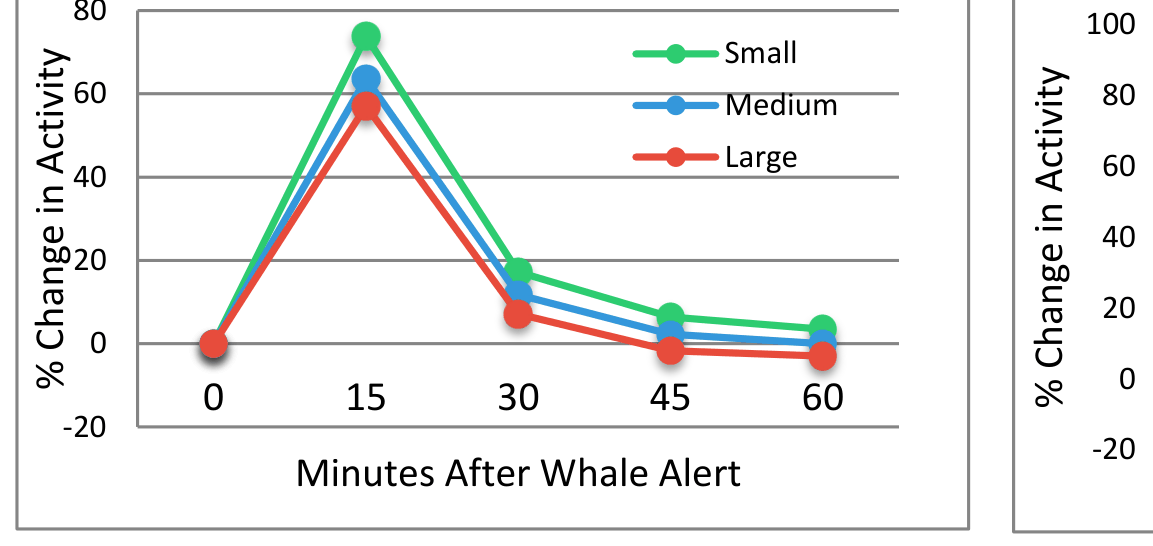
Large bitcoin trades reshape participant composition and trigger herding, raising volatility, while ethereum whales produce minimal market impact, revealing persistent information asymmetries.

Fanfare 3Crypto & DeFiKeith HazenPDF

Percentage change in non-whale buy activity peaks 15 minutes after whale alerts across investor sizes.
Figure 2: Percentage Change in Ratio of Non-whale Participation Buy (Sell) Following Whale Buy (Whale Sell) Relative to the Control Periods The plots below explore chang…
11

Private Money History and Stablecoins

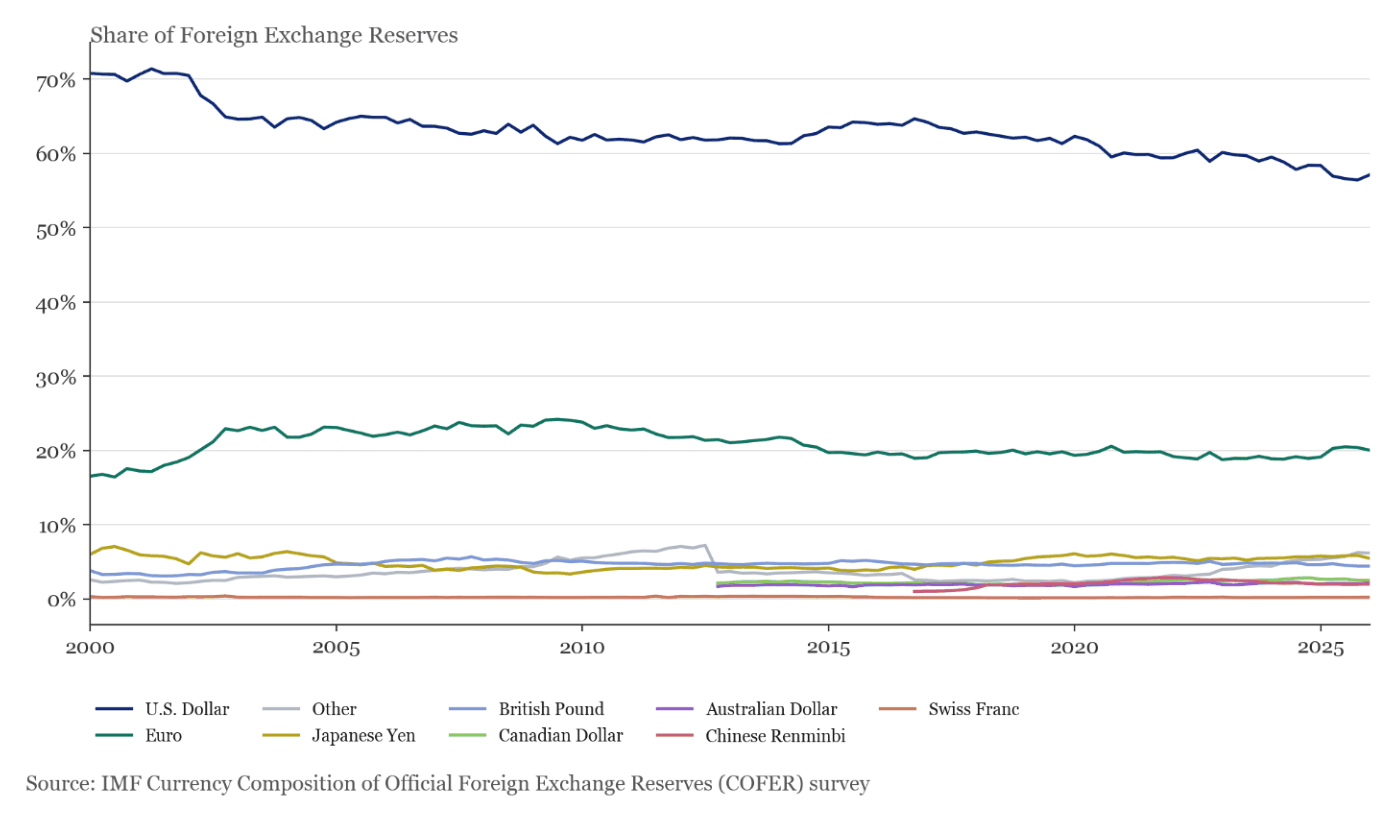
The paper uses monetary history to identify five institutional foundations for scalable private money and assesses how contemporary stablecoins and the GENIUS Act address them.

Fanfare 3Crypto & DeFiMichael D. Bordo and Carolyn A. WilkinsPDF

Official Foreign Exchange Reserves by Currency
Figure 2: Official Foreign Exchange Reserves by Currency
24

Cryptocurrency Dependence Under Market Stress

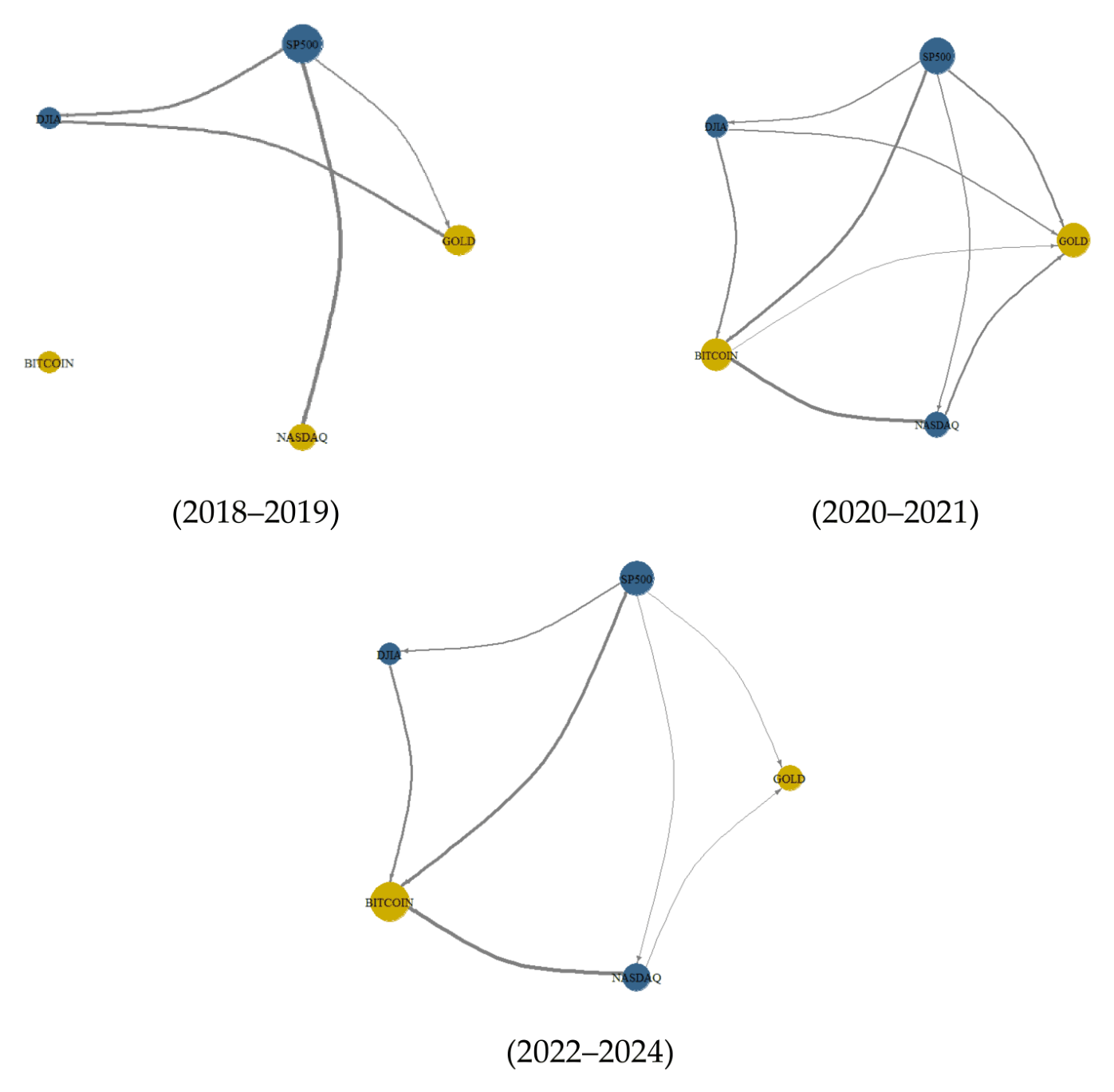
The study proposes a multi-stage method combining neural networks and copulas to detect regime changes and finds cryptocurrency dependence with traditional assets increases sharply during crises.

Fanfare 2Crypto & DeFiVirginie Terraza and Aslı Boru İpekPDF

Network graphs showing cryptocurrency connectedness with traditional assets across crisis and normal periods
Figure 3. Connectedness between financial markets.

Risk, Credit & Banking5

03

NBFIs as Crisis Shock Absorbers

Nonbank financial institutions contract loan syndication during banking crises but expand bond underwriting, helping firms that maintain NBFI relationships weather downturns better.

Fanfare 3Risk, Credit & BankingBruno Albuquerque and Melih FiratPDF

16

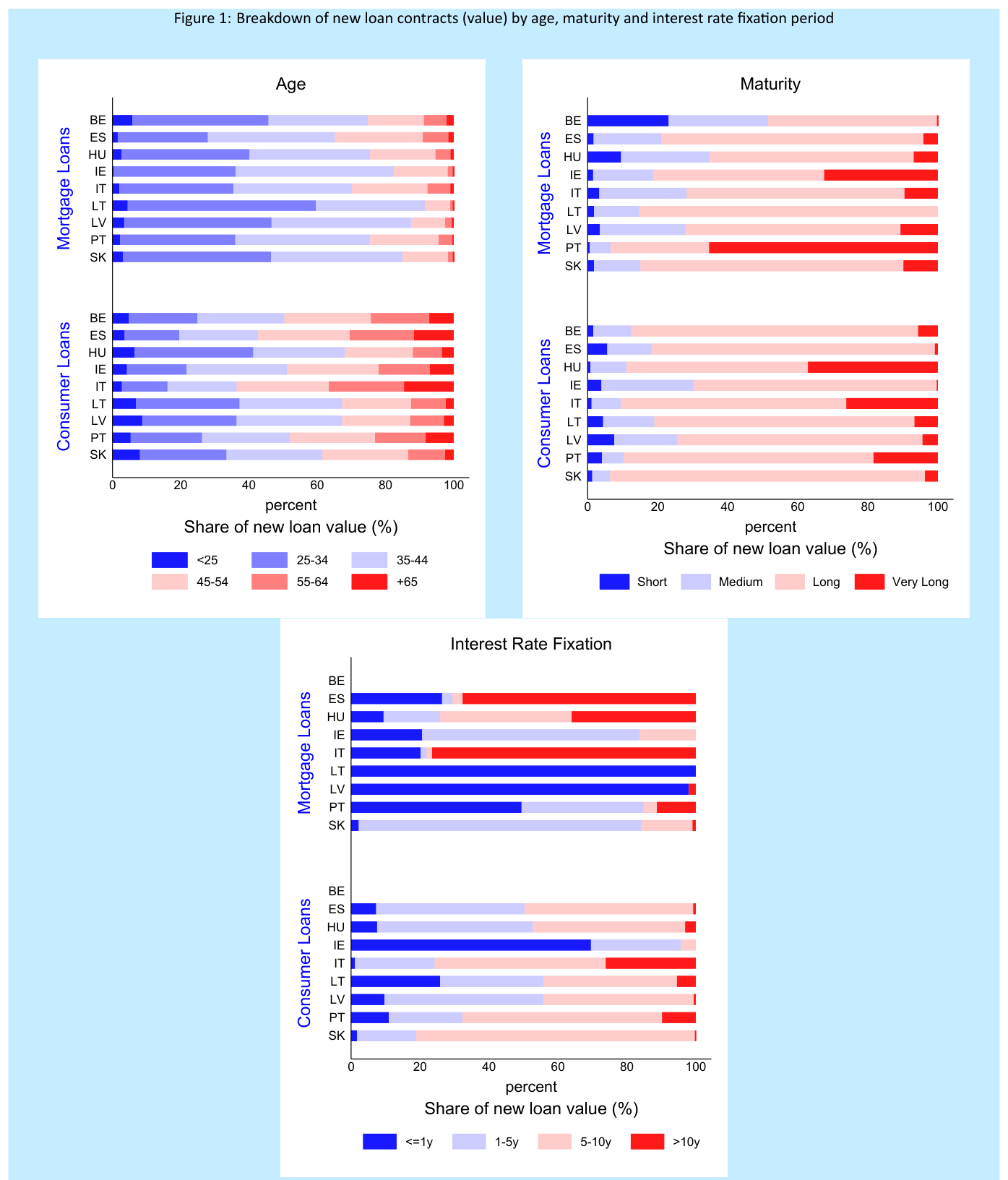
Monetary Pass-Through in European Credit Markets

ECB tightening passes nearly fully to mortgage rates but weakly to consumer credit, with younger borrowers facing stronger mortgage pass-through than older ones.

Fanfare 2Risk, Credit & BankingOlivier De Jonghe et al.PDF

Horizontal bar charts comparing pass-through effects by age, maturity, and interest rate position across credit markets.
19

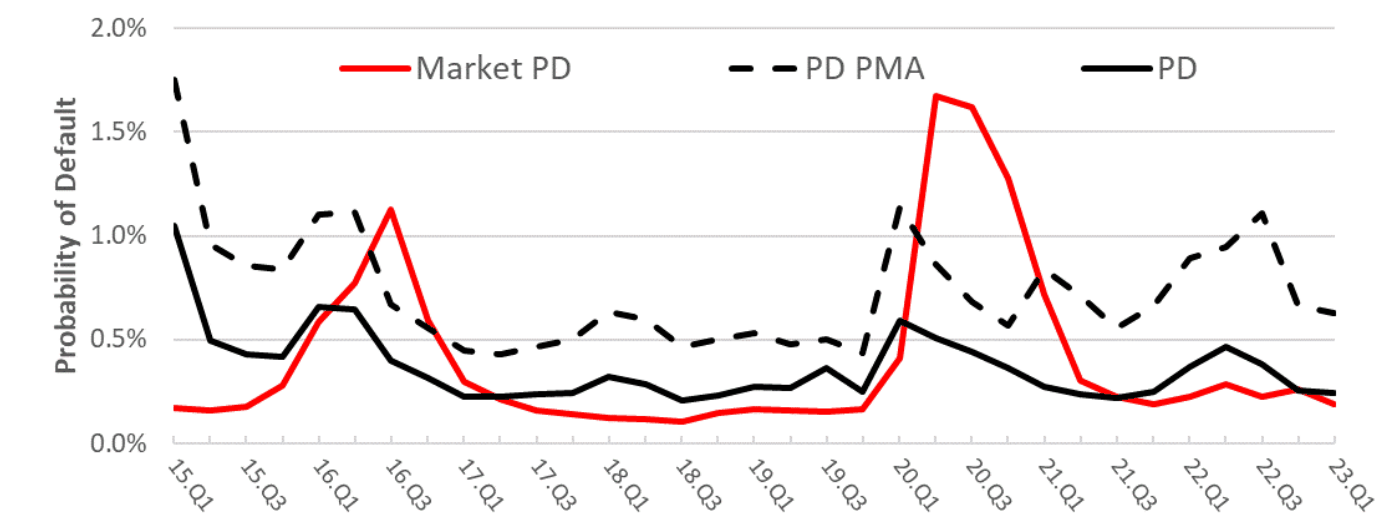
Solvency-Liquidity Bank Stress Testing

A stochastic balance-sheet model quantifies how solvency and liquidity risks interact, finding that amplification effects from behavioral responses explain roughly one-third of default risk.

Fanfare 2Risk, Credit & BankingGiovanni Covi and Tihana ŠkrinjarićPDF

Weighted Average Probability of Default Comparison with Market Estimates
Figure 5: Weighted Average Probability of Default Comparison with Market Estimates
26

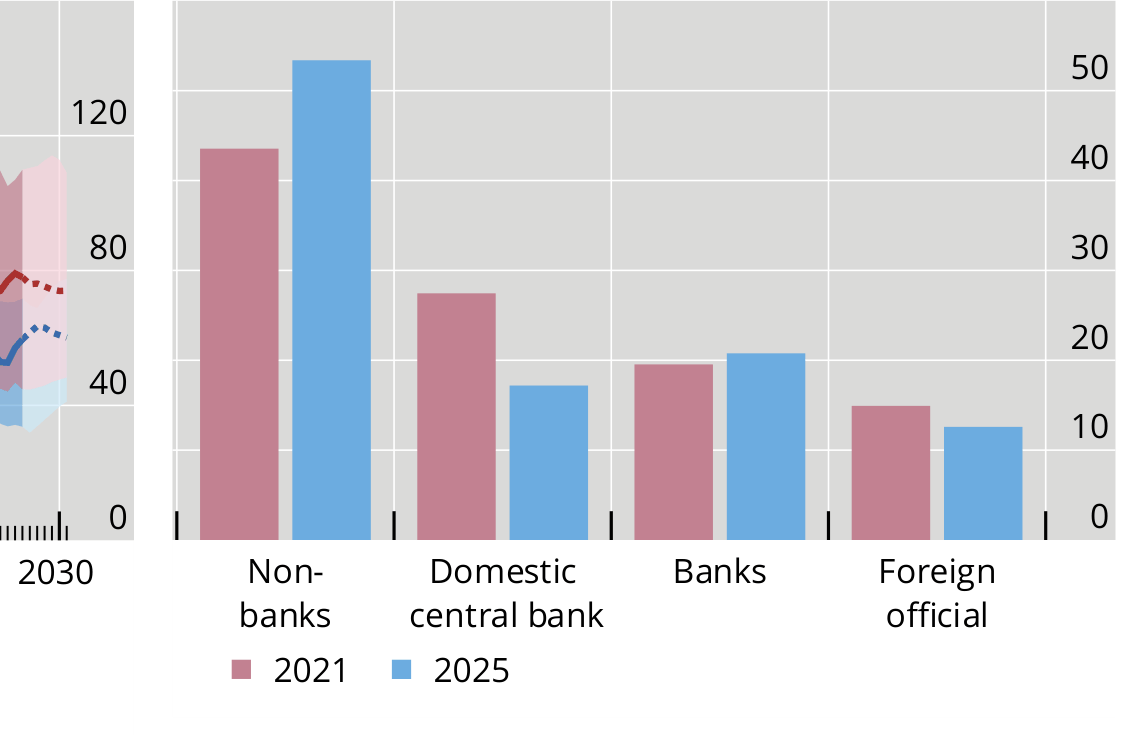
Government Debt, Non-Banks, and Market Dysfunction

The analysis finds high public debt and growing non-bank footprint increase the risk of market dysfunction in government debt markets while making very favorable conditions more likely.

Fanfare 2Risk, Credit & BankingMathias Drehmann and Sonya ZhuPDF

Bar chart comparing non-banks, domestic central bank, banks, and foreign official holders of government debt between 2021 an…
Graph 1 As a percentage of GDP

ML & AI Methods2

04

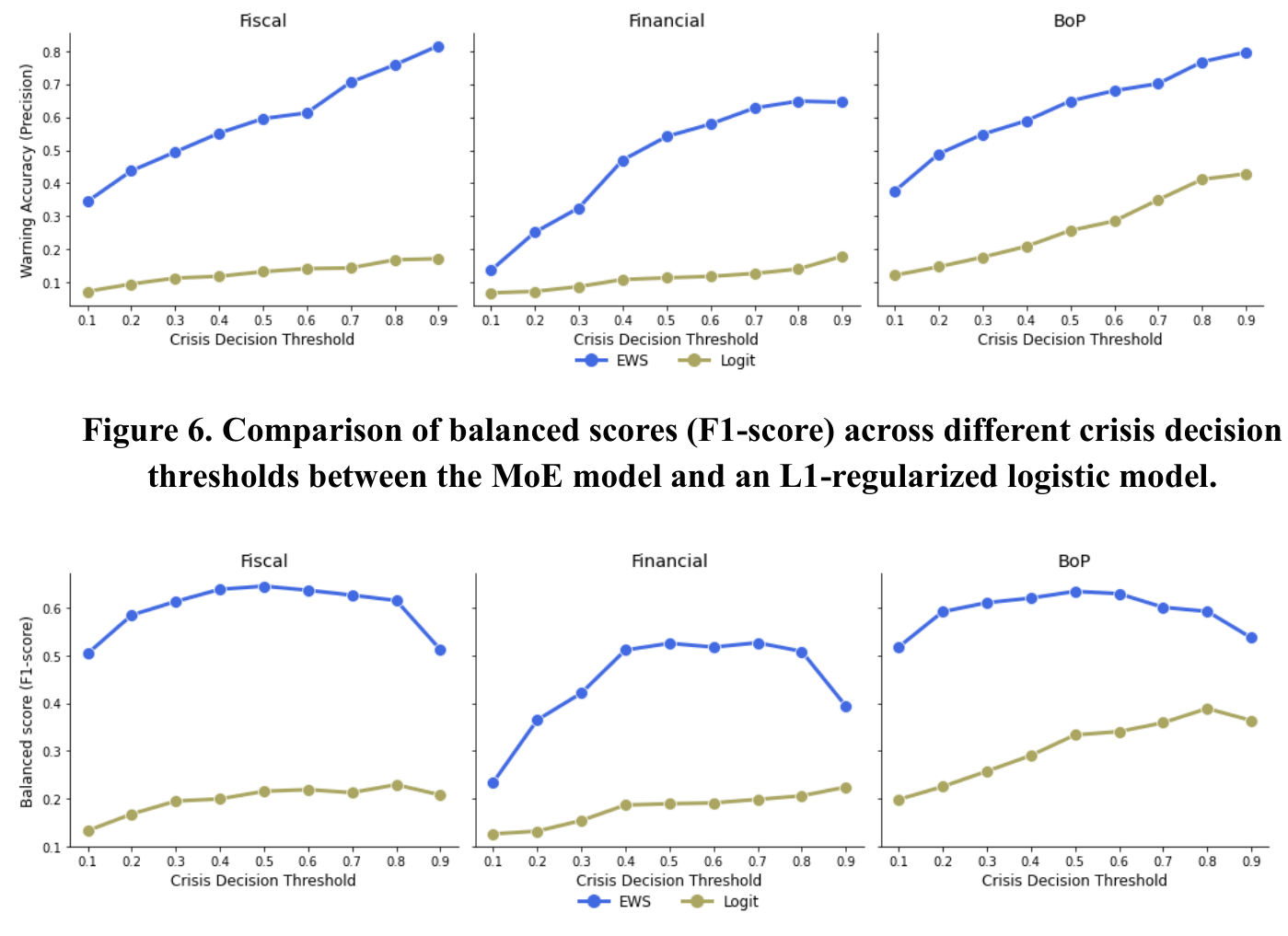
Macro-Financial Crisis Prediction Framework

A mixture-of-experts approach combining ensemble models and logistic regression predicts developing-economy crises while decomposing risk into interpretable fiscal and financial components.

Fanfare 3ML & AI MethodsFrancisco Blasques et al.PDF

Comparison of balanced scores (F1-score) across different crisis decision
Figure 6. Comparison of balanced scores (F1-score) across different crisis decision
15

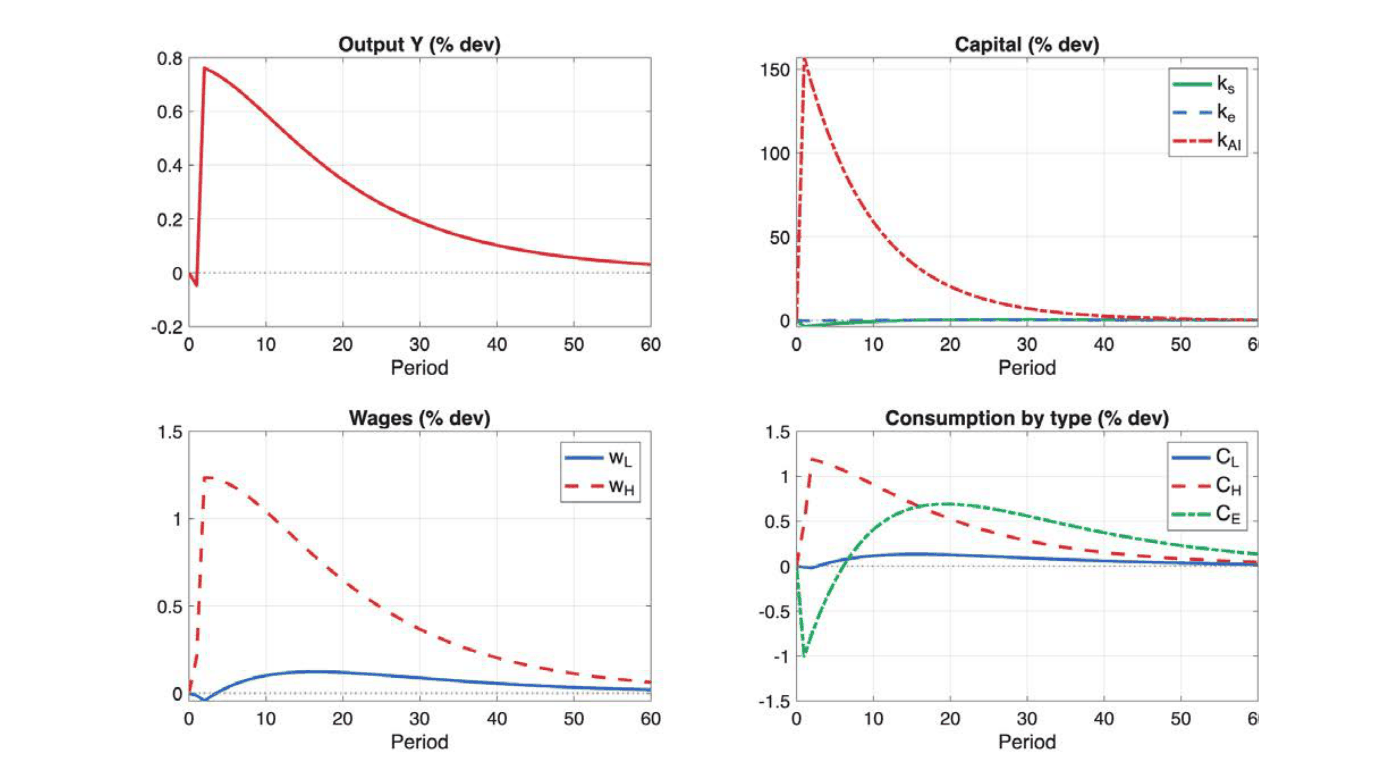
AI Capital and Skill Complementarity

A calibrated model finds AI complements high-skill workers and equipment, with AI price declines expansionary but increased usage contractionary due to complementarity constraints.

Fanfare 3ML & AI MethodsAndré Luduvice and Roberto PinheiroPDF
Transitory impulse response: halve AI price (ρ = 0.90)
Figure 5: Transitory impulse response: halve AI price (ρ = 0.90)

Asset Pricing & Factors4

06

Gold and Geopolitical Reserve Currency Risk

Rising geopolitical risk fragments safe-asset demand: countries shift toward gold when sanction risk heightens, raising gold prices and Treasury yields as US convenience yields fall.

Fanfare 3Asset Pricing & FactorsKai Arvai et al.PDF
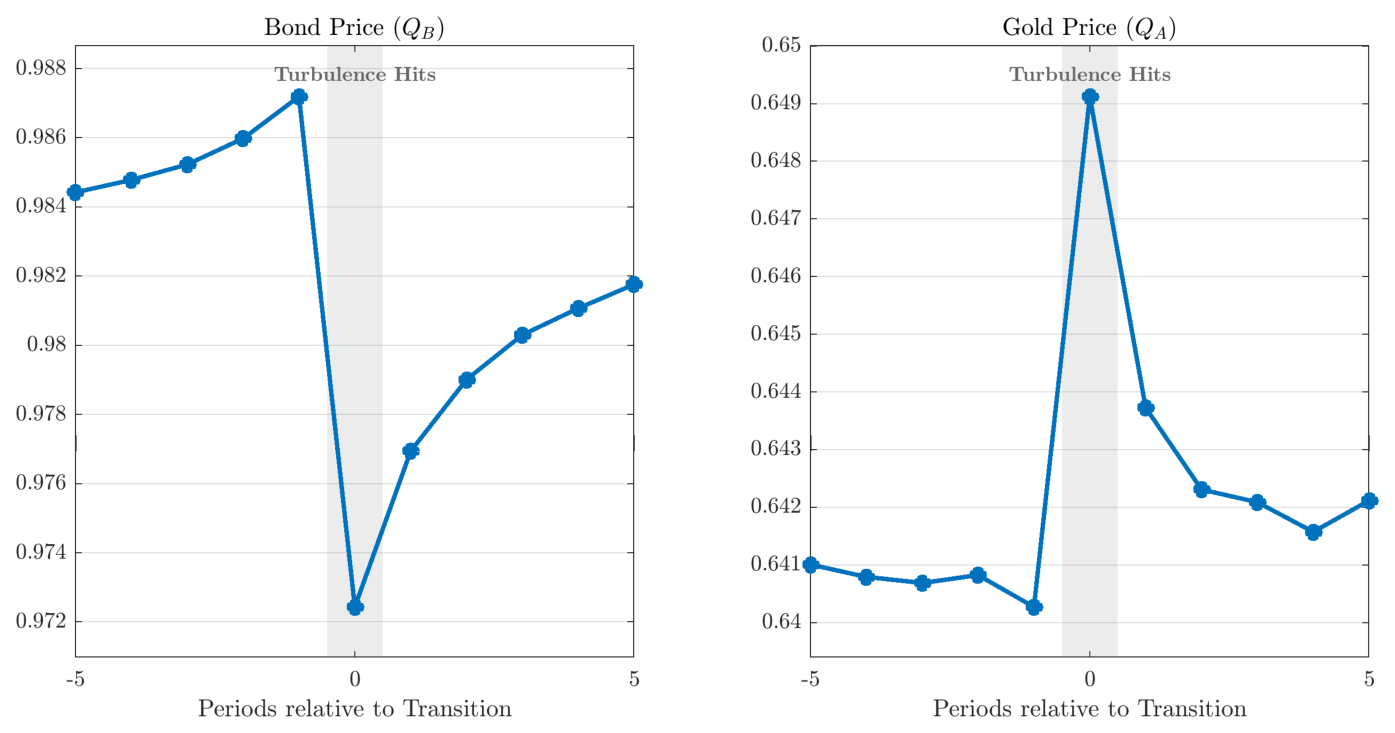
Bond and gold prices spike around geopolitical transition, showing flight-to-safety behavior.
Figure 3 Asset Prices Around the Transition to Geopolitical Turbulence
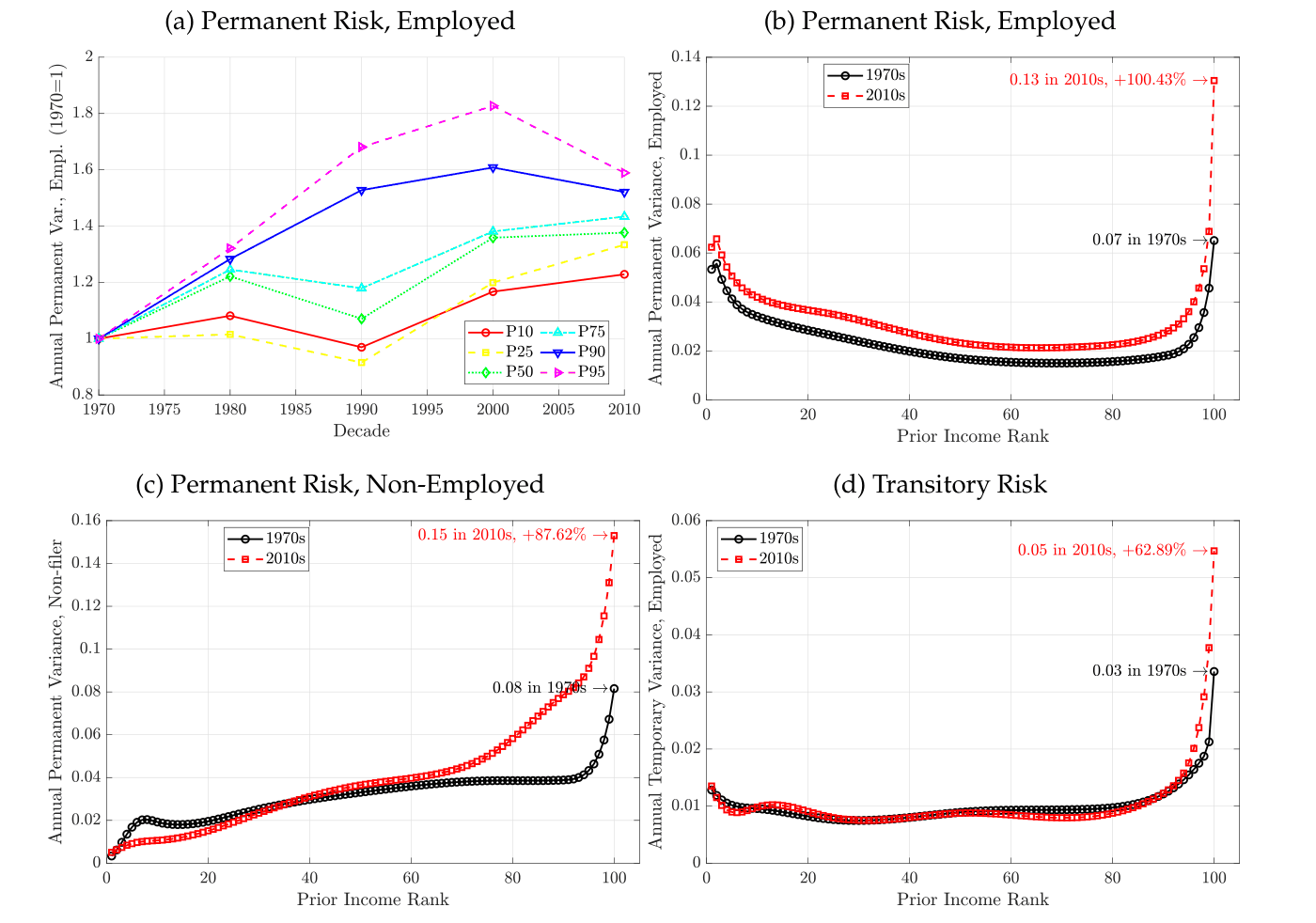
08

Rising Income Risk Among Top Earners

Analysis of IRS tax returns shows permanent income risk rose nearly 70% among the top 5% since the 1970s, depressing risk-free rates and widening wealth inequality.

Fanfare 3Asset Pricing & FactorsJ. Carter Braxton et al.PDF
Income risk evolution 1970-2010 across income percentiles for employed and non-employed households.
Figure 19: Evolution of Income Risk Using Adjusted Gross Income (AGI)
09

Climate Policy Uncertainty and Financial Stress

A structural VAR shows climate policy uncertainty depresses equities and raises financial stress through credit channels, creating supply-driven downturns distinct from conventional uncertainty shocks.

Fanfare 3Asset Pricing & FactorsSerena Ionta Massimo GuidolinPDF
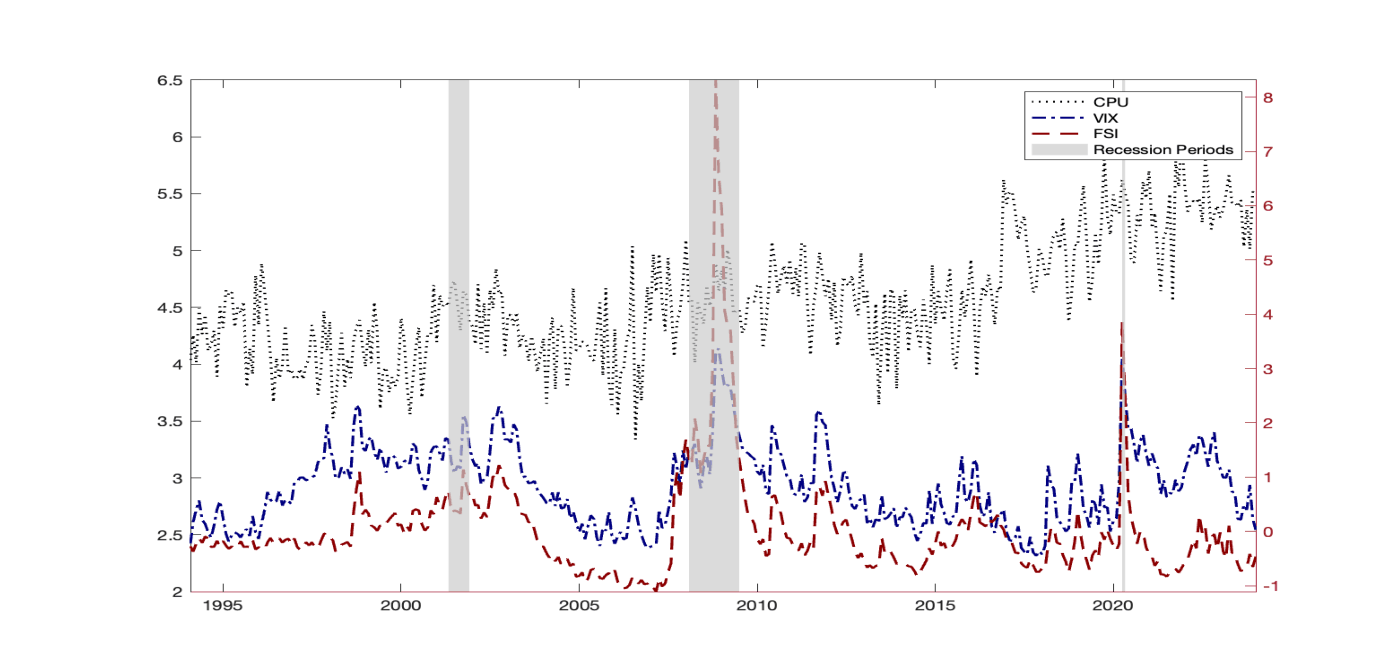
Uncertainty Measures
Figure 1 Uncertainty Measures
18

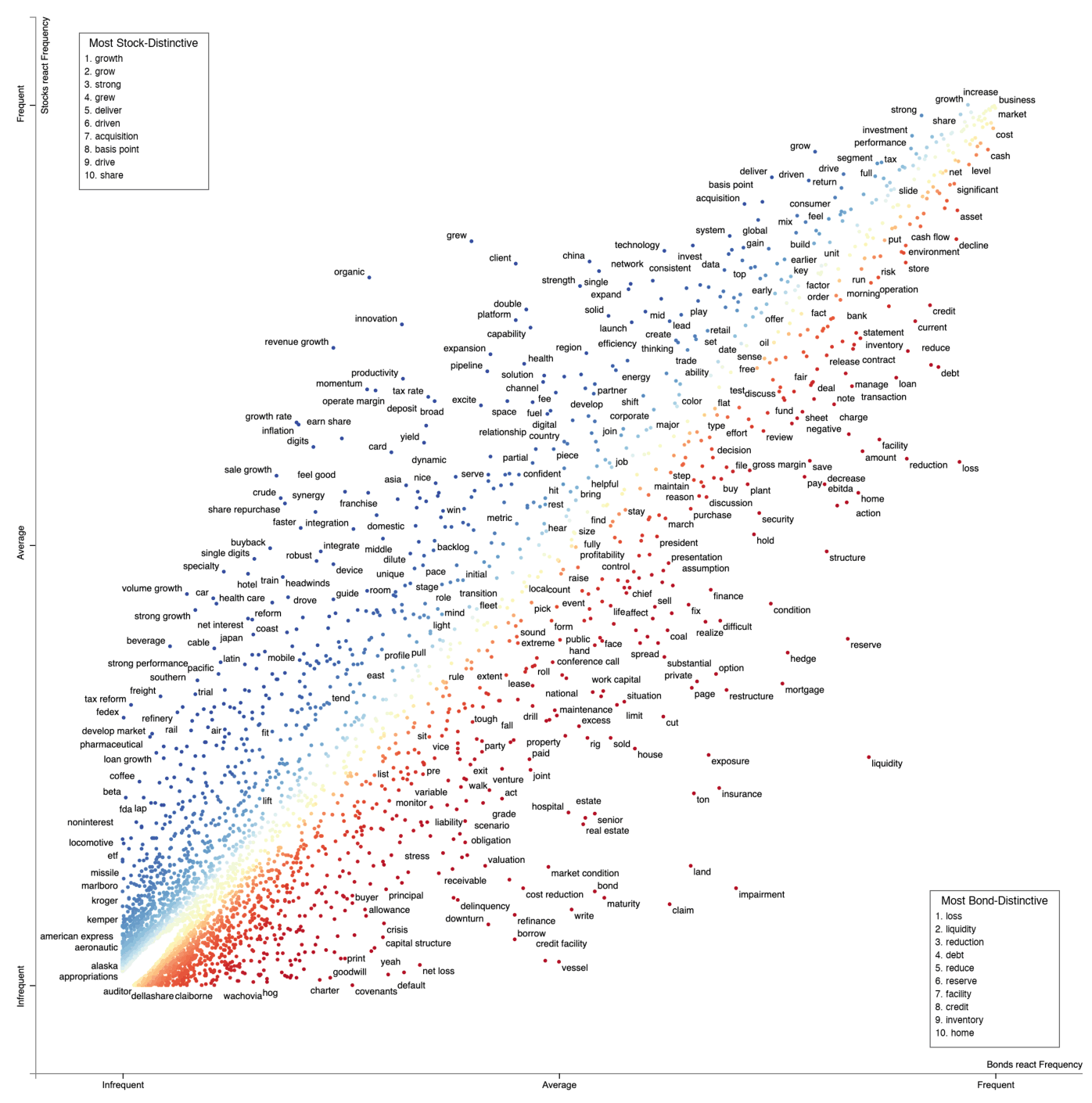
Debt Dictionaries in Financial Markets

Stock and bond investors extract different value signals from earnings calls, with bondholders emphasizing operations and risk while equityholders focus on growth and innovation.

Fanfare 2Asset Pricing & FactorsJawad Addoum et al.PDF

Scattertext Visualization of Stock and Bond Reactions
Figure 1: Scattertext Visualization of Stock and Bond Reactions

Macro-Finance & Rates8

07

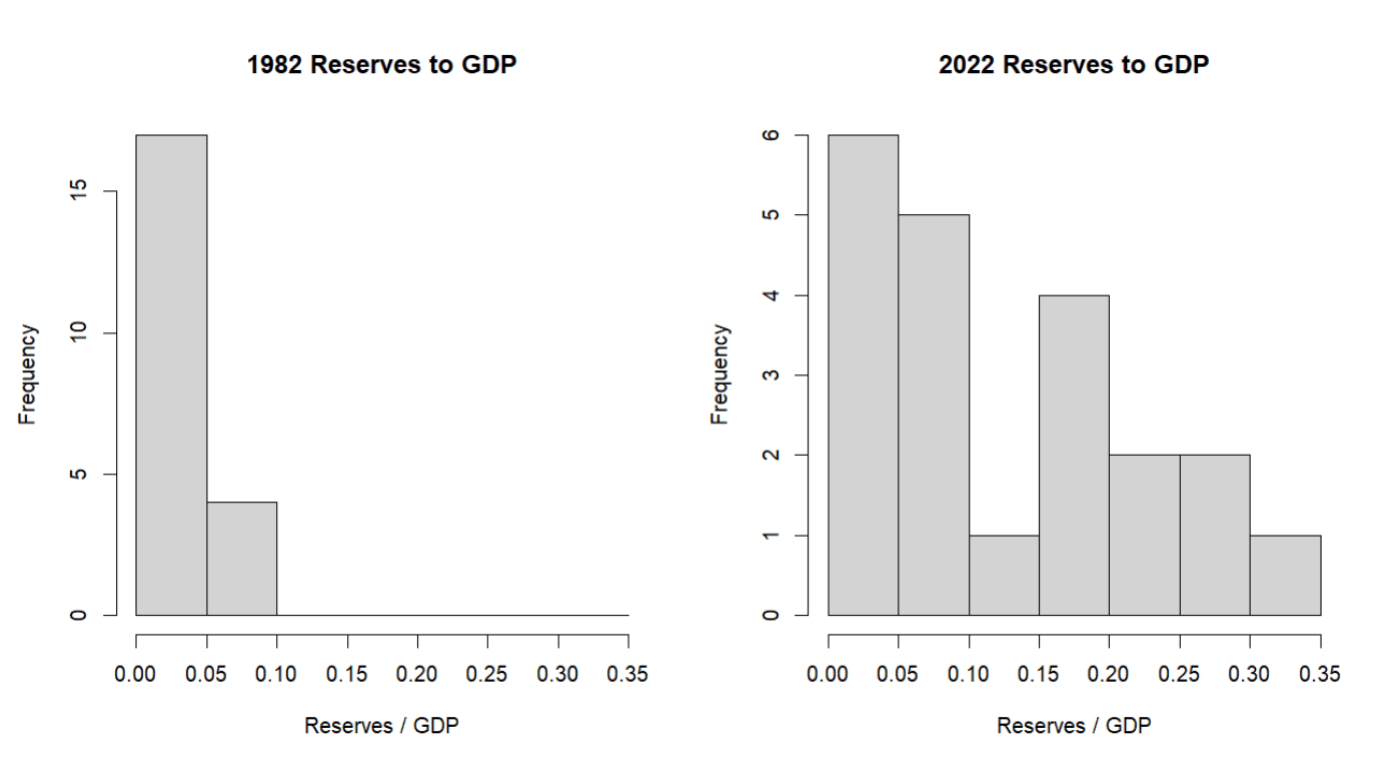
US Tightening and Emerging Market Resilience

The study compares monetary tightening in the 1980s and 2020s, finding that fiscal space—not exchange-rate flexibility alone—explains why emerging markets have avoided crisis this time.

Fanfare 3Macro-Finance & RatesDrishan Banerjee et al.PDF

Foreign exchange reserves to GDP ratios were much lower in 1982 than in 2022
Figure 6: Foreign exchange reserves to GDP ratios were much lower in 1982 than in 2022
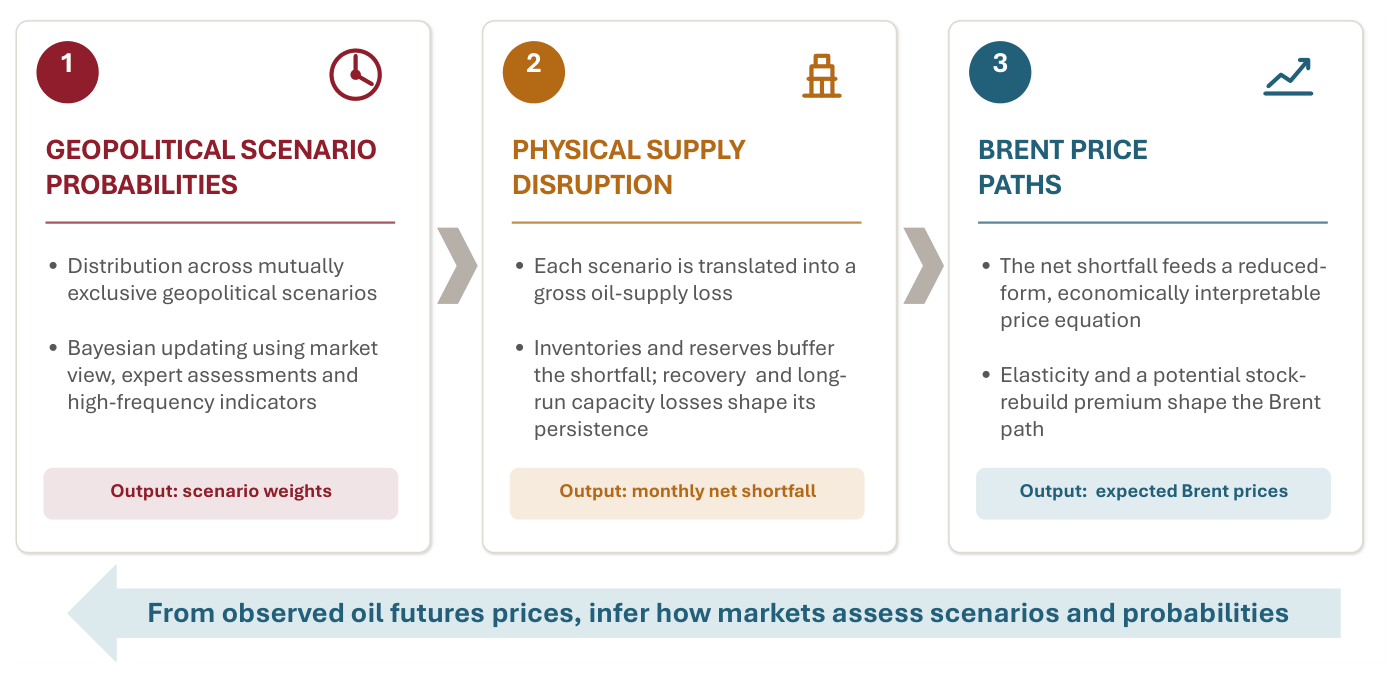
12

Bayesian Geopolitical Oil Price Scenarios

A framework maps Middle East geopolitical risk to oil prices and inflation through scenario analysis updated in real time using market prices and expert assessments.

Fanfare 3Macro-Finance & RatesIrma Alonso-Alvarez et al.PDF

Three-block operational framework: geopolitical scenarios to physical supply disruption to Brent price paths.
Figure 1: From geopolitical risk to oil prices: a three-block operational framework.
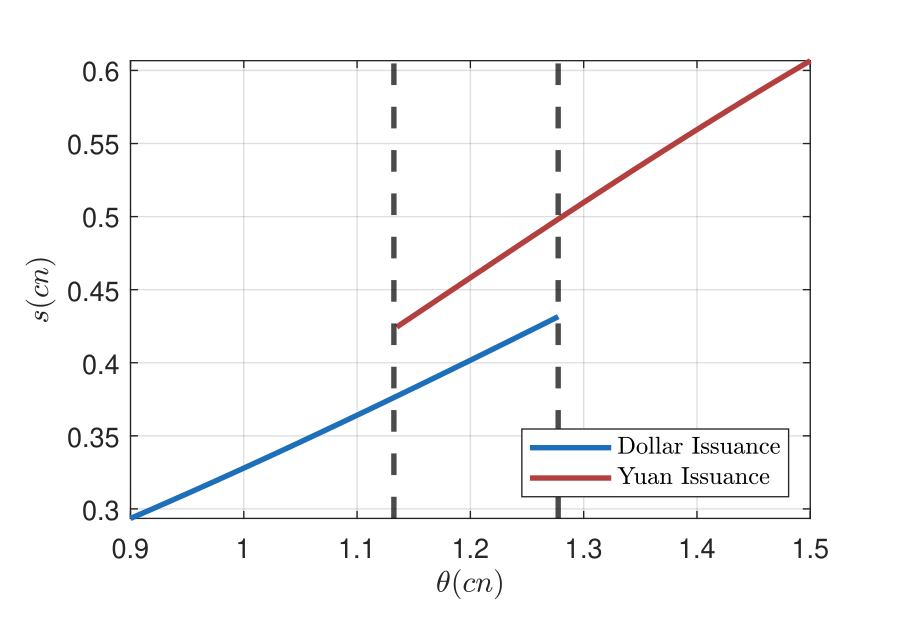
13

Financial Interdependence and Currency Competition

A model shows that as China's financial markets deepen, network effects allow the renminbi to compete with the dollar, triggering a discrete shift from cooperation to fragmentation.

Fanfare 3Macro-Finance & RatesZhengyang JiangPDF

Two curves showing dollar and yuan issuance equilibria across financial market depth parameters.
Figure 4: Multiple Equilibria with Three Countries
17

QE Effects Through Corporate Bond Markets

Bank of England quantitative easing lowered corporate bond yields but did not increase real investment; instead firms used proceeds for buybacks and reduced bank borrowing.

Fanfare 2Macro-Finance & RatesMahmoud Fatouh et al.PDF

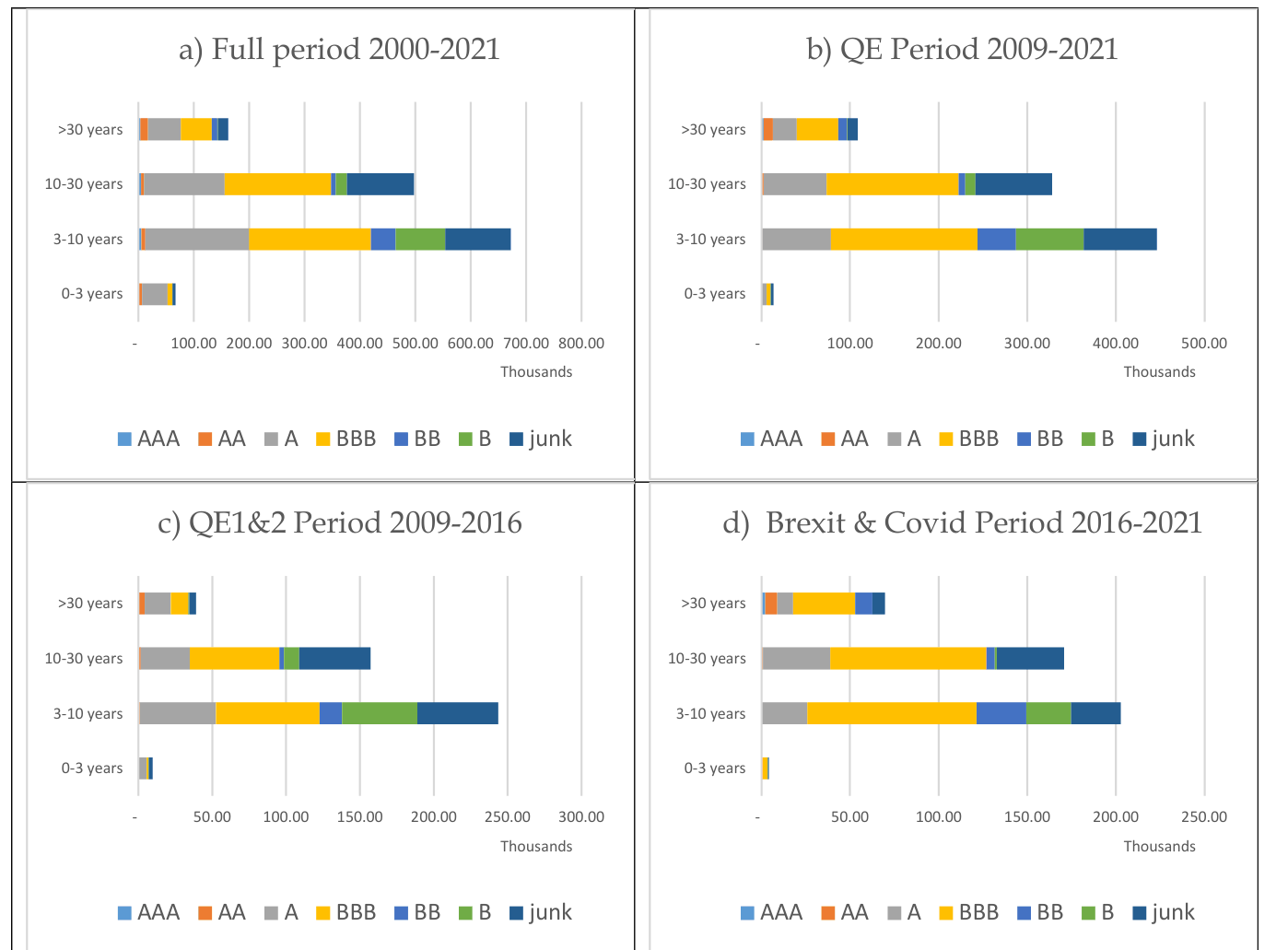
Maturity rating distribution of bond issuance
Figure 3: Maturity rating distribution of bond issuance
22

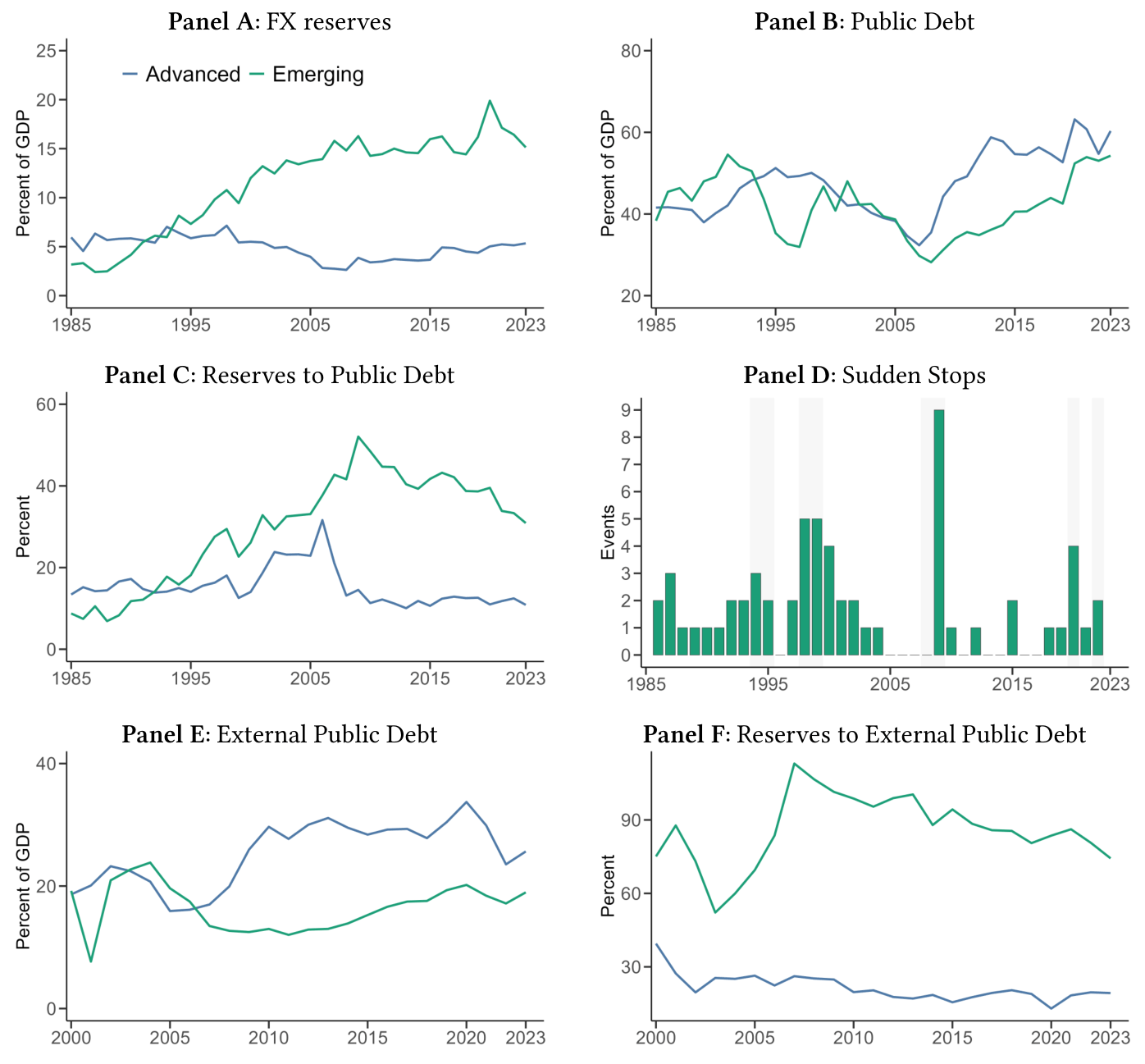
Reserve Accumulation and Sovereign Debt Dynamics

The research finds that reserve adequacy shapes how global financial shocks transmit to sovereign spreads and external debt in emerging markets, with over-accumulation dampening spread responses.

Fanfare 2Macro-Finance & RatesMateo Agustín FernándezPDF

Reserves, public debt, and sudden stops in emerging and advanced economies
Figure 1: Reserves, public debt, and sudden stops in emerging and advanced economies
25

Exchange Rates and Information-Driven Premia

A model shows asymmetric information about monetary policy can make exchange-rate risks uninsurable, generating foreign-exchange premia and opening a case for policy coordination.

Fanfare 2Macro-Finance & RatesMr. Suman S Basu and Pablo WinantPDF

29

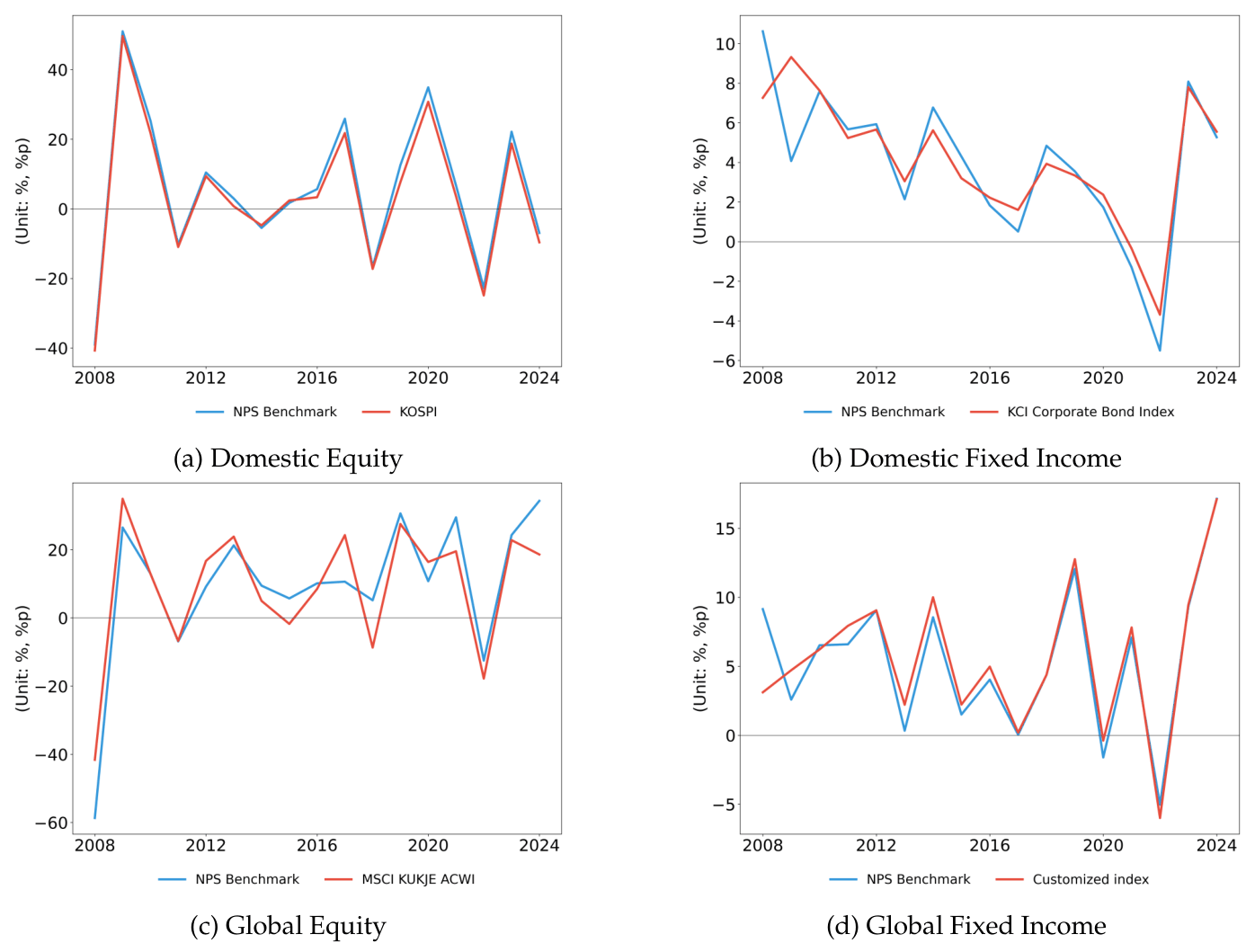
Public Carry Trades and Korea's Fiscal Sustainability

Korea's carry-trade strategy strengthens public net worth near-term but cannot offset projected deficits or restore long-term fiscal sustainability without reform.

Fanfare 2Macro-Finance & RatesYiLi Chien et al.PDF

Comparison of NPS reported returns with proxy indices
Figure 12: Comparison of NPS reported returns with proxy indices.
30

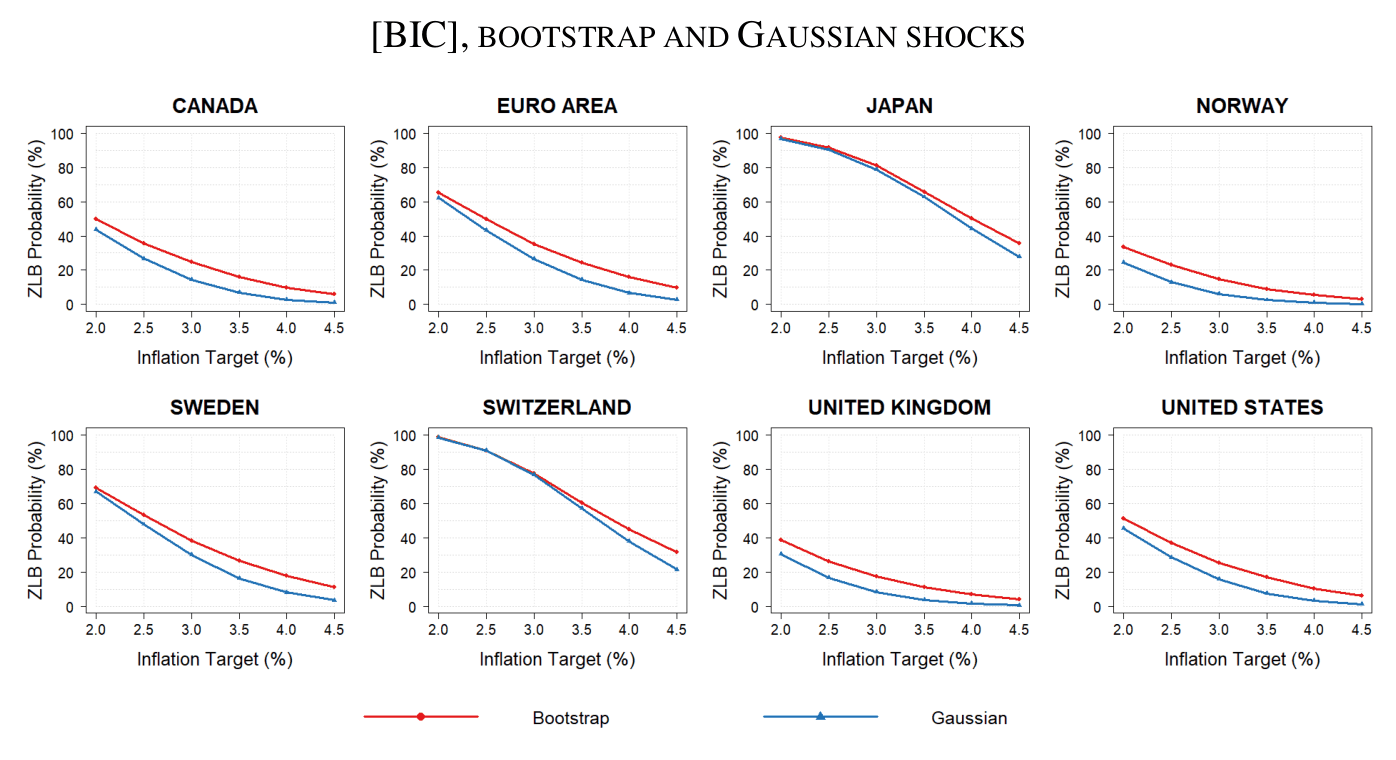
Inflation Targets and Zero Lower Bound Risk

Switzerland and Japan face the highest risk of hitting the zero bound under current inflation targets; higher average inflation substantially reduces this constraint.

Fanfare 2Macro-Finance & RatesAntónio Afonso and Leonardo ZorziPDF

Zero lower bound probability curves across eight countries by inflation target level.
FIGURE 3: CUMULATIVE PROBABILITY OF REACHING THE ZLB AT LEAST ONCE (%) – VAR (5)

Econometrics & Forecasting2

10

Inflation Inattention on Production Networks

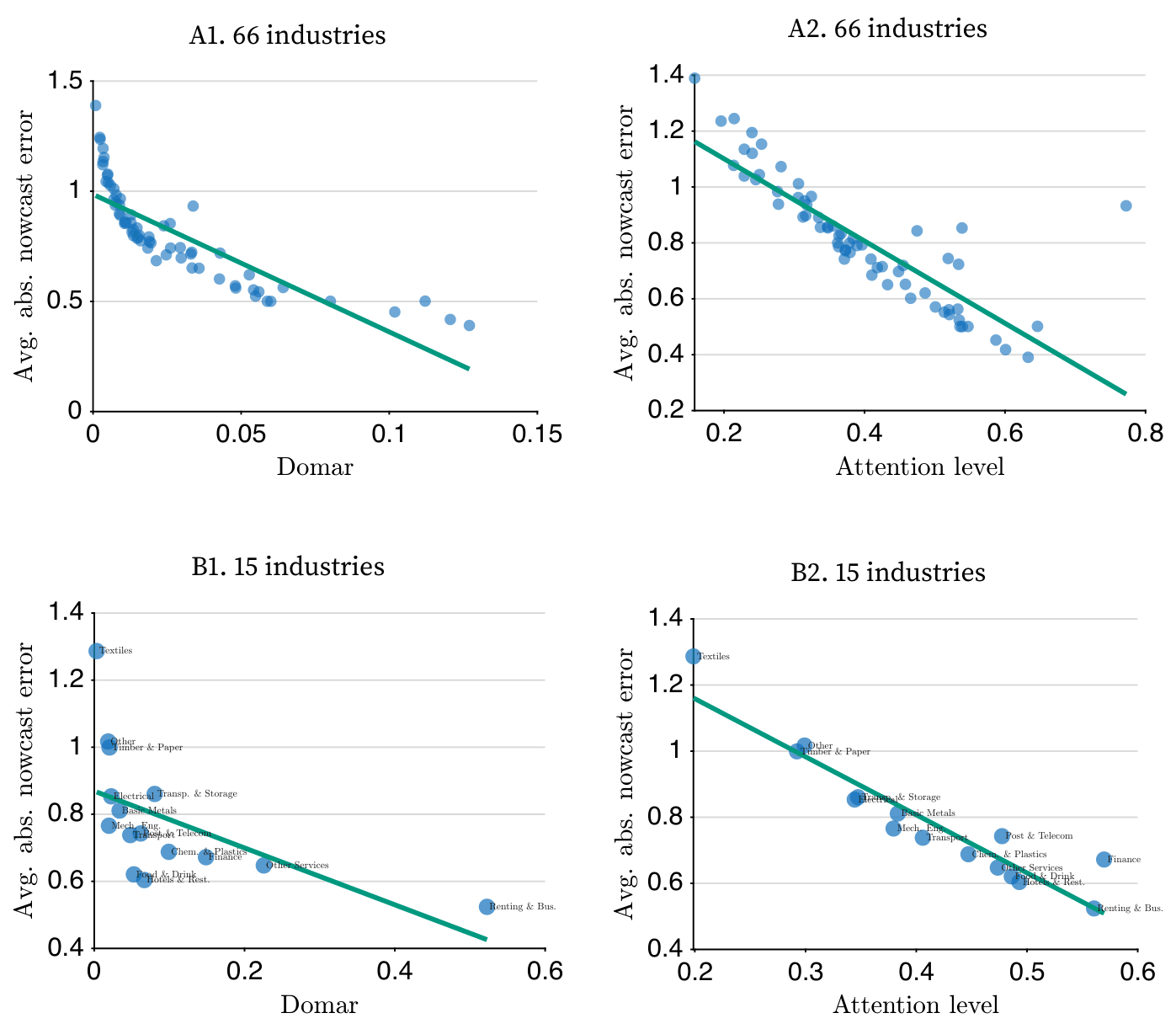
The research shows that firms in industries with larger network weights forecast inflation more accurately, and production networks endogenously increase nominal rigidity by about 30 percent.

Fanfare 3Econometrics & ForecastingRafael Gonçalves and Ina HajdiniPDF

Industry characteristics and forecast accuracy in the model
FIGURE 2. Industry characteristics and forecast accuracy in the model
14

DSGE Estimation with FOMC Text Data

Incorporating unstructured text from Federal Reserve transcripts into a DSGE model sharpens monetary policy inference and implies a flatter, less backward-looking Phillips curve.

Fanfare 3Econometrics & ForecastingSara Casella et al.PDF

Trading, Microstructure & Execution2

20

Corporate Bond Demand Multipliers

Heterogeneous substitutability between corporate bonds implies security-level multipliers are much smaller than previous estimates, though portfolio multipliers remain substantial.

Fanfare 2Trading, Microstructure & ExecutionManav Chaudhary et al.PDF

21

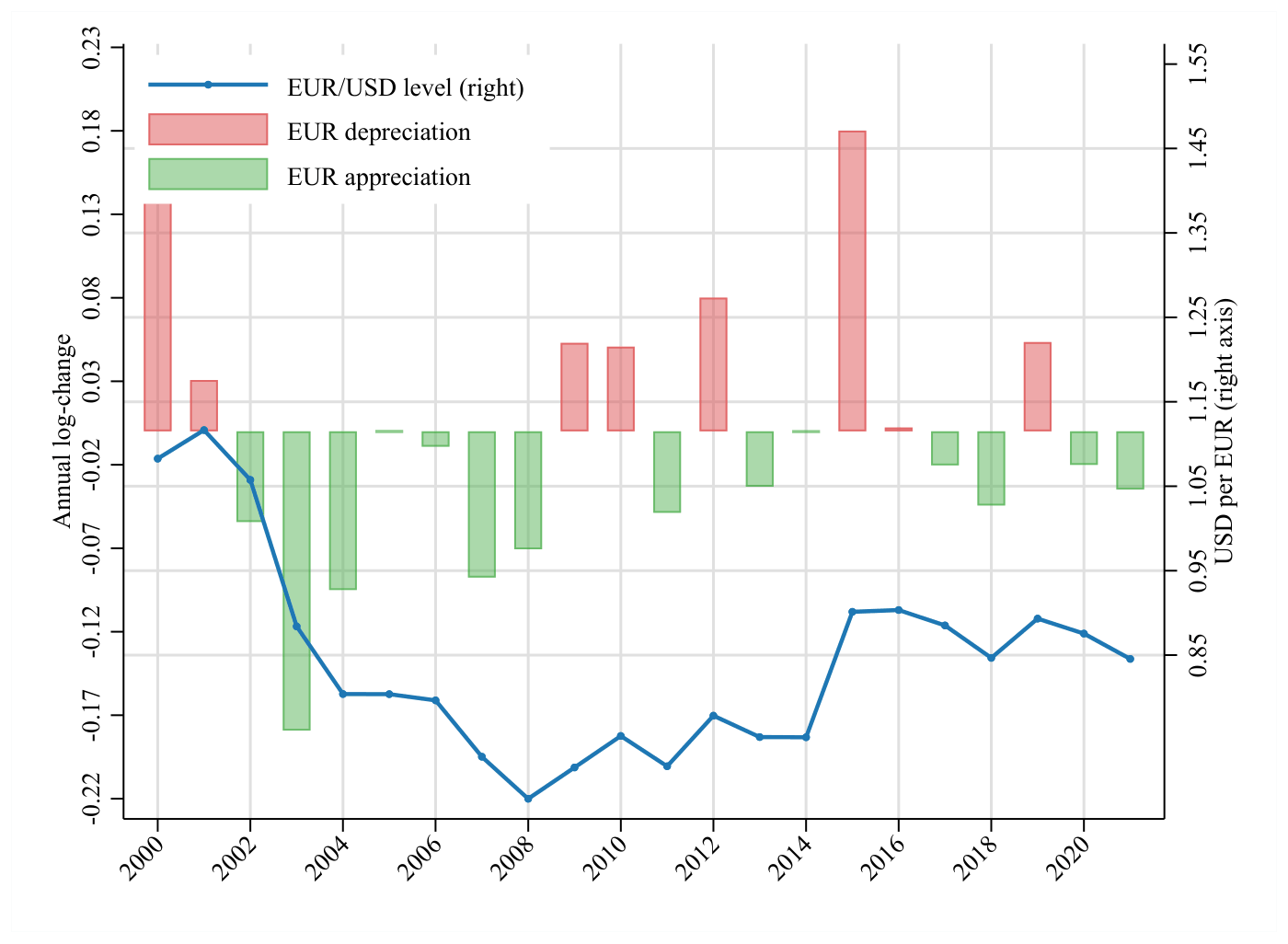
Corridor Invoicing as Real Hedging

Italian trade data reveals firms use invoicing currency bilaterally and by country to hedge country-specific risk, not just currency risk, reducing profit variance beyond net exposure.

Fanfare 2Trading, Microstructure & ExecutionEmanuele Brancati et al.PDF

Annual EUR/USD Exchange Rate
Figure B1: Annual EUR/USD Exchange Rate

Also notable2

23

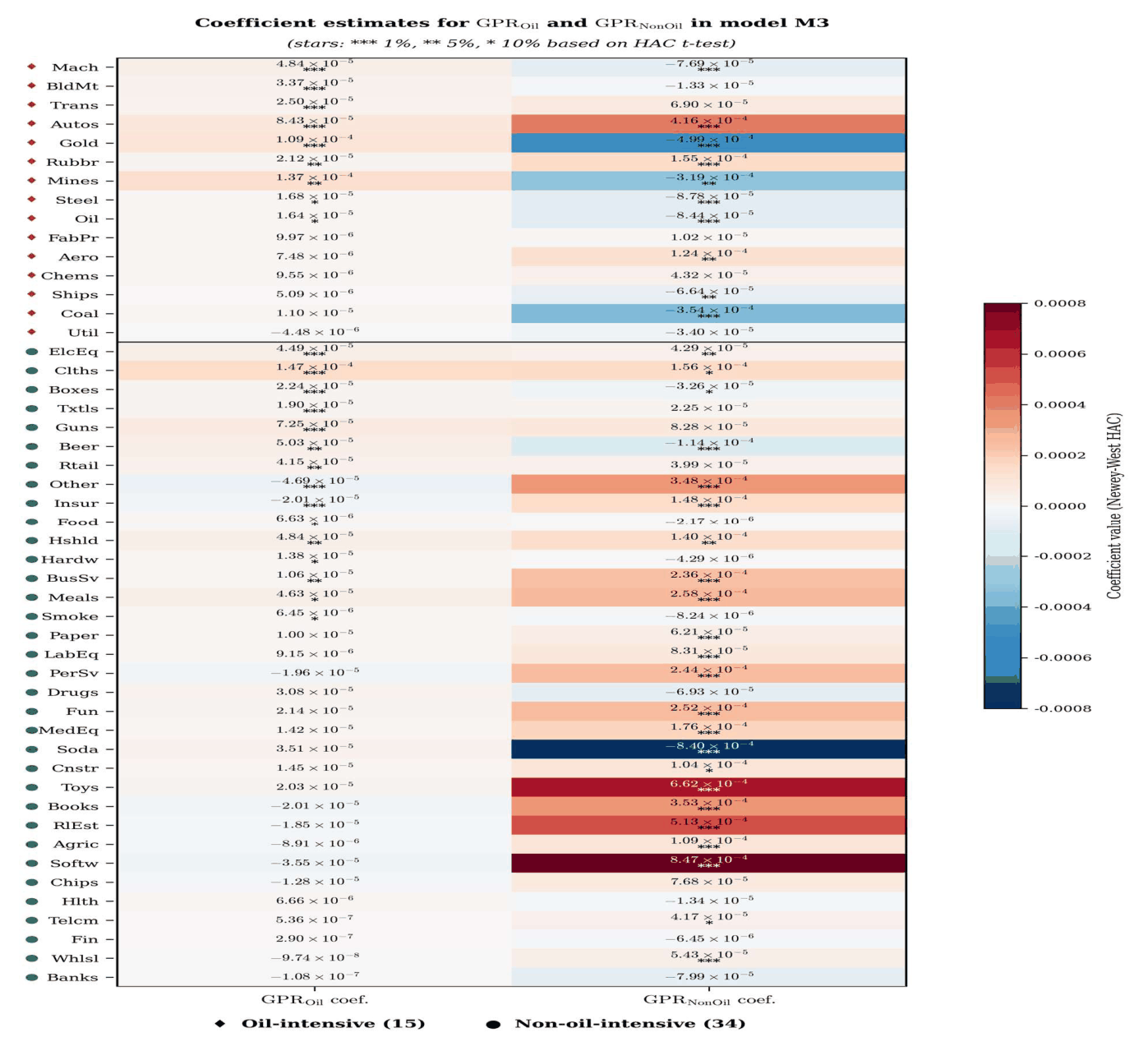
Oil and Non-Oil Geopolitical Risk on US Volatility

Decomposing geopolitical risk into oil and non-oil components predicts US industry stock volatility better than aggregate measures across 49 sectors.

Fanfare 2Derivatives & VolatilityOnur Polat et al.PDF

Estimated coefficients for GPR-Oil (left column) and GPR-NonOil (right column) in model M3, across the 49 Fama-French
Figure 2. Estimated coefficients for GPR-Oil (left column) and GPR-NonOil (right column) in model M3, across the 49 Fama-French industries.
28

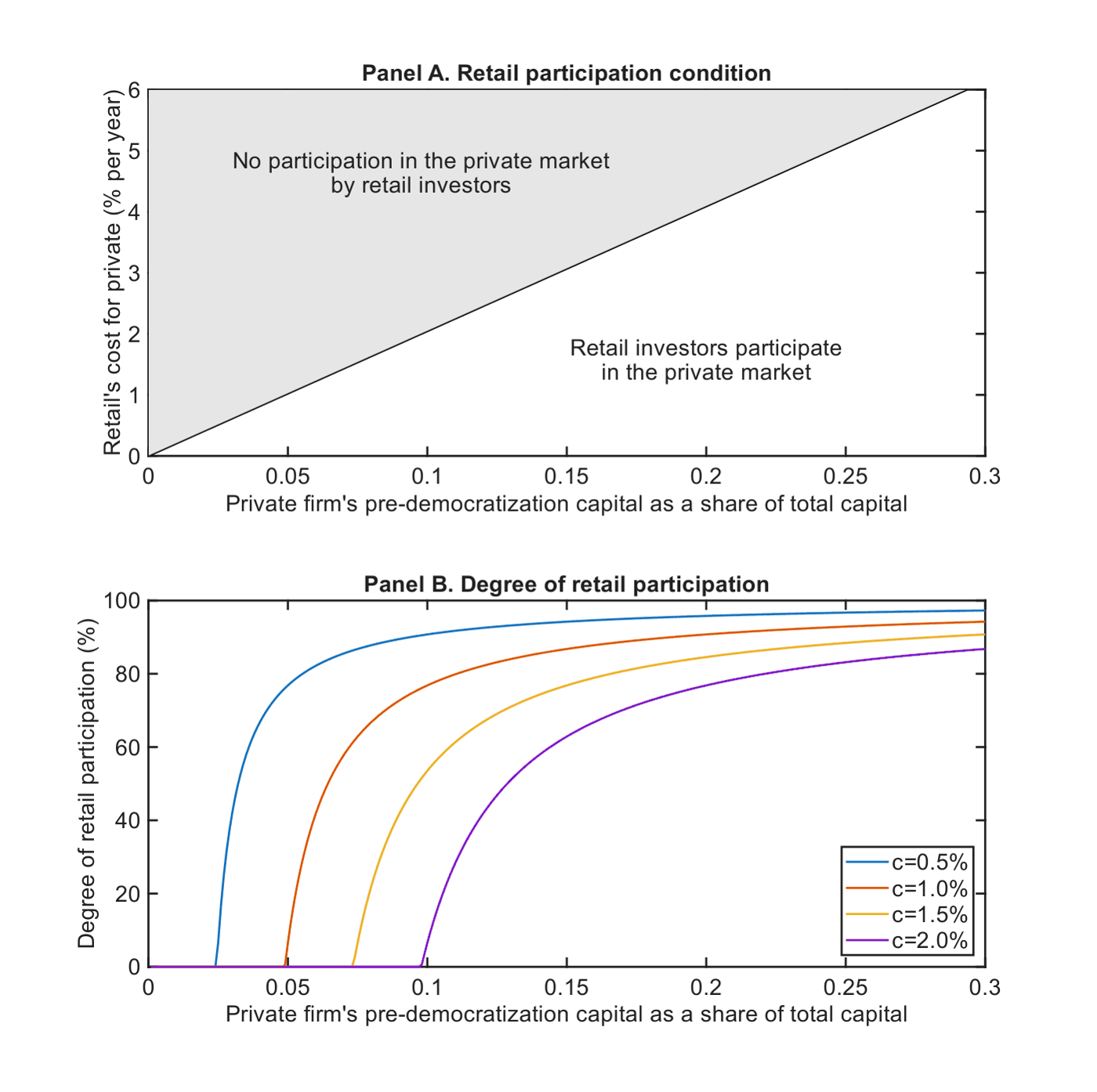
Retail Access to Private Markets: Equilibrium Effects

Opening private markets to retail investors modestly improves their welfare while reducing firms' cost of capital and shrinking private equity alpha.

Fanfare 2Portfolio & AllocationLubos Pastor et al.PDF

Retail participation conditions and participation rates in private markets by firm capital share.
Figure 6. Participation by retail investors in the private market. The horizontal axis in both panels is the private firm’s share of total public and private capital, K0

Read the paperOpen full-size image

    Type to search. Try rough volatility, LLM agents or FinGPT.

    ↑↓ move↵ openesc closeFull search page