ML-QuantSubscribe

Quant Letter

September 2026, Week 4

The week in quantitative finance research: 90 papers from arXiv, SSRN and RePEc, screened and ranked, 19–25 Sep 2026.

Papers
90
New this week
90
With figures
44
High fanfare
9

From the editor

This week balances methodological rigor with practical market insights. Tail risk estimation and time-series validation trade-offs address foundational modeling challenges, while label engineering and LLM look-ahead bias expose common pitfalls in factor and AI development. Key reads: Semi-Discrete Optimal Transport, Time-Series Validation Trade-Offs Revisited, and Label Engineering for Stock Selection.

Top picks

If you read five papers this week, read these.

  1. Tail Risk via Semi-Discrete Optimal Transport

    Proposes semi-discrete optimal transport to capture heavy tails in financial returns, maintaining stable tail ratio estimates across diverse neural generators when standard Lipschitz methods fail.

    Fanfare 4Risk, Credit & Banking
    Variational method for optimal transport
  2. A survey examines how AI transforms information production, intermediation, and market structure, with implications for efficiency, competition and financial stability.

  3. Progress on Explaining Asset Prices Around Earnings Announcements
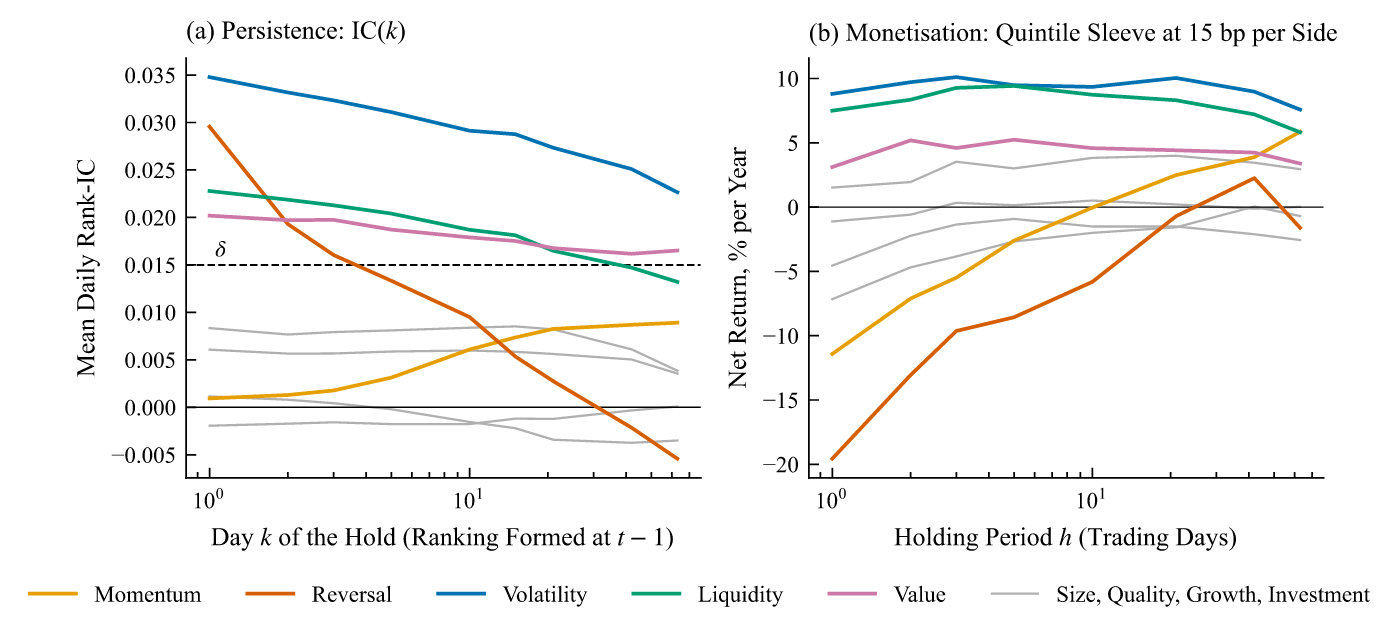
  4. Persistence and monetisation by family
  5. Reshaping the prediction target through location, scale and shape transformations raises long-short Sharpe from 0.68 to 1.69, with label choice mattering more than model choice.

What's rising

Topics drawing unusually many papers this week.

  1. Option pricing

    3.0×

    1.8% of this week's 791 new papers, 3.0x its share over the previous 2-3 weeks (0.6%).

  2. Anomalies

    2.2×

    3.0% of this week's 791 new papers, 2.2x its share over the previous 2-3 weeks (1.4%).

  3. Jump processes

    2.3×

    1.8% of this week's 791 new papers, 2.3x its share over the previous 2-3 weeks (0.8%).

  4. Monte Carlo

    1.7×

    3.2% of this week's 791 new papers, 1.7x its share over the previous 2-3 weeks (1.8%).

  5. Implied volatility

    1.7×

    3.0% of this week's 791 new papers, 1.7x its share over the previous 2-3 weeks (1.8%).

GitHub radar

What the quant community starred on GitHub this week, from a panel of 10,589 developers who follow financial machine learning (244 of the 860 we checked starred something). Counts only: we never publish who starred what.

Quant repos rising

  1. Open-source platform for tracking real-time stock prices and company insights.

    ★ 19.2k+3,593 this weekTypeScript

  2. AI trading bot making one Jev trade decision per Monad block.

    ★ 2,395+1,462 this weekTypeScriptNew repo

  3. Collection of 23,000+ agent skills for empirical research in social sciences.

    ★ 4,374+500 this weekStata

  4. Anthropic's financial services implementation.

    ★ 37.5k+2,589 this weekPython

  5. Autonomous financial deep research framework with agentic capabilities.

    ★ 176+33 this weekPythonNew repo

  6. Calibrated typed-decision models for finance and trading applications.

    ★ 18+18 this weekPythonNew repo

  7. Open-source self-hosted privacy-first personal finance manager.

    ★ 3,783+181 this weekPython

  8. ccxt/ccxt2 quants

    Unified API for 100+ crypto exchanges and prediction markets.

    ★ 44.1k+123 this weekPython

What quants are playing with

  1. Non-autoregressive decision engine for typed choices over text in 100+ languages.

    ★ 24.0k+23.7k this weekPythonNew repo

  2. Fastest and cheapest web agent for automation tasks.

    ★ 20.1k+14.0k this weekPythonNew repo

  3. google/ax19 quants

    Google's open agentic orchestration runtime for agent systems.

    ★ 11.1k+9,108 this weekGo

  4. Decision models built on Qwen3.5/3.8 you can train locally.

    ★ 6,886+6,653 this weekPythonNew repo

  5. Contrastive language model implementation.

    ★ 1,065+1,065 this weekPythonNew repo

  6. Turn any LLM into a Jev-style decision model with typed decisions.

    ★ 590+590 this weekPythonNew repo

Of the 1,631 finance papers we featured as new at least a year ago, 34% are now published, and 8 of our early picks have 100+ citations. FinGPT: Open-Source Financial Large Language Models was featured 5 days after release; it has 492 citations.

All papers

Filter by venue, topic or fanfare.

Venue
Topic
Fanfare
90 papers

arXiv

Quantitative finance and ML-for-finance preprints

30 papers · 29 figures

Risk, Credit & Banking3

01

Tail Risk via Semi-Discrete Optimal Transport

Proposes semi-discrete optimal transport to capture heavy tails in financial returns, maintaining stable tail ratio estimates across diverse neural generators when standard Lipschitz methods fail.

Fanfare 4Risk, Credit & BankingRyan M. Engel et al.PDF
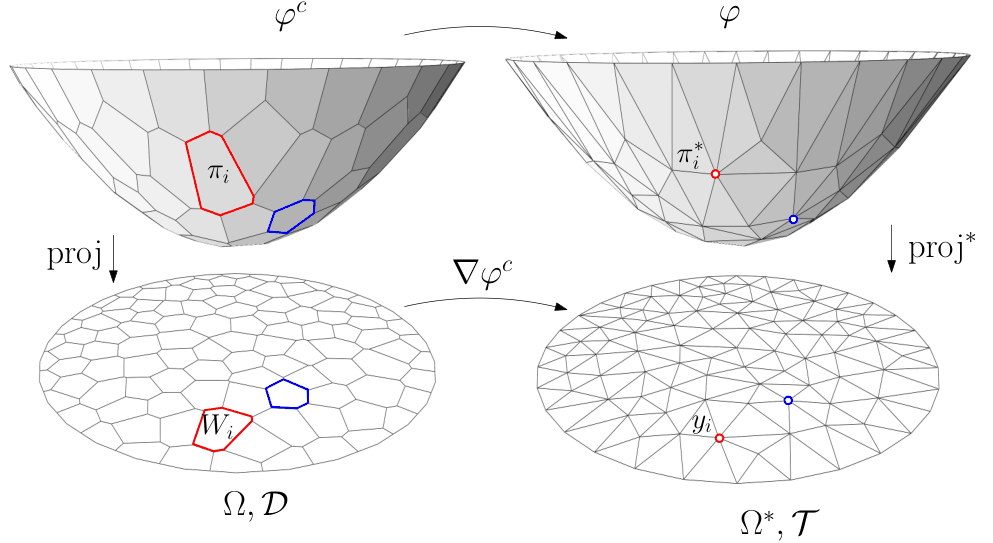
Variational method for optimal transport
Figure 1 . Variational method for optimal transport.
11

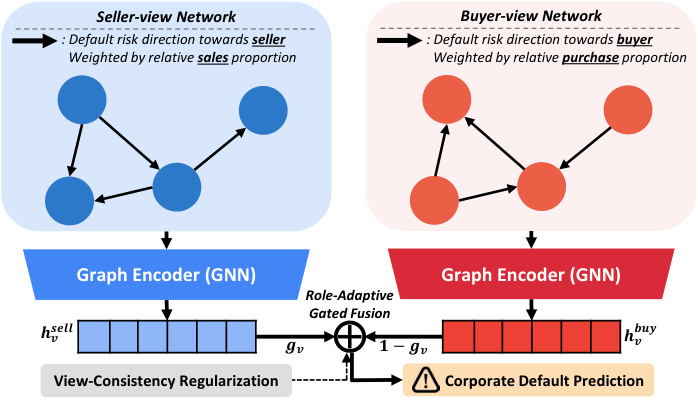
DefaultGNN for Corporate Default Prediction

A dual-perspective graph neural network framework predicts corporate defaults from buyer-seller transaction networks, improving approval rates by 7-11 percentage points without increasing default risk.

Fanfare 3Risk, Credit & BankingJunghoon Kim et al.PDF

Overall framework of DefaultGNN . View-specific embeddings learned from multiplex transaction networks are fused via
Figure 6. Overall framework of DefaultGNN . View-specific embeddings learned from multiplex transaction networks are fused via gating, regularized through view consisten…
30

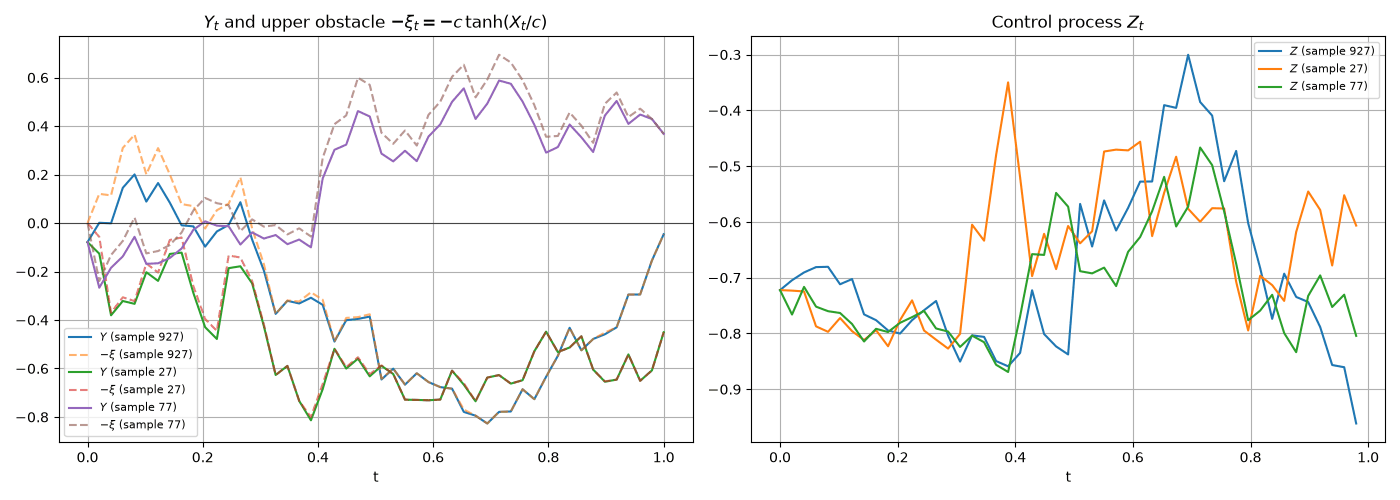
Deep Learning Reflected BSDE under Paired Ambiguity

Develops a deep learning scheme for optimal stopping under simultaneous model and discount-rate ambiguity, with application to American option valuation under uncertainty.

Fanfare 2Risk, Credit & BankingNacira Agram et al.PDF

Training diagnostics showing value estimates and control processes converging across multiple scenarios with bounded discoun…
Figure 2 : Bounded discount rate ambiguity (Section 6.1 ): diagnostics from a single trained run.

ML & AI Methods3

02

Frozen Referee for Agent Factor Mining

Proposes a statistical referee that judges investment factors proposed by language-model agents using out-of-sample market outcomes, ensuring false-discovery control at any stopping time.

Fanfare 4ML & AI MethodsBo Qu et al.PDF

Persistence and monetisation by family
Figure 4: Persistence and monetisation by family. Left: the decay curve IC(k) of a ranking known at t-1 against the return on day t+k-1 , with the viability threshold \d…
07

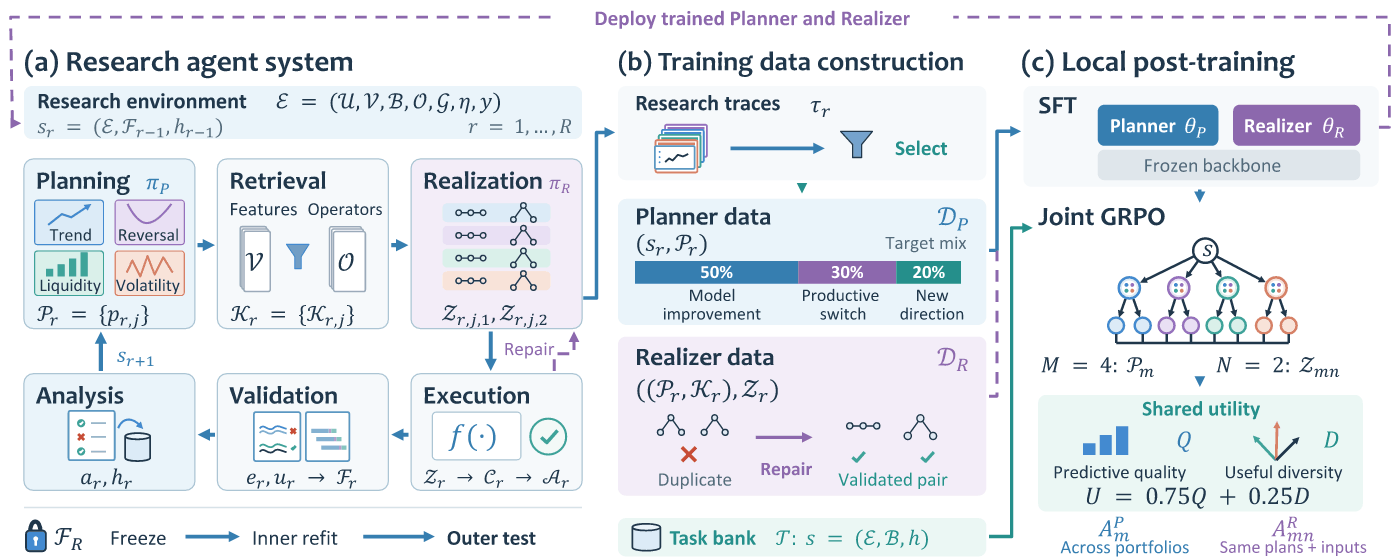
AlphaDiverse: Multi-Agent Alpha Factor Mining

Proposes a multi-agent system with post-training that automates alpha factor mining locally, using diverse research paths and joint optimization to broaden exploration while maintaining prediction quality.

Fanfare 3ML & AI MethodsQingzhuo Wang et al.PDF

AlphaDiverse overview
Figure 2: AlphaDiverse overview. (a) The research loop proposes plans, implements factors, and updates its state from inner evaluation. (b) These records supply selected…
08

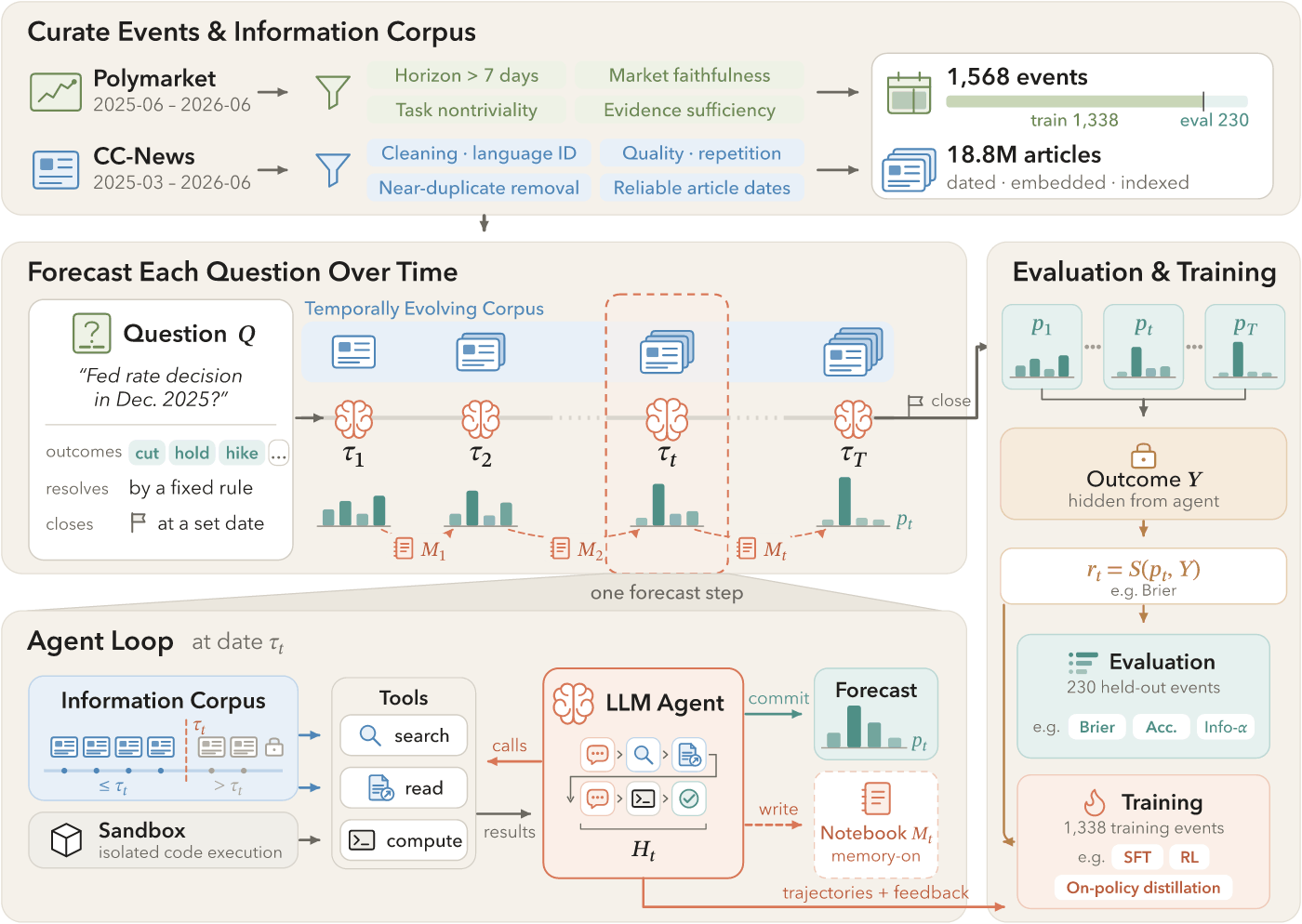
Forecast-Dojo: LLM Forecasting Benchmark

Introduces a replayable environment combining 1,568 resolved prediction-market questions with 18.8M dated news articles to benchmark and train language-model forecasting agents on historical data.

Fanfare 3ML & AI MethodsLiqin Ye et al.PDF

Overview of Forecast-Dojo
Figure 1: Overview of Forecast-Dojo. Top: resolved Polymarket events are filtered and split by time into training and evaluation events, and CC-News articles are cleaned…

Econometrics & Forecasting7

03

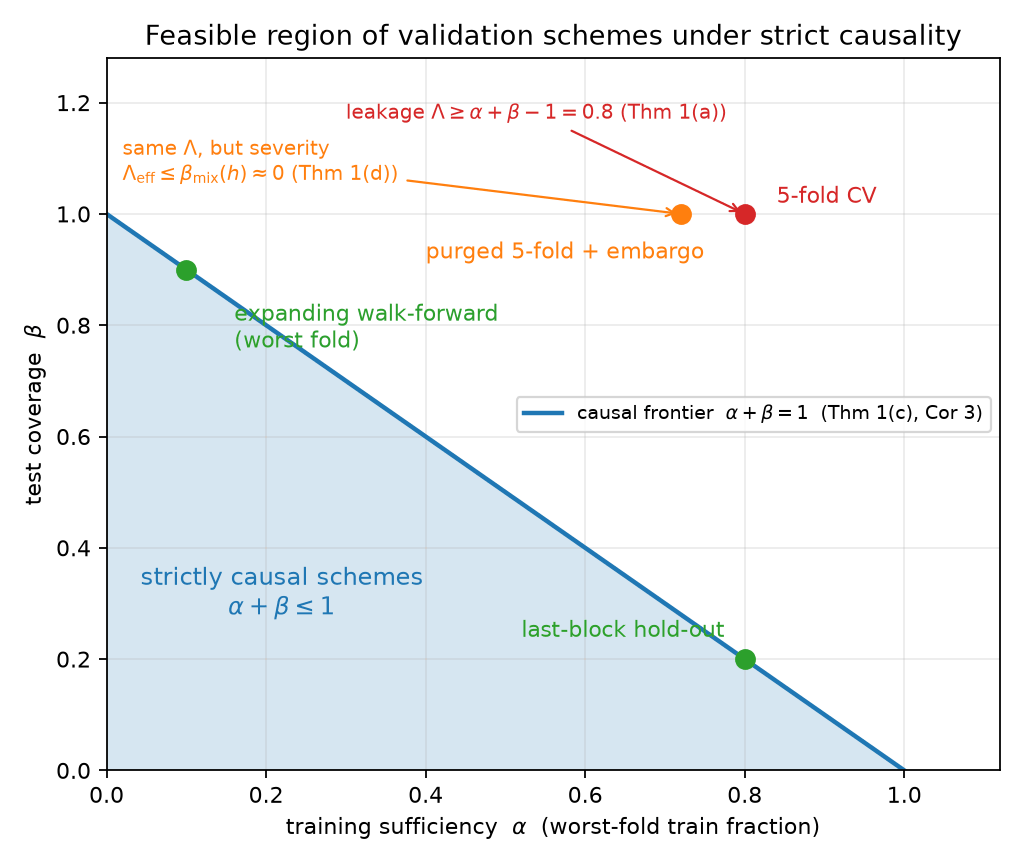
Time-Series Validation Trade-Offs Revisited

Proves that training sufficiency, test coverage, and temporal causality cannot be maximized simultaneously in time-series validation, pricing each constraint explicitly.

Fanfare 4Econometrics & ForecastingJiayu LiPDF

The feasible region of strictly causal schemes, \alpha+\beta\leq 1 (Theorem 1 (c)), and the coordinates of the standard
Figure 1: The feasible region of strictly causal schemes, \alpha+\beta\leq 1 (Theorem 1 (c)), and the coordinates of the standard schemes. k -fold lies outside the regio…
14

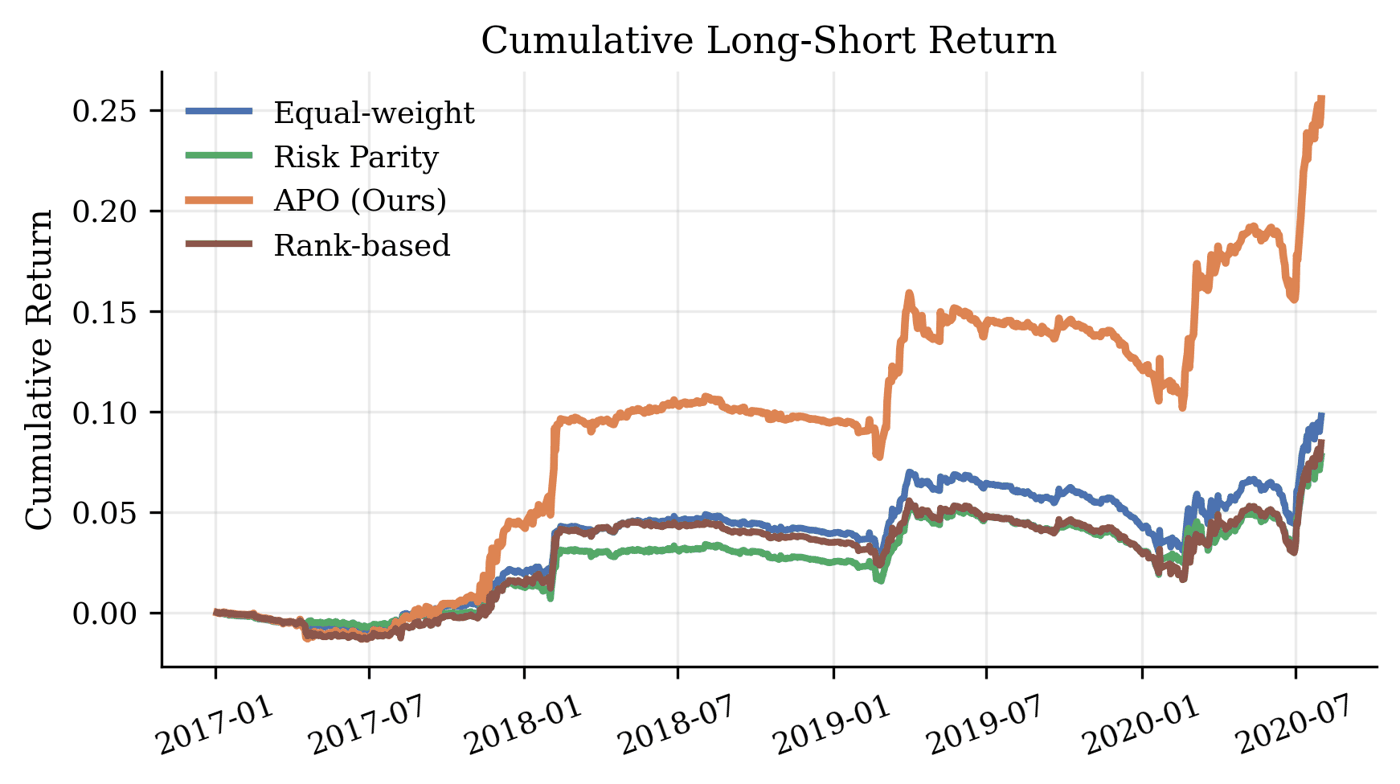
Multi-Task Learning for Stock Forecasting

A hierarchical multi-task framework jointly predicts price movement, volatility and volume using liquidity-aware signals, outperforming neural and tree-based baselines on Chinese equity indices.

Fanfare 3Econometrics & ForecastingHengyi Yang et al.PDF

Cumulative long-short returns of APO and three portfolio-construction baselines
Fig. 5: Cumulative long-short returns of APO and three portfolio-construction baselines.
15

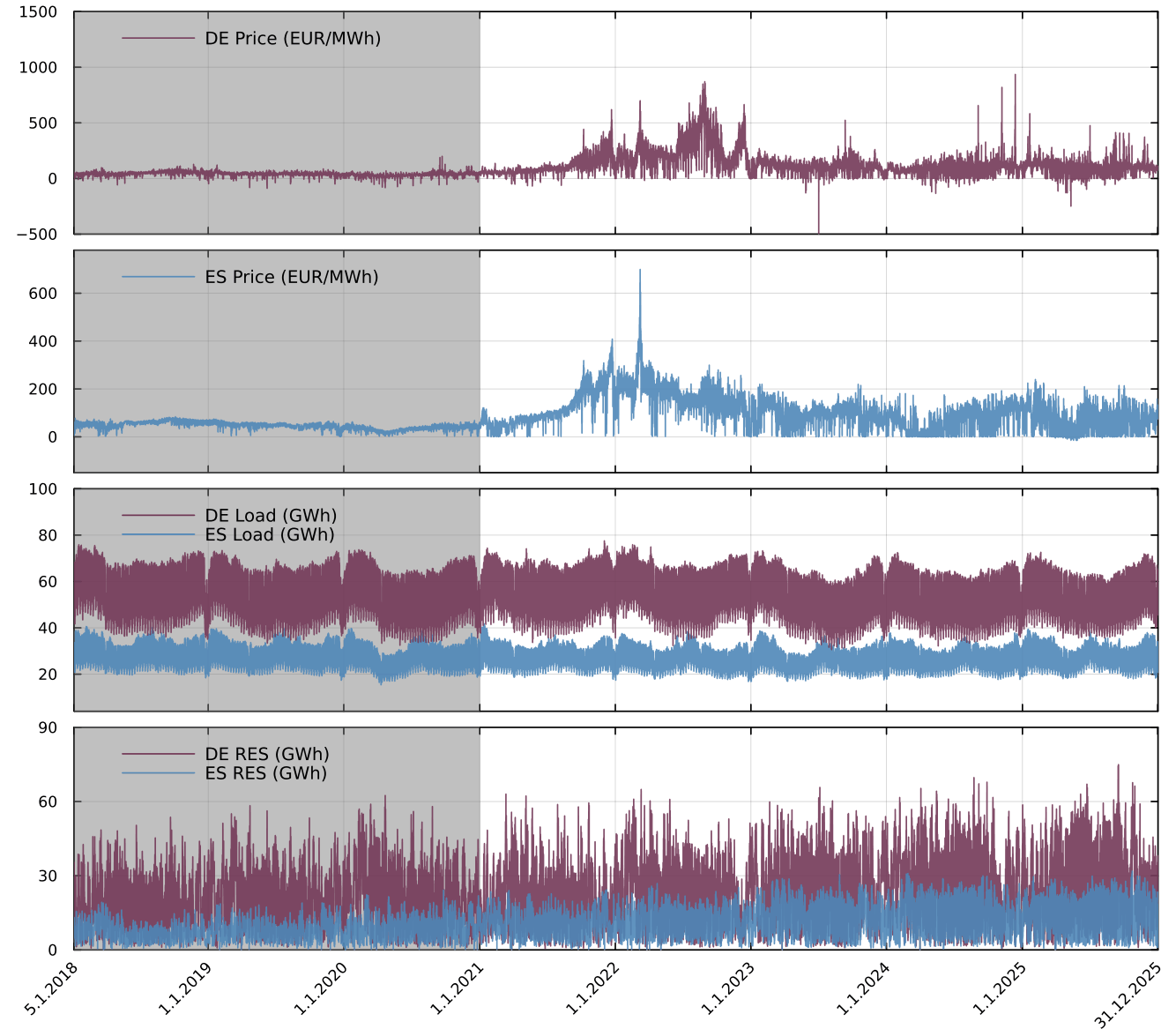
Temporal Hierarchy Forecasting for Electricity

Jointly reconciling hourly price and spread forecasts improves intraday electricity price prediction accuracy by up to 19.7% and battery-arbitrage profits by up to 10.4%.

Fanfare 3Econometrics & ForecastingArkadiusz Lipiecki et al.PDF

Top two panels: German (DE) and Spanish (ES) day-ahead electricity prices from 5 January 2018 to 31 December 2025
Figure 2: Top two panels: German (DE) and Spanish (ES) day-ahead electricity prices from 5 January 2018 to 31 December 2025. Middle panels: Day-ahead load forecasts in b…
16

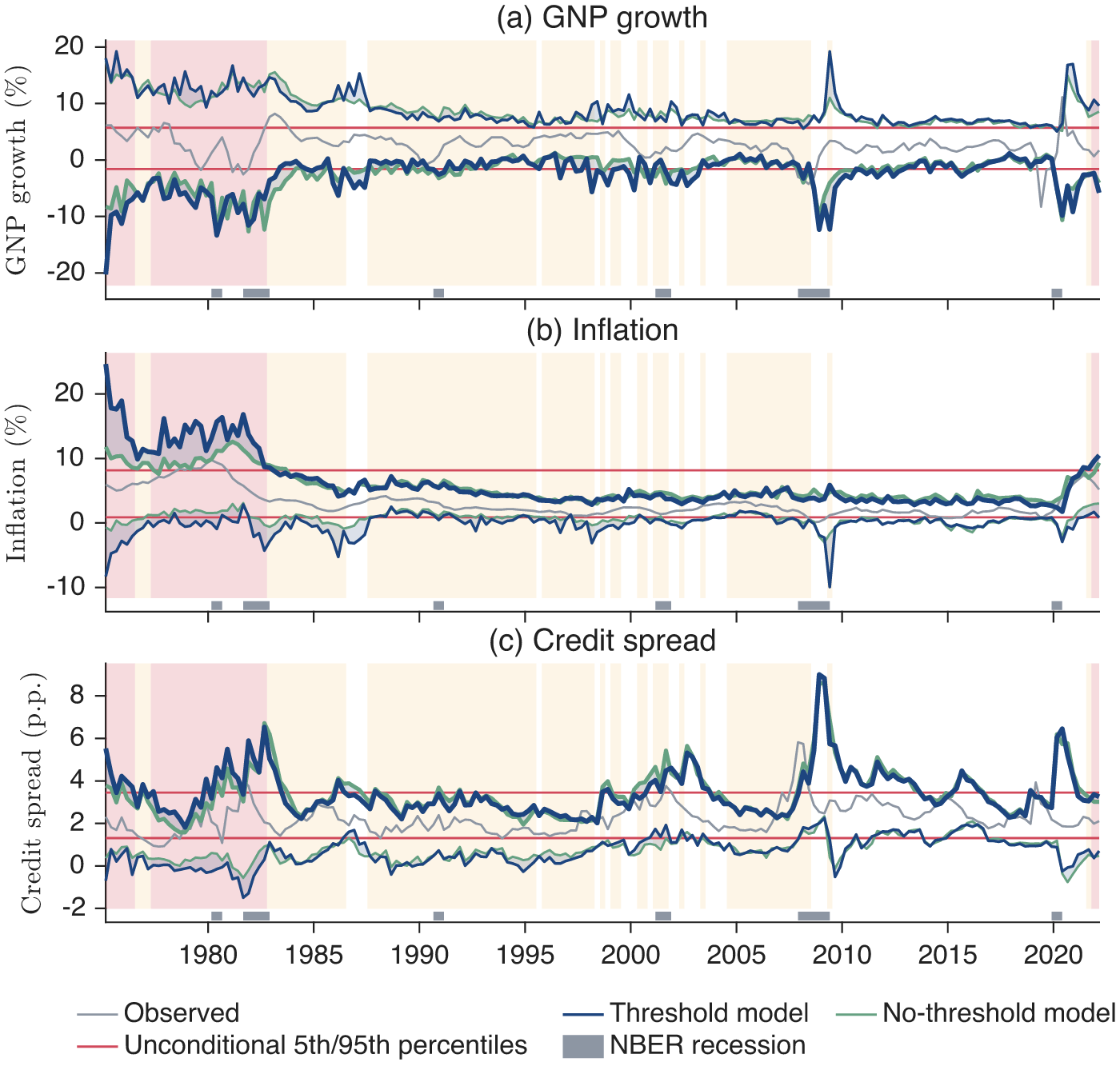
Macroeconomic Tail Risk Drivers

A regime-switching volatility-in-mean VAR reveals that the drivers of growth and inflation tails differ from median dynamics, with macroeconomic uncertainty playing a larger role in downside risk.

Fanfare 3Econometrics & ForecastingHaroon Mumtaz and Sofia VelascoPDF

Time series of GNP growth, inflation, and credit spread showing tail risk distributions with regime shading.
Figure 2 : Tail risk with and without inflation regimes.
19

Stochastic Nested Fixed Point BLP Estimation

A stochastic nested fixed-point estimator reduces memory and computational cost for random-coefficients logit demand models, enabling estimation on 100 million markets in hours.

Fanfare 3Econometrics & ForecastingZhentong Lu et al.PDF

Small-Sample Distribution of the BLP Estimator
Figure 1 : Small-Sample Distribution of the BLP Estimator
20

Rough HAR Model for Realized Variance

Augmenting HAR with a negative moving-average component approximates rough dynamics, outperforming classical models out-of-sample and matching continuous-time rough model accuracy.

Fanfare 3Econometrics & ForecastingMikkel Bennedsen et al.PDF

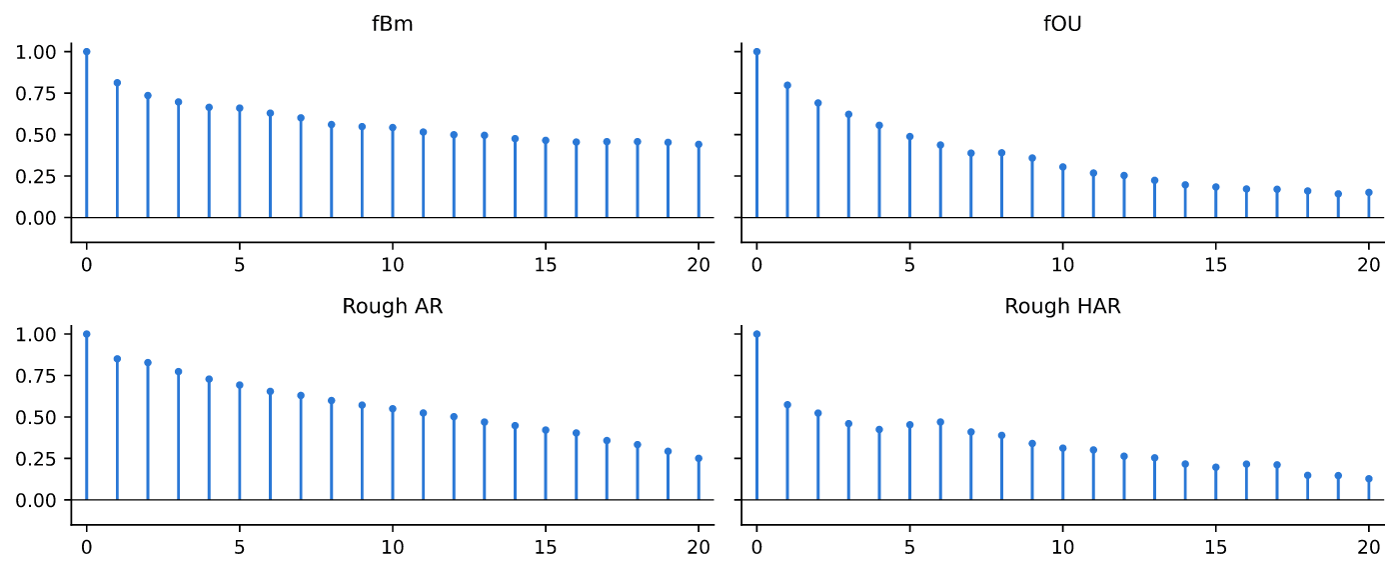
Autocorrelation functions comparing fBm, IOU, Rough AR, and Rough HAR models
Figure 3: Sample autocorrelation functions of the four models.
23

Network Realized GARCH-Itô Models

Introduces a network realized GARCH-Itô model that identifies dynamic volatility transmission among assets using high-frequency data, outperforming recursive forecasts on sector ETFs.

Fanfare 2Econometrics & ForecastingXinyu SongPDF

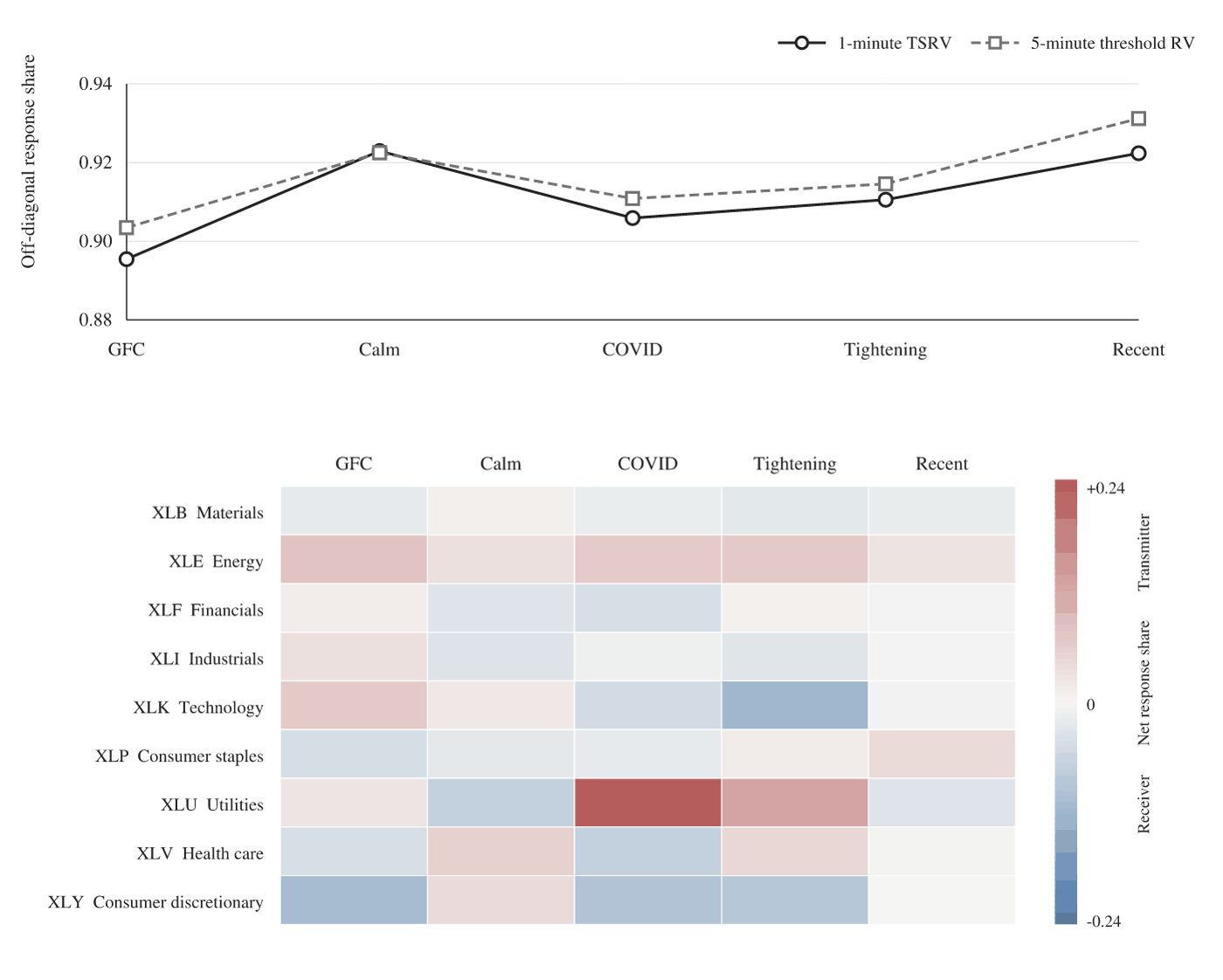
Connectedness across market regimes
Figure 1 : Connectedness across market regimes

Trading, Microstructure & Execution4

04

Adversarial RL for Hawkes Market Making

The research extends adversarial reinforcement learning for market making to handle self-exciting order arrivals and price impact, using an LSTM module to improve robustness in complex microstructure environments.

Fanfare 3Trading, Microstructure & ExecutionHao Yang and Zhenguo XuPDF

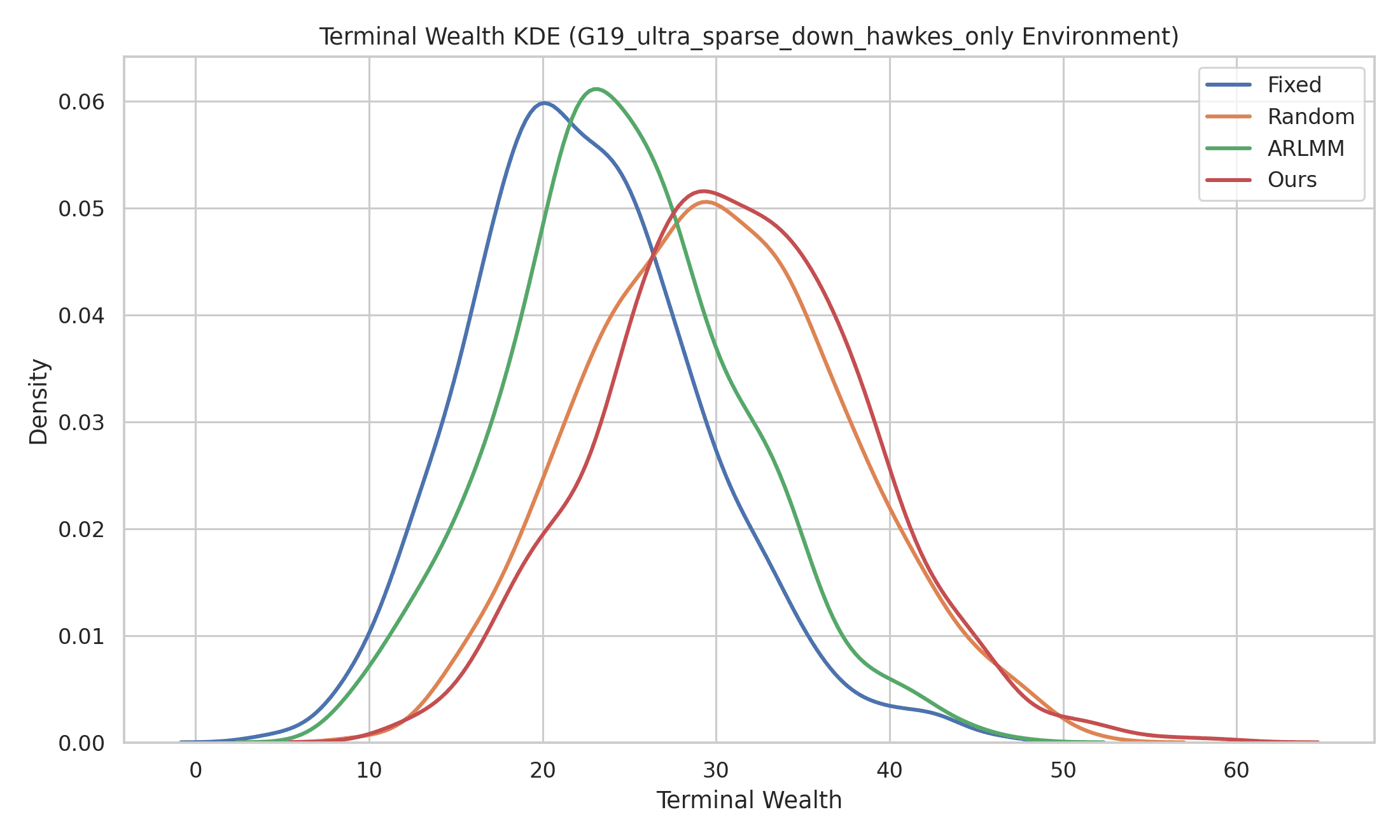
Kernel density estimates of terminal wealth in G19
Figure 1: Kernel density estimates of terminal wealth in G19.
21

Optimal Liquidity Provision and Rebate Design

Develops a nested optimization model for market making and rebate design in option markets, showing how exchanges can set fees to incentivize liquidity provision and improve market depth.

Fanfare 2Trading, Microstructure & ExecutionSamuel N. Cohen et al.PDF

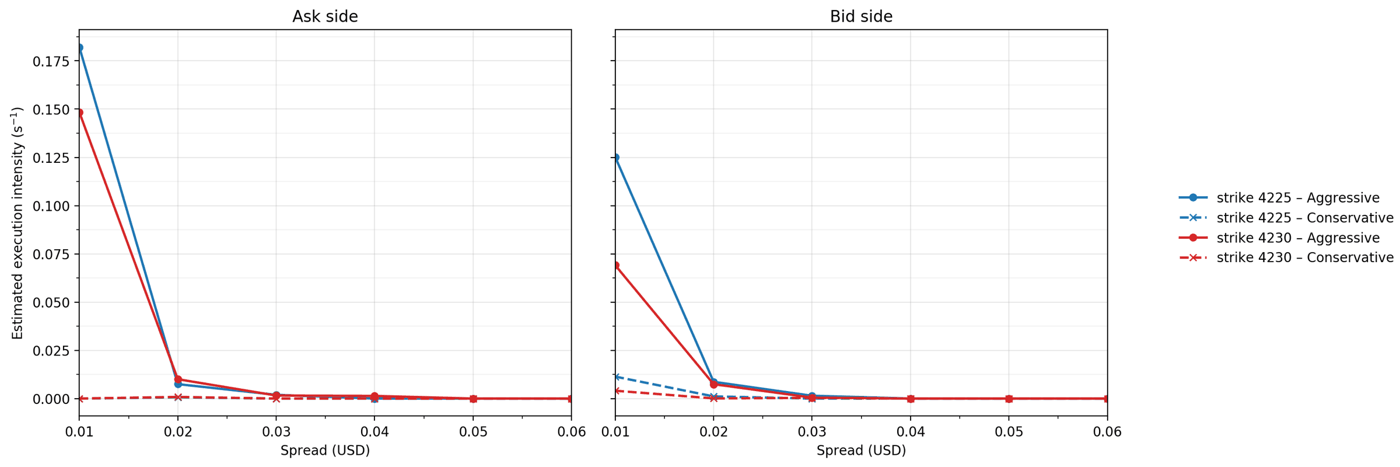
Limit order execution intensities for ask and bid sides across spread ticks
Figure 6 : Plot of estimated limit order execution intensities, expressed in second -1 .
25

Optimal Execution Under Cash Constraints

Extends the Almgren-Chriss optimal execution framework to enforce intertemporal cash constraints, reducing peak cash drawdown while maintaining implementation shortfall in multi-asset rebalancing.

Fanfare 2Trading, Microstructure & ExecutionRyuji Hashimoto and Namid R. StillmanPDF

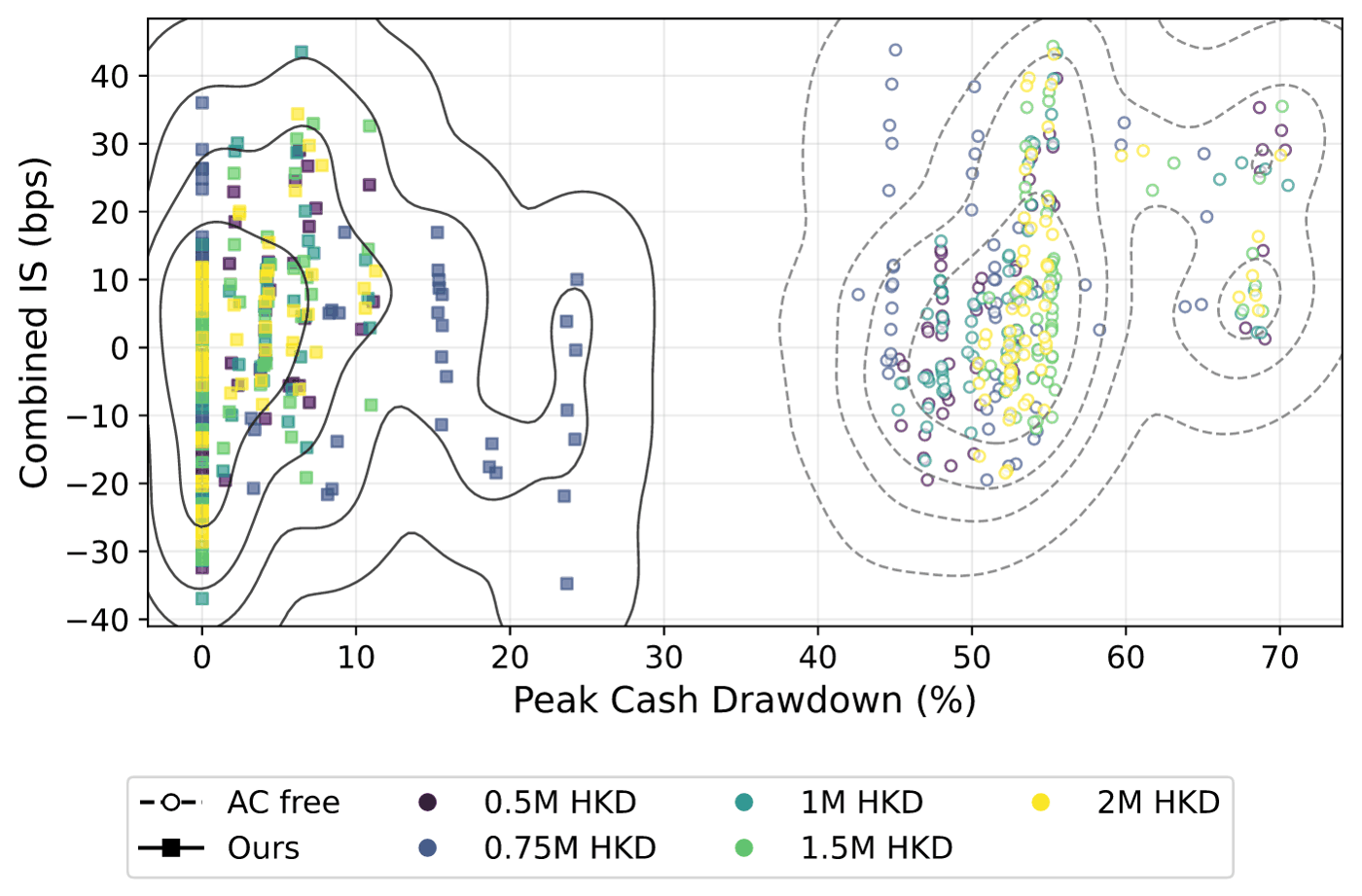
Joint distributions of peak cash drawdown and combined IS for Ours and AC free
Figure 4 . Joint distributions of peak cash drawdown and combined IS for Ours and AC free. Solid and dashed contours show KDEs for Ours and AC free, respectively, and ma…
27

Rule-Based Pricing Algorithms in Digital Markets

Experiments show that algorithm design features like warnings, pre-configured strategies, and LLM advice raise market prices by increasing starting prices and fostering cooperative algorithm designs.

Fanfare 2Trading, Microstructure & ExecutionAdrian Hillenbrand et al.PDF

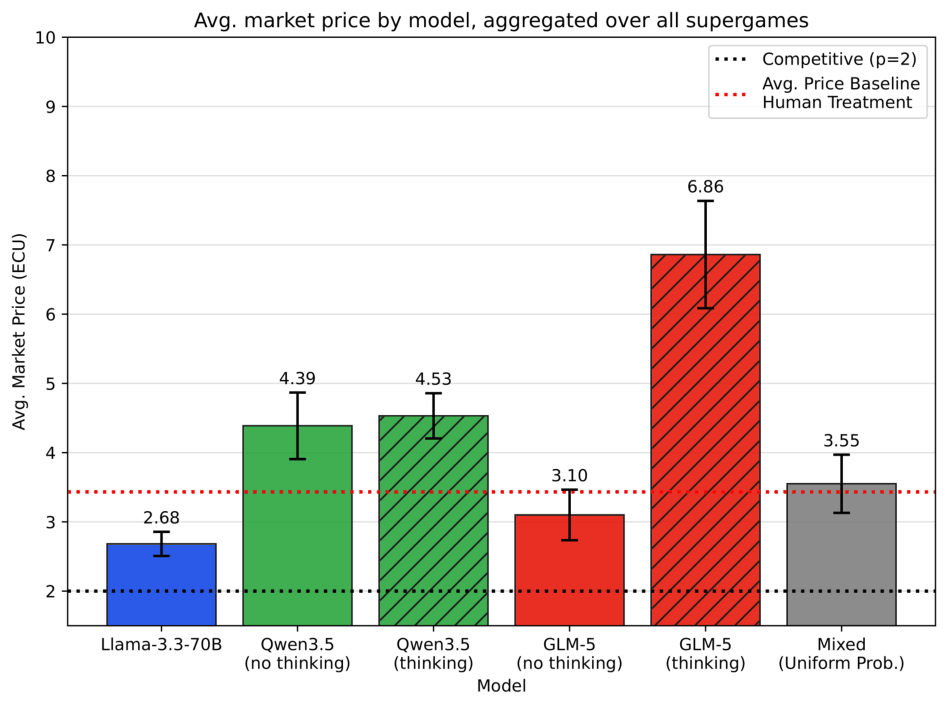
Average Market Price by LLM Model Configuration
Figure 7 : Average Market Price by LLM Model Configuration. Human Baseline and Nudge + Coordination treatments shown for comparison. The error bars represent 95% confide…

LLMs & Text4

05

MFAST Framework for News-Based Trading

Introduces a market-friction-aware framework that converts timestamped financial news into auditable trading decisions while accounting for execution timing, transaction costs, and liquidity constraints.

Fanfare 3LLMs & TextKemal KirtacPDF

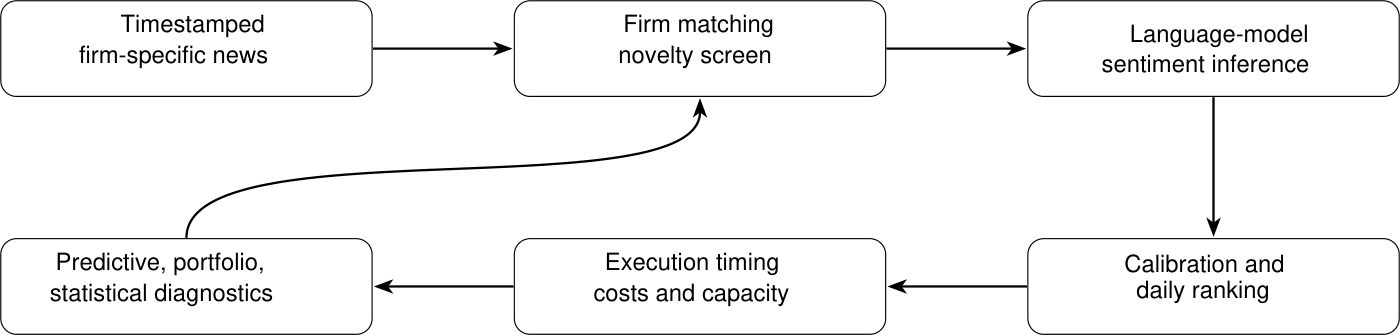
MFAST system architecture for market-friction-aware news-based trading
Figure 1: MFAST system architecture for market-friction-aware news-based trading.
12

Sentiment Arcs in Central Bank Communication

The study shows that how monetary policy sentiment unfolds across a press conference, not just its average tone, predicts rate changes and shapes forecaster expectations at the ECB and Fed.

Fanfare 3LLMs & TextMartin Feldkircher et al.PDF

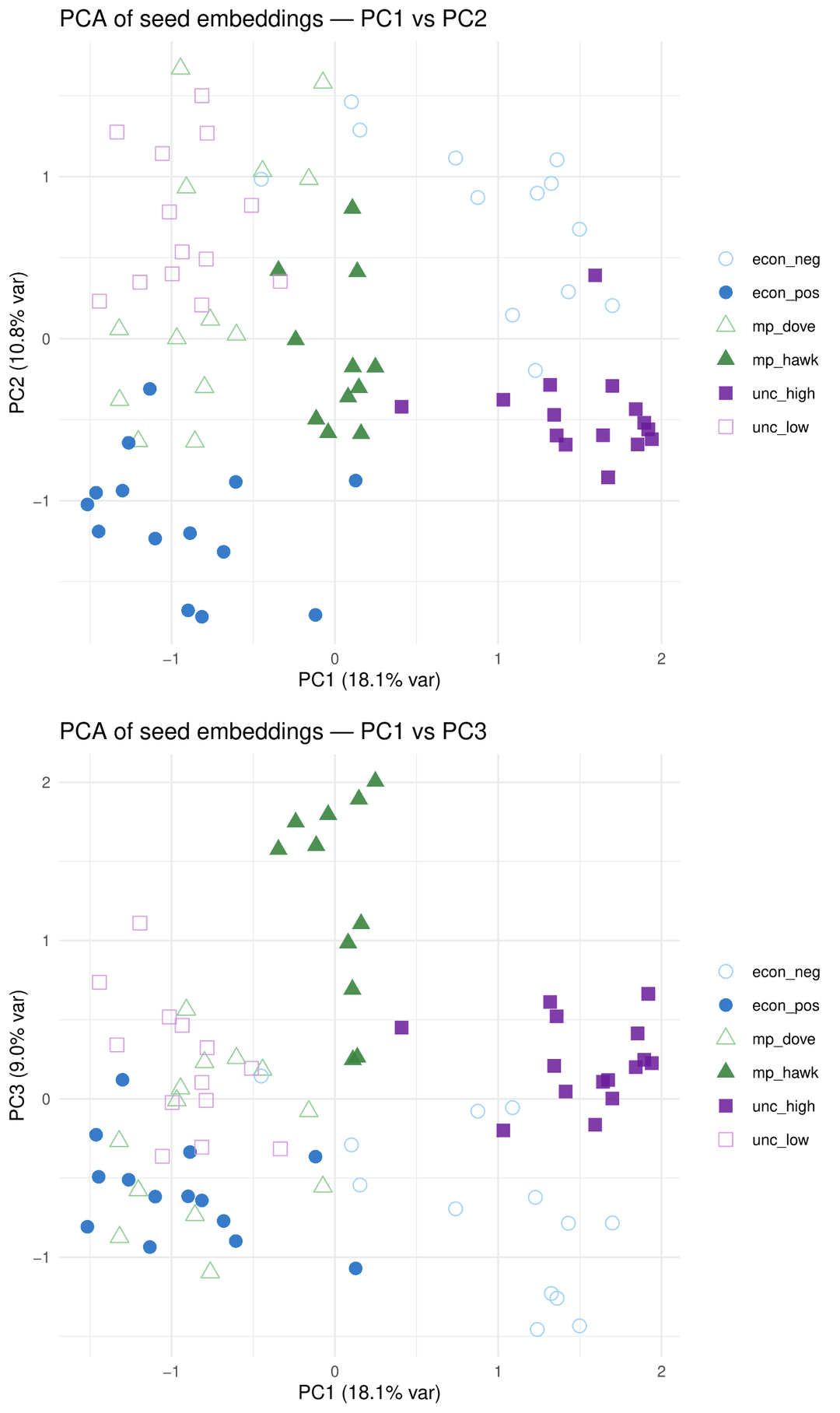
Seed phrase validation: PCA of seed embeddings
Figure 6 : Seed phrase validation: PCA of seed embeddings
18

FinInteract Benchmark for Ambiguous Financial QA

A benchmark reveals that language models answer financial questions above 90 percent with clarification but only 28.9 percent when they must elicit it themselves, exposing model ambiguity resolution.

Fanfare 3LLMs & TextXinyu Wang et al.PDF

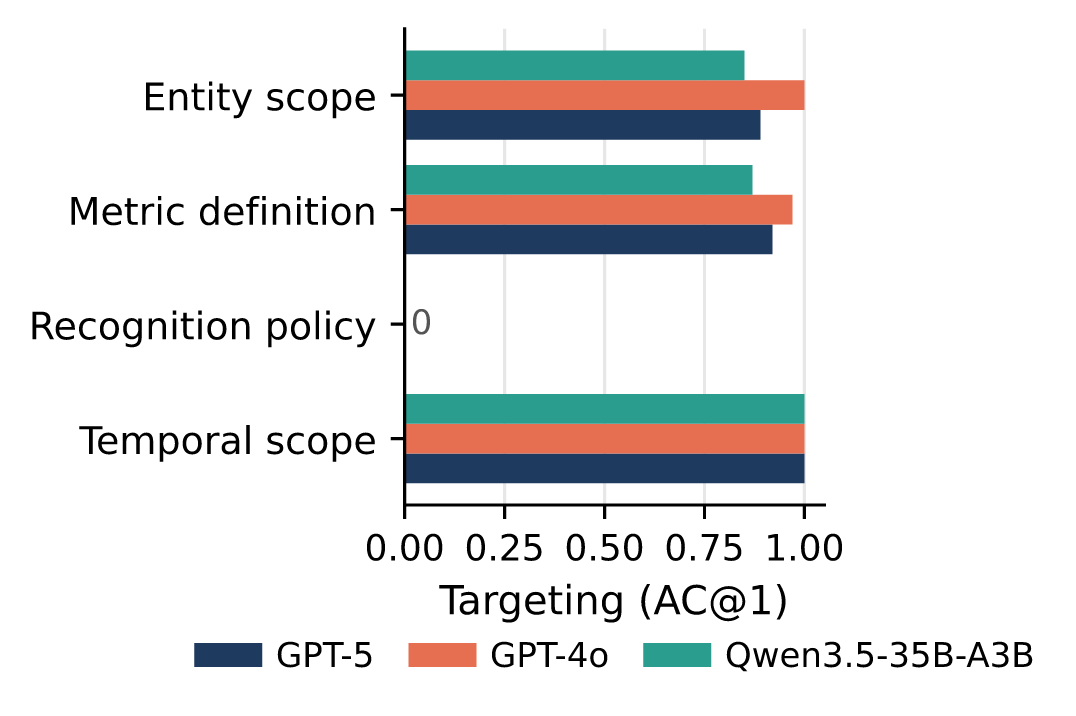
Per-category model performance on clarification capability across entity, metric, temporal, and recognition policy ambiguiti…
Figure 5: Per-category clarification-capability profile (touch AC@1 from Table 6 (c)). Every model targets entity, metric, and temporal ambiguity well (0.85–1.00) but co…
24

FinRankGRPO: LLM Portfolio Ranking

Develops a two-stage framework that fine-tunes language models for listwise asset ranking using Spearman rank correlation rewards, achieving a Sharpe ratio of 0.636 on asset allocation.

Fanfare 2LLMs & TextNingyuan Deng et al.PDF

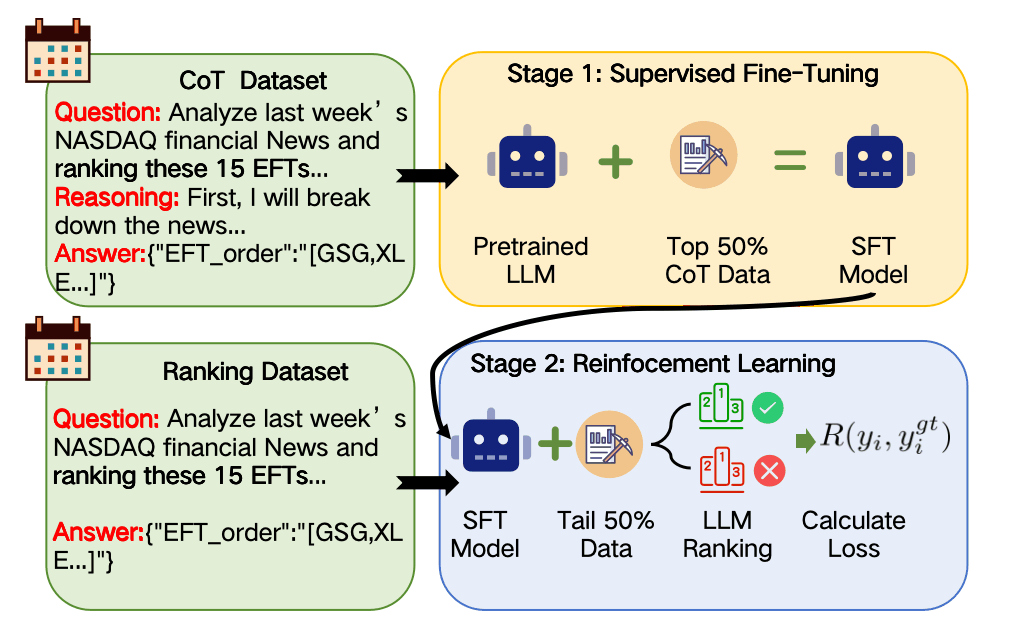
The two-stage construction framework of our FinRankGRPO, Stage 1 is SFT in high quality distill CoT datasets, Stage 2
Figure 2: The two-stage construction framework of our FinRankGRPO, Stage 1 is SFT in high quality distill CoT datasets, Stage 2 is trained by our FinRankGRPO, which is a…

Derivatives & Volatility3

06

Universal Diffusion Models for Volatility Surfaces

A universal diffusion model trained on pooled data from 50 stocks learns to jointly generate implied volatility surface changes and stock returns, extrapolating well to unseen stocks.

Fanfare 3Derivatives & VolatilityMingzhi Yang et al.PDF

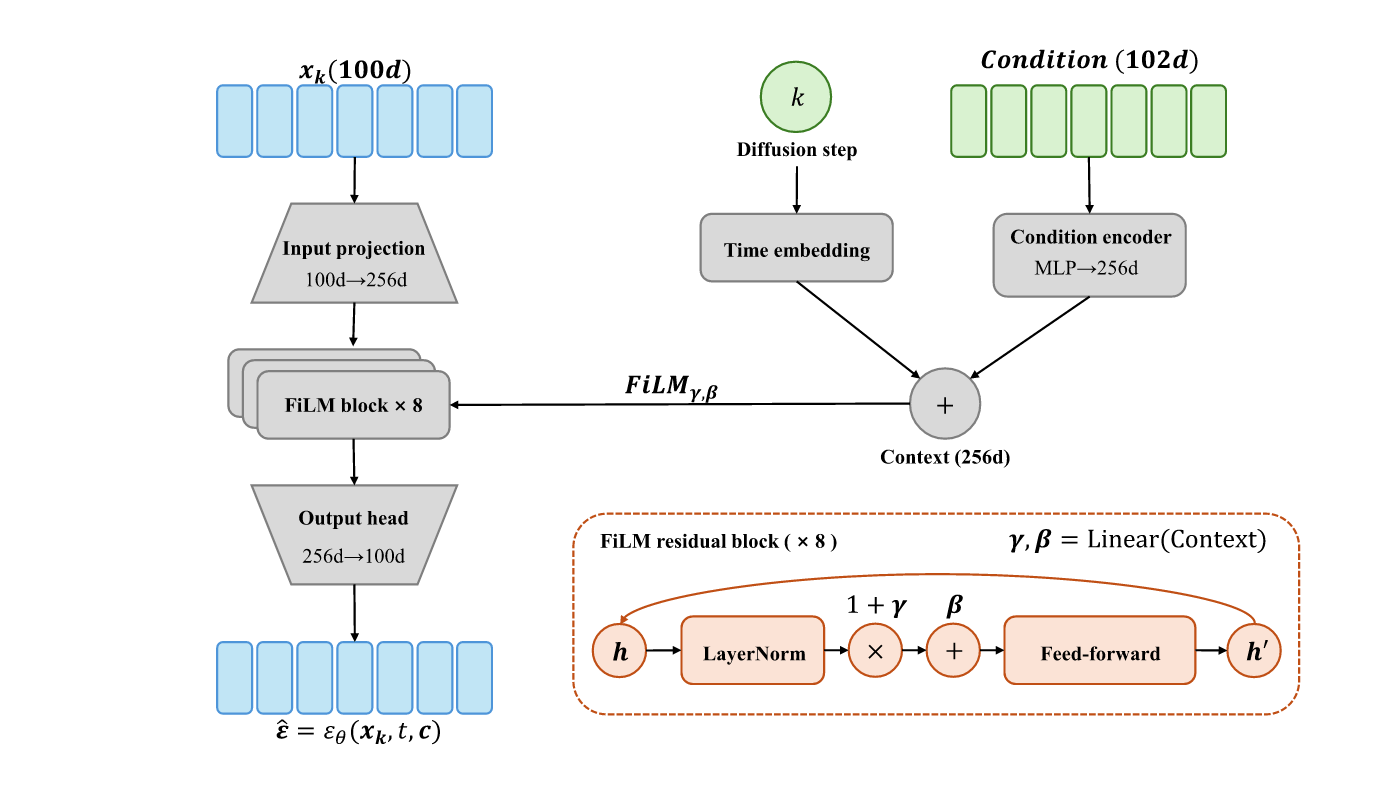
Conditional FiLM denoiser architecture
Figure 2 . Conditional FiLM denoiser architecture.
22

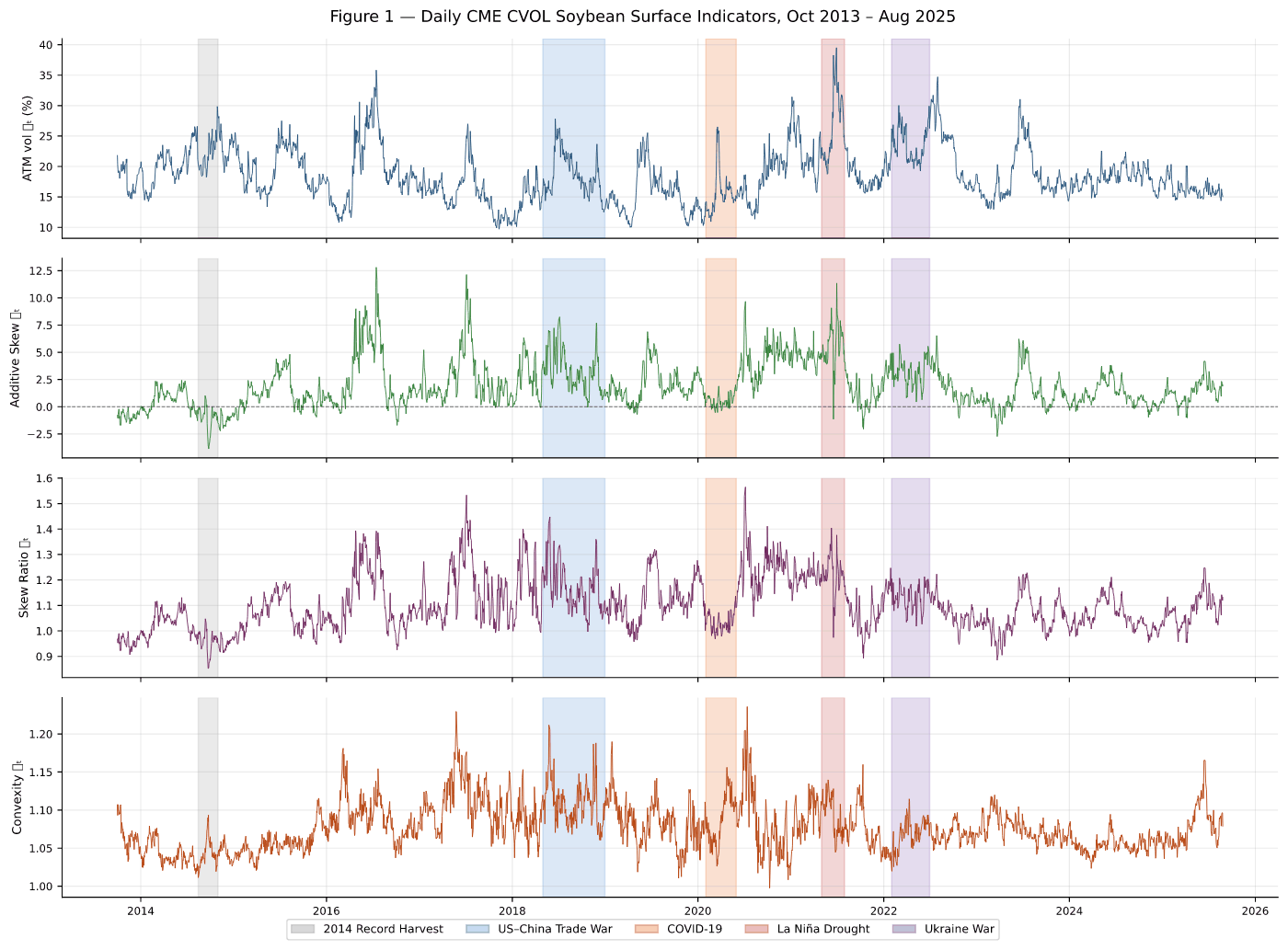
Surface-Driven Stochastic Volatility for Commodities

Develops a surface-driven stochastic volatility framework for commodity options using daily volatility surface factors, recovering vol-of-vol and leverage parameters from smile dynamics.

Fanfare 2Derivatives & VolatilityArthur Steve Tchoneteck et al.PDF

Time series of daily CME CVOL soybean surface indicators: ATM volatility, skew, skew ratio, and convexity from 2013–2025.
Figure 1. Daily CME CVOL soybean surface indicators, October 2013 to August 2025. Top: ATM implied volatility level \mathcal{L}_{t} (%). Second: additive skew \mathcal{S…
26

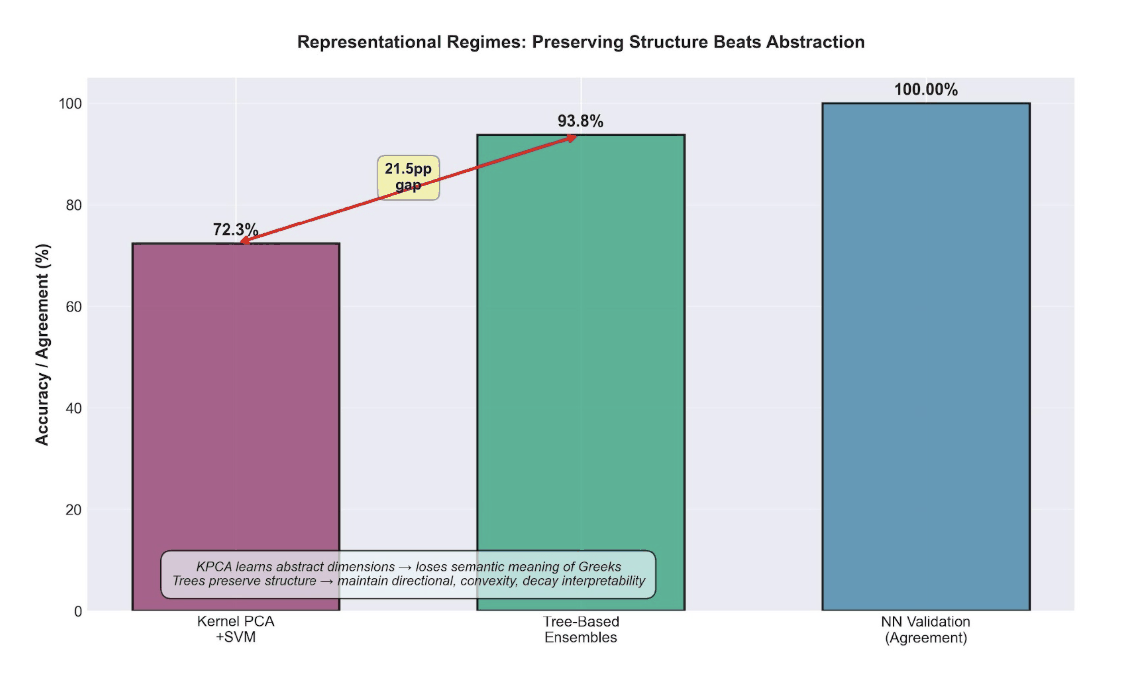
Machine Learning Detects Black-Scholes Deviations

Tree-based machine learning outperforms neural networks at detecting systematic option-pricing deviations from Black-Scholes using 2.6 million real contracts, with domain-expert features crucial.

Fanfare 2Derivatives & VolatilityJuli Huang et al.PDF

Model comparison across three representational regimes
Figure 2: Model comparison across three representational regimes. Tree-based methods (which preserve domain structure) outperform kernel PCA (which learns abstract embed…

Portfolio & Allocation4

09

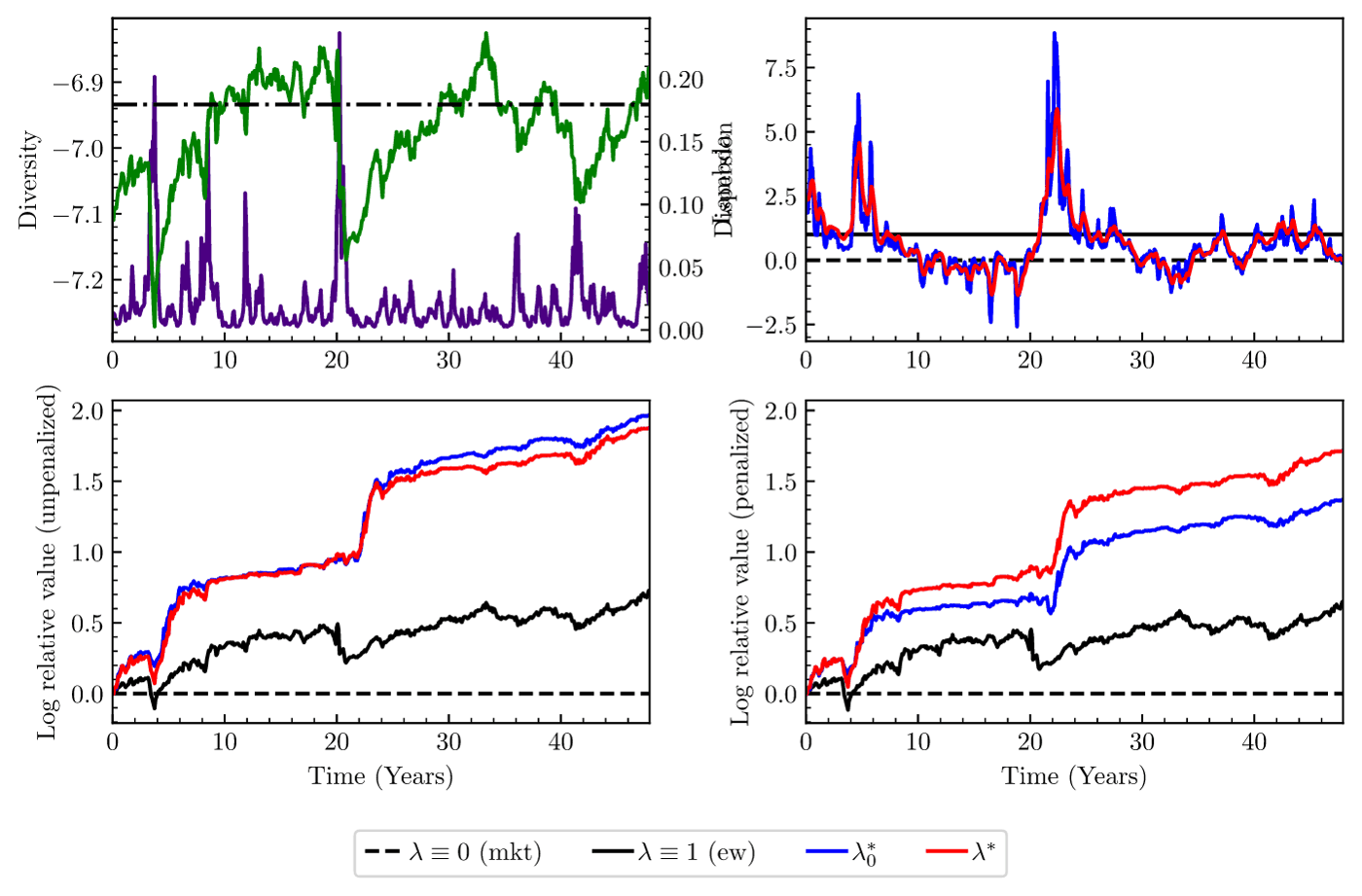
Active Portfolio Allocation with SPT

Formulates a stochastic control problem for actively allocating between equal-weighted and market portfolios based on a diversity-dispersion model, outperforming passive strategies during market bubbles.

Fanfare 3Portfolio & AllocationBrian Ceco et al.PDF

Top row: A simulated path of market diversity and dispersion under the calibrated mean-reverting SDD model (left), and
Figure 7. Top row: A simulated path of market diversity and dispersion under the calibrated mean-reverting SDD model (left), and the resulting frictionless target \lambd…
10

Decision-Focused Learning for Portfolio Optimization

Proposes a KKT-based decision-focused learning method that trains mean-variance portfolio models by directly minimizing downstream portfolio loss while preserving all constraints.

Fanfare 3Portfolio & AllocationKensei Nosaka et al.PDF

28

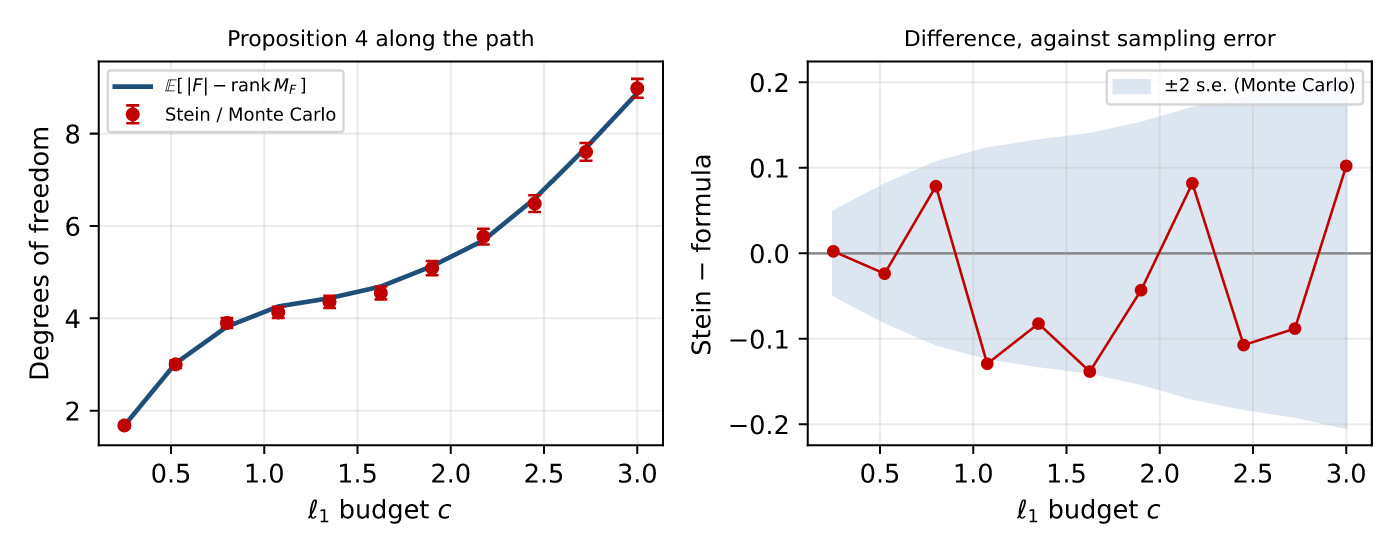
Critical Line Algorithm and Constrained LASSO

Shows that mean-variance portfolio selection and the constrained LASSO trace identical piecewise-linear solution paths, mapping their parametrizations exactly.

Fanfare 2Portfolio & AllocationThomas Schmelzer and Trevor HastiePDF

Proposition 4 checked along the path
Fig 3: Proposition 4 checked along the path. Left: degrees of freedom at eleven budgets, by \mathbb{E}[|\mathcal{F}|-\operatorname{rank}M_{\mathcal{F}}] (line) and by Mo…
29

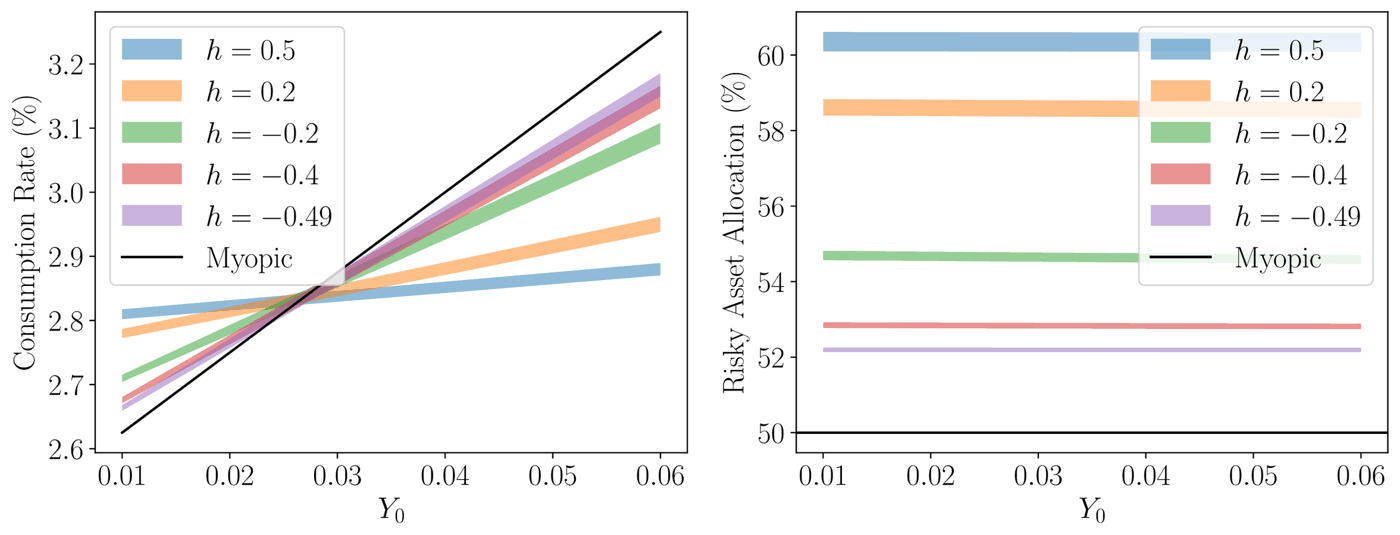
Optimal Investment under Integrated Variance Clocks

Characterizes optimal consumption and investment strategies in markets with stochastic volatility clocks using infinite-horizon backward SDEs, extending to rough and hyper-rough regimes.

Fanfare 2Portfolio & AllocationEduardo Abi Jaber et al.PDF

Optimal Investment under Integrated Variance Clocks

Also notable2

13

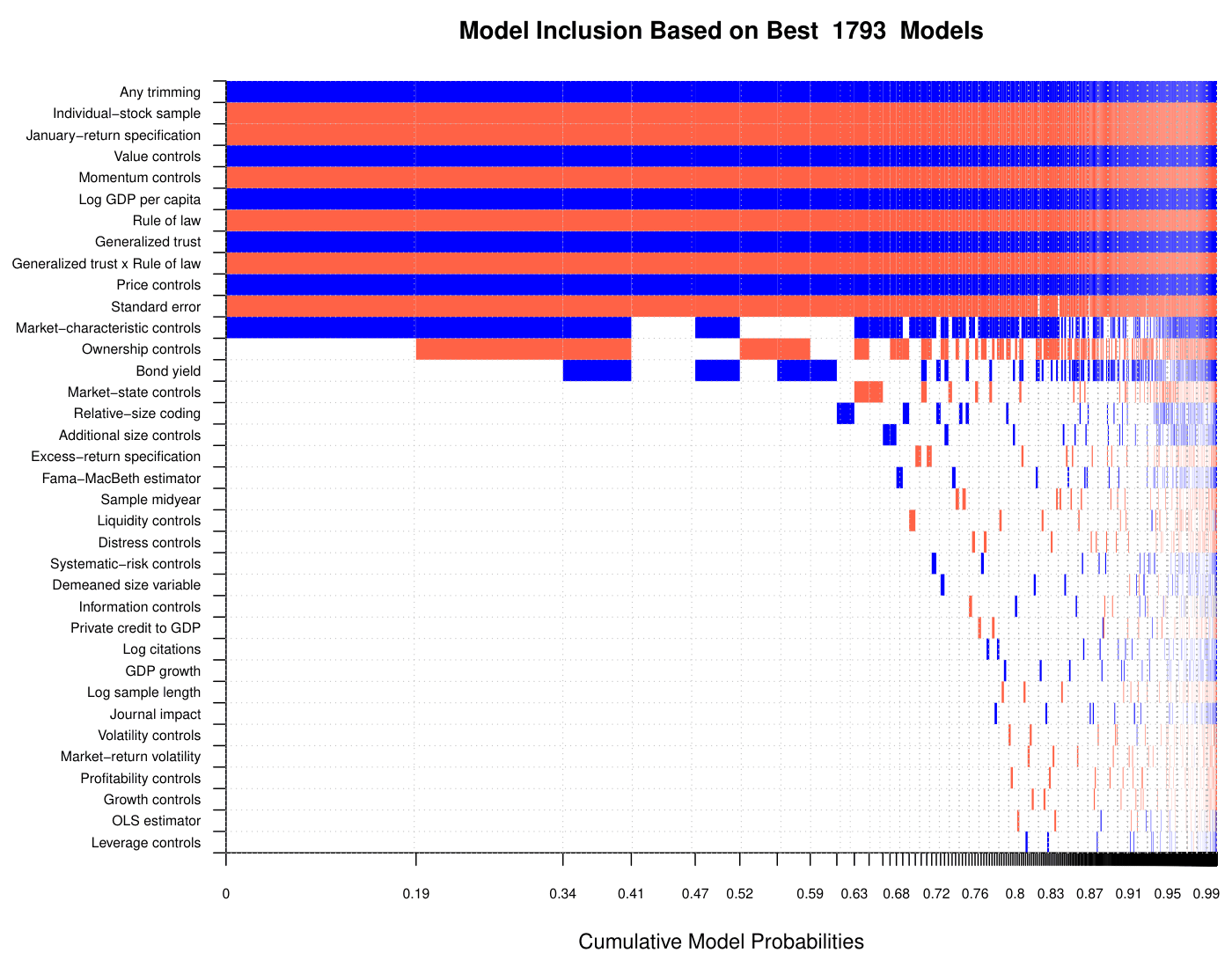
Trust, Rule of Law, and the Size Premium

Meta-analysis of 1,613 size-premium estimates across 31 countries finds that stronger rule of law is associated with larger size premia, contrary to intuition.

Fanfare 3Asset Pricing & FactorsJiri Schwarz et al.PDF

Bayesian Model-Averaged Coefficient Summary
Figure 5: Bayesian Model-Averaged Coefficient Summary
17

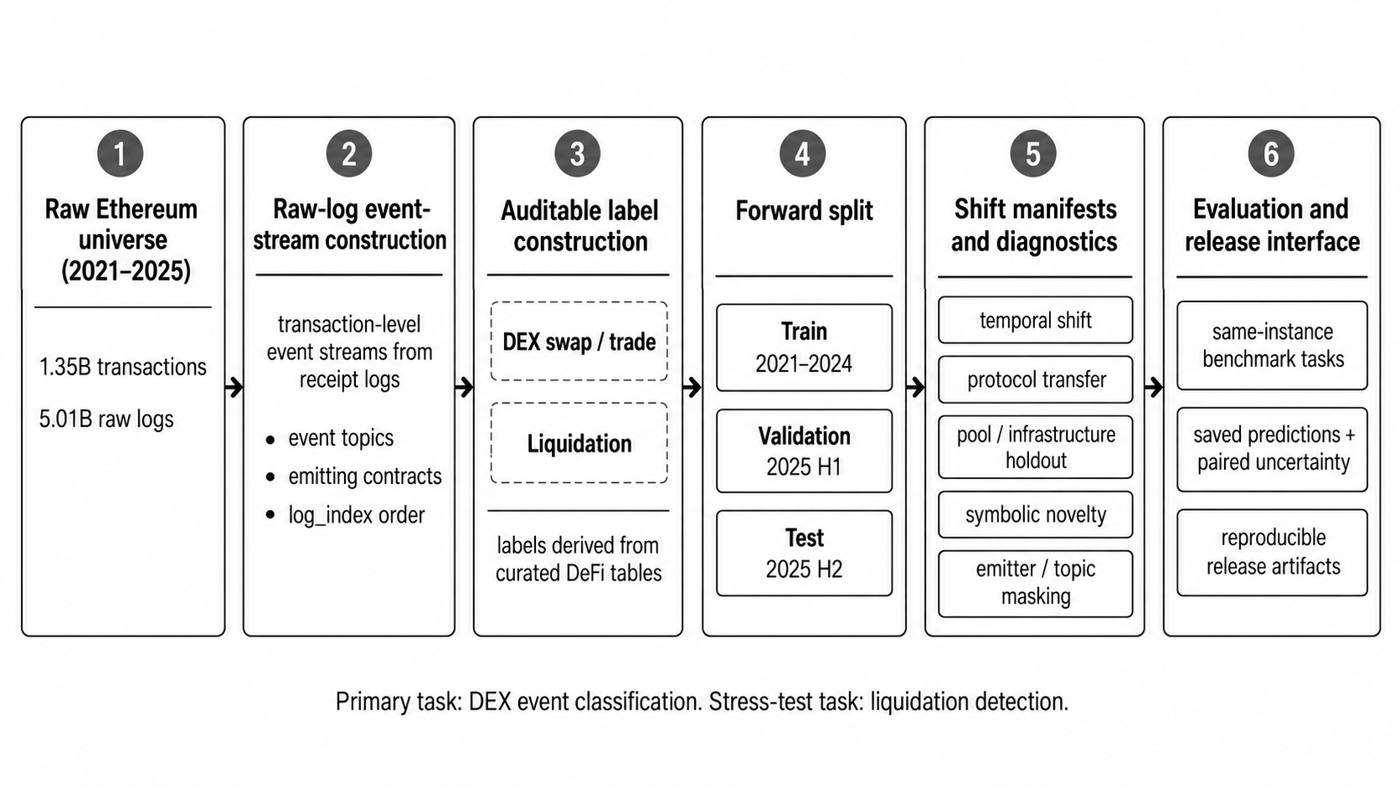
ETH-TraceBench: Ethereum DeFi Benchmark

Introduces a large-scale benchmark on 1.35 billion Ethereum transactions to evaluate DeFi representations under temporal, protocol, and contract drift, revealing model degradation on unseen pools.

Fanfare 3Crypto & DeFiKemal Kirtac and Carsten MaplePDF

ETH-TraceBench benchmark construction and evaluation pipeline
Figure 1: ETH-TraceBench benchmark construction and evaluation pipeline. The raw Ethereum universe is converted into transaction-level event streams from receipt logs; D…

SSRN

New working papers in finance, economics and ML

30 papers

ML & AI Methods5

01

Artificial Intelligence and Financial Markets

A survey examines how AI transforms information production, intermediation, and market structure, with implications for efficiency, competition and financial stability.

Fanfare 4ML & AI MethodsÁlvaro Cartea et al.

02

Label Engineering for Stock Selection

Reshaping the prediction target through location, scale and shape transformations raises long-short Sharpe from 0.68 to 1.69, with label choice mattering more than model choice.

Fanfare 4ML & AI MethodsTony Guida and Guillaume Coqueret

06

LLM Stock Rankings and Look-Ahead Bias

Testing whether a large language model ranks stocks by forecasting or memory, the study finds a significant information-coefficient gap of 0.185 inside versus outside its training window, suggesting substantial look-ahead contamination.

Fanfare 3ML & AI MethodsBach Nguyen

07

Training-Data Leakage in LLM Stock Signals

The study measures recall versus forecasting in an LLM's stock rankings by comparing cross-sectional information coefficients inside and outside the training window.

Fanfare 3ML & AI MethodsBach Nguyen

12

LLM Factor Search with Transaction Cost Penalties

The paper builds a closed-loop system where an LLM proposes equity factors penalized for execution costs and shows that accounting for trading costs dramatically improves net performance.

Fanfare 3ML & AI MethodsRaghuram Nagireddy

Trading, Microstructure & Execution4

03

Reinforcement Learning Agents Enable Collusion

Q-learning pricing agents in simulated duopolies reach supracompetitive outcomes with no communication, achieving collusion indices of 0.778 and 40% profit gains over competitive benchmarks.

Fanfare 4Trading, Microstructure & ExecutionVladislav Dolgov

08

Zero Fees Drive Fake Volume in Crypto Futures

Analysis of Kalshi's regulated Bitcoin and Ethereum futures reveals that 39-48% of notional trades are mechanical fixed-size orders that vanish when fees are charged, indicating costless artificial volume rather than legitimate trading.

Fanfare 3Trading, Microstructure & ExecutionAndre Guettler

20

Settlement Risk Prices Currency Excess Returns

Hungary's 2015 adoption of payment-versus-payment settlement reduced currency excess returns by ten basis points, demonstrating settlement risk is a priced friction limiting arbitrage.

Fanfare 3Trading, Microstructure & ExecutionSeungduck Lee et al.

26

Fed Communication Divergence and High-Frequency Trading

Semantic and tonal shifts across sequential Federal Reserve communications generate significant intraday price movements and abnormal volume, revealing incomplete information absorption at initial announcement.

Fanfare 2Trading, Microstructure & ExecutionAihui Wei

Asset Pricing & Factors4

04

Defence Sector Repricing Before Ukraine

European defence stocks repriced sharply starting November 2021, two to three months before Russia's invasion, delivering 26% alpha and reflecting release of ESG-exclusion constraints.

Fanfare 4Asset Pricing & FactorsAndrej Bajic and Miloš Starović

11

Margin Debt Growth and Factor Momentum

Factor momentum strategies earn 49 basis points per month extra return following quarters of rapid margin-debt growth, a predictability that persists after publication and reflects limits to arbitrage correction.

Fanfare 3Asset Pricing & FactorsWeijian Sun and Yu Xia

16

Price Delay and Momentum Profits

Momentum profits concentrate among firms with high price delay, a measure of information friction, directly supporting theories that gradual information incorporation drives momentum.

Fanfare 3Asset Pricing & FactorsBharat Raj Parajuli

27

Negative Rates and Firm Valuations

Comparing firms across the ECB's 2014 negative rate adoption shows treated European firms had higher valuations but reduced leverage, suggesting cash-flow and discount-rate channels dominate tax-shield effects.

Fanfare 2Asset Pricing & FactorsArun Upadhyay et al.

Risk, Credit & Banking7

05

Forward Guidance and Bank Credit Supply

High-frequency analysis reveals contractionary forward guidance immediately cuts bank lending, while expansionary guidance produces weak stimulus, driven by binding capital constraints.

Fanfare 3Risk, Credit & BankingElliot Spears

14

Securitization Amplifies Rate Transmission

Banks engaged in securitization contract lending more sharply after monetary tightening because their investor base demands higher returns and cuts risk exposure when rates rise.

Fanfare 3Risk, Credit & BankingDorian Henricot and Enrico Sette

19

Hedge Fund Returns and Interest Rate Risk

Using SEC filings from 2013-2021, the paper finds hedge fund returns show heterogeneous sensitivity to interest rates, with effects varying by strategy, leverage, and derivative exposure.

Fanfare 3Risk, Credit & BankingAyelen Banegas

23

Systemic Risk in Global Banking Networks

Combining quantile-connectedness, tail-risk measures, and network analysis, the research shows tail connectedness exceeds median levels and lower-tail effects persist longer, with the VIX alone reliably predicting next-week systemic risk.

Fanfare 2Risk, Credit & BankingOguzhan Ozcelebi et al.

24

Negative Rates Cut Bank Lending via Asset Returns

Japan's 2016 negative-rate policy reduced lending from low-profitability banks holding reserves, consistent with lower expected returns on bank assets rather than deposit-side stress.

Fanfare 2Risk, Credit & BankingKoji Takahashi and Kiyotaka Nakashima

28

Signature-Based Structural Credit Models

The study develops a time-varying signature asset model for structural credit that improves calibration across CDS maturities and equity option prices, especially for high-yield firms.

Fanfare 2Risk, Credit & BankingMatthias Arnsdorf et al.

30

Distressed Debt Exchanges and Creditor Trilemma

Analysis of 284 distressed exchanges from 2009-2022 reveals over 50% of firms face subsequent default, with large illiquid creditors trapped in a prisoner's dilemma explaining high acceptance rates.

Fanfare 3Risk, Credit & BankingRafal Sieradzki and Edward I. Altman

Portfolio & Allocation2

10

LASSO Benchmarks Reveal Mutual Fund Alpha

Using factor selection, the study finds mean active alpha of plus 9 basis points monthly for mutual funds, reversing the no-alpha conclusion when benchmarks are tailored to each fund.

Fanfare 3Portfolio & AllocationDmitry Malakhov

29

Minimax Portfolio Optimization Under Tail Risk

The research proposes a data-driven portfolio method that blends tail-risk models and projects onto valid mixtures, providing bounds on Expected Shortfall regret without Wasserstein assumptions.

Fanfare 2Portfolio & AllocationZheqi Fan

Derivatives & Volatility4

13

Training Option Models on Prices not Volatility

The paper compares machine learning option pricing trained on pricing errors versus implied-volatility errors using 8.67 million S&P 500 index-option observations from 1997 through 2025.

Fanfare 3Derivatives & VolatilityPanayiotis C. Andreou et al.

15

Hedge Fund Leverage Amplifies Bond Volatility

Leveraged hedge fund positions amplify sovereign bond yield sensitivity to monetary shocks by over a quarter through directional rebalancing, with effects scaling to position intensity.

Fanfare 3Derivatives & VolatilityFelix Hermes

21

Tail Risk Forecasting with Cubic Distributions

A cubic quantile framework forecasts Value-at-Risk and Expected Shortfall more reliably than GARCH benchmarks across eight equity indices without requiring a parametric density.

Fanfare 3Derivatives & VolatilityLaura Garcia-Jorcano et al.

22

Physics-Constrained Neural Operators for Option Pricing

A deep operator network maps volatility surfaces to option prices under the Heston model 15,000 times faster than finite-difference methods while reducing dynamic hedging variance by over 59% under transaction costs.

Fanfare 2Derivatives & VolatilityWonChan Cho

Macro-Finance & Rates2

18

Expectations Drive Term Structure Sensitivity

Decomposing yield sensitivity without assuming rational expectations reveals that expectations rather than risk premia drive short- and medium-term bond yields, with systematic inconsistencies across horizons.

Fanfare 3Macro-Finance & RatesPooya Molavi et al.

25

Banking Structure and Euro-Area Monetary Transmission

A 100-basis-point contractionary monetary shock lowers inflation and sales across 20 euro-area economies, with transmission strength varying by bank asset-risk exposure and assets-to-GDP ratio rather than a simple weak-strong taxonomy.

Fanfare 2Macro-Finance & RatesShi Hongyan

Also notable2

09

FOMC Semantic Novelty and Financial Stress

Semantic surprises extracted from Federal Reserve statements predict subsequent financial-stress dynamics and reduce forecast error by up to 23%, particularly when initial stress is high or during recessions.

Fanfare 3LLMs & TextFengtian Yang et al.

17

Industry Networks Predict Market Returns

Using production, employment, and sales data across 426 industries, the research shows that upstream industry signals predict aggregate monthly stock returns with 23.8% out-of-sample R-squared.

Fanfare 3Econometrics & ForecastingElham Ghorbani and Rasoul Foroughfard

RePEc

Working papers curated by RePEc's NEP field reports

30 papers · 15 figures

ML & AI Methods3

01

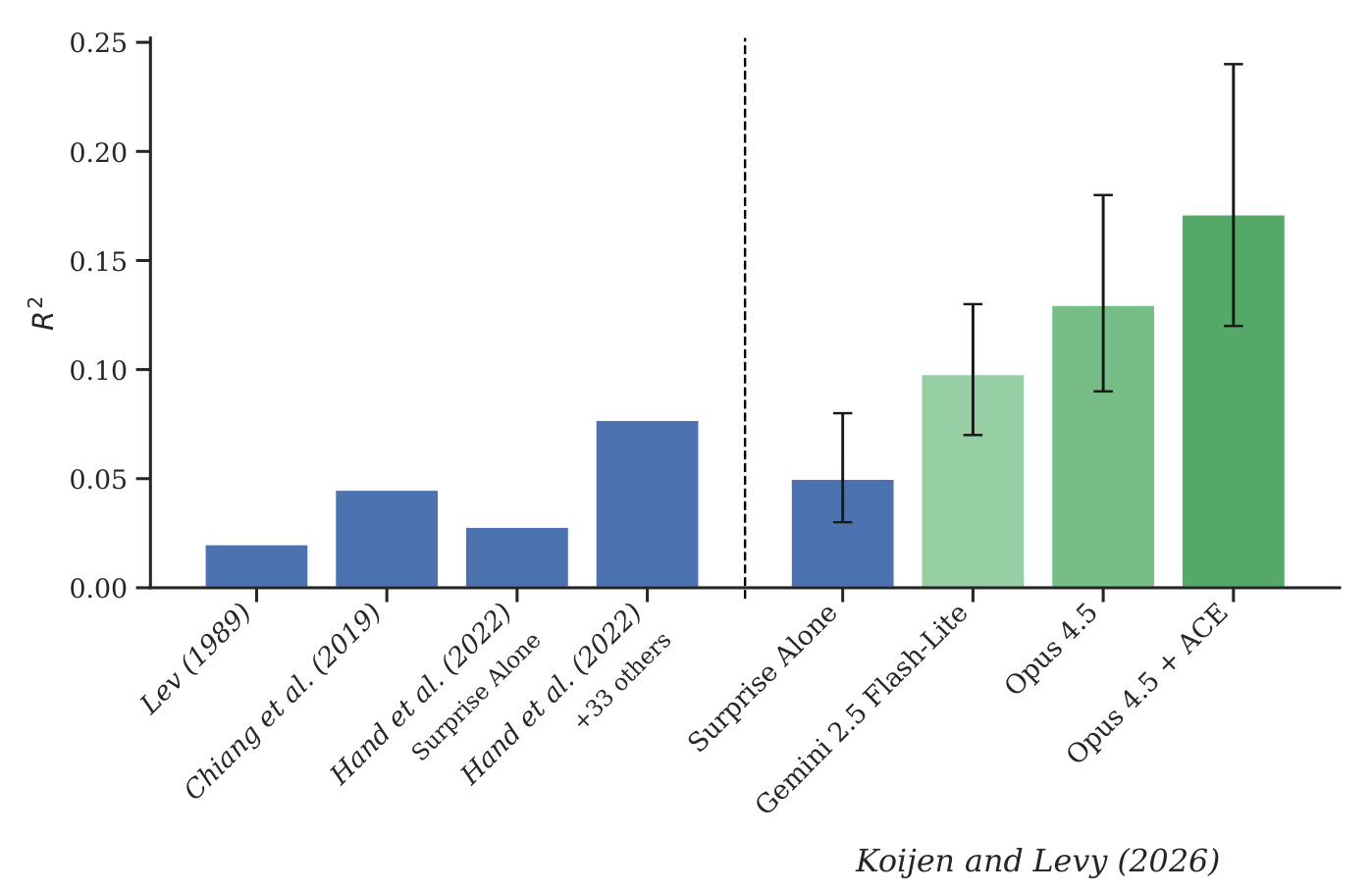
Agentic AI Systems Beat Asset Pricing Benchmarks

Optimized AI systems analyzing earnings call transcripts double explained variation in stock returns versus standard benchmarks while improving interpretability through human-readable decision rules.

Fanfare 4ML & AI MethodsRalph S. J. Koijen and Bradford LevyPDF

Progress on Explaining Asset Prices Around Earnings Announcements
Figure 1: Progress on Explaining Asset Prices Around Earnings Announcements
08

Predicting Market Stress with Random Forests

Tree-based machine learning models predict the full distribution of financial market stress 27% better than traditional time-series methods, with macro uncertainty and monetary policy expectations as key drivers.

Fanfare 3ML & AI MethodsInaki Aldasoro et al.PDF

11

AI Architecture and Financial Stability

Q-learning and large language model investors generate systematically different behaviors in fund redemption settings, with Q-learning showing excessive coordination and amplified fragility under default risk.

Fanfare 3ML & AI MethodsKartik Anand et al.PDF

Asset Pricing & Factors7

03

Skewness Risk in Currency Markets

Using model-free skewness measures from currency options, the study shows that skewness risk is priced in currency returns and explains variation across a broad cross-section of currency portfolios.

Fanfare 3Asset Pricing & FactorsJunye Li et al.PDF

05

Asset Embeddings from Portfolio Holdings

The paper shows that portfolio holdings contain all information needed for asset pricing and develops asset embeddings analogous to word embeddings to represent firms and predict valuations.

Fanfare 3Asset Pricing & FactorsXavier Gabaix et al.PDF

06

Intermediary Constraints and Global Risk Pricing

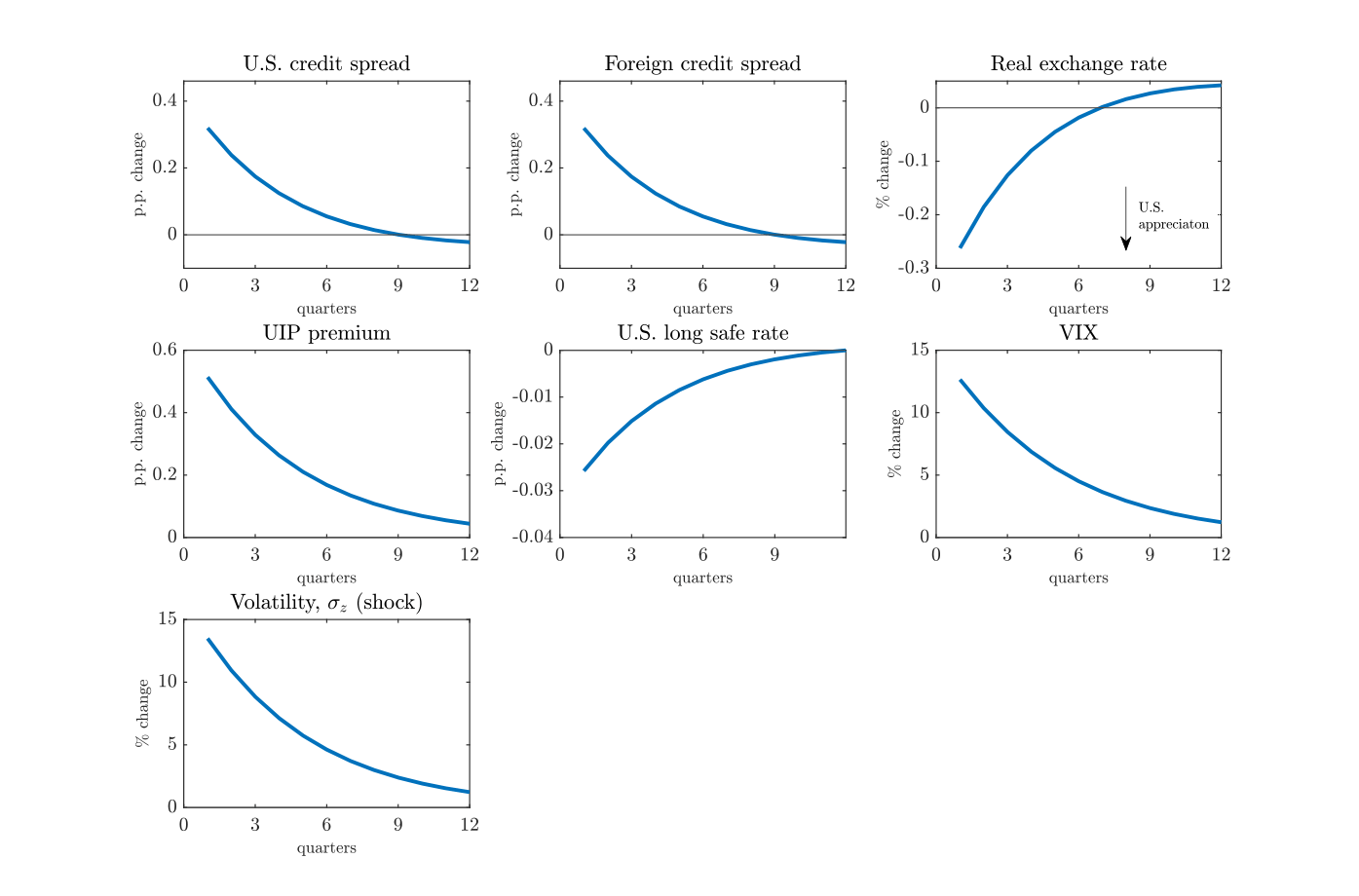
A two-country model shows that uncertainty shocks tighten intermediary constraints, widening credit spreads, appreciating the dollar, and raising currency risk premia globally.

Fanfare 3Asset Pricing & FactorsOzge Akinci and Ṣebnem Kalemli-ÖzcanPDF

Model responses to uncertainty shock: credit spreads, exchange rates, and risk premiums over time.
Figure 3: Responses to uncertainty shock, model
07

Carry Trade Returns and Crash Risk

Focusing on dollar-lira trading, the paper shows that higher crash risk significantly increases carry trade expected returns, accounting for 46–77% of compensation through Shapley decomposition.

Fanfare 3Asset Pricing & FactorsMerve Mavus Kutuk and Sweder van WijnbergenPDF

17

Rate Insurance in Equity and Bond Returns

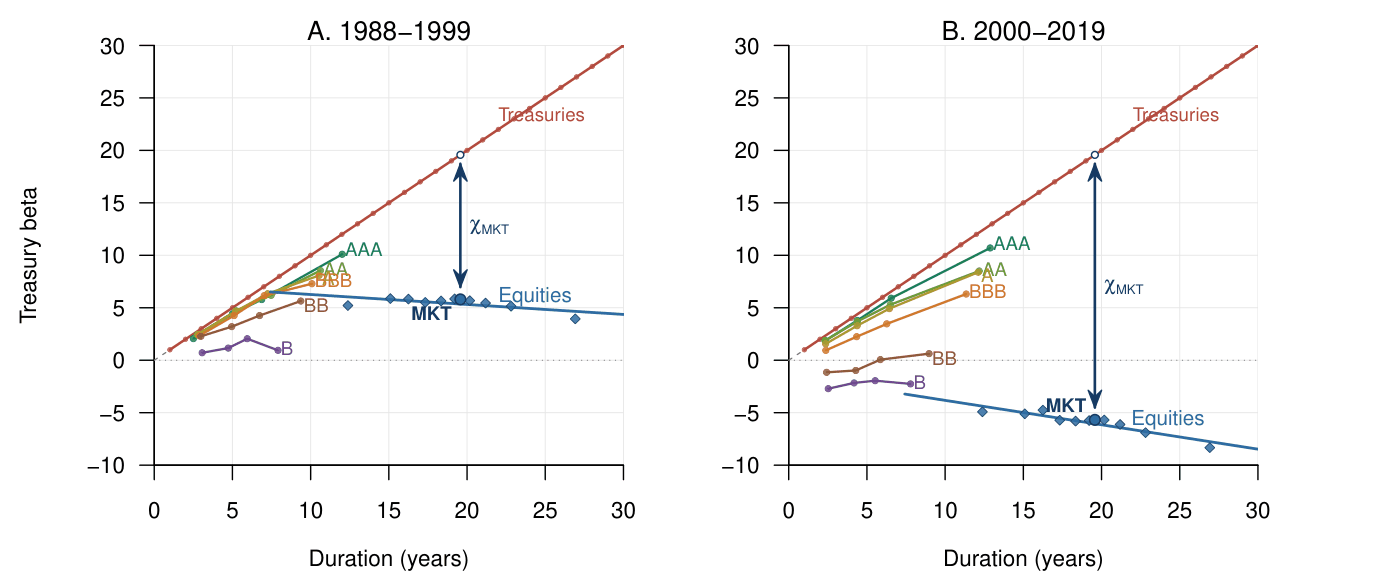
Stock returns are dampened by rate insurance: falling rates cushion payoff risk in bad times while rising rates in good times hedge duration exposure.

Fanfare 3Asset Pricing & FactorsOlivier WangPDF

Rate insurance effect comparing corporate bonds and equities across duration periods 1988-2019.
Figure 2: Rate insurance in corporate bonds and equities. The vertical axis is the monthly coeffi- cient on each asset’s matched Treasury return divided by duration. Equ…
18

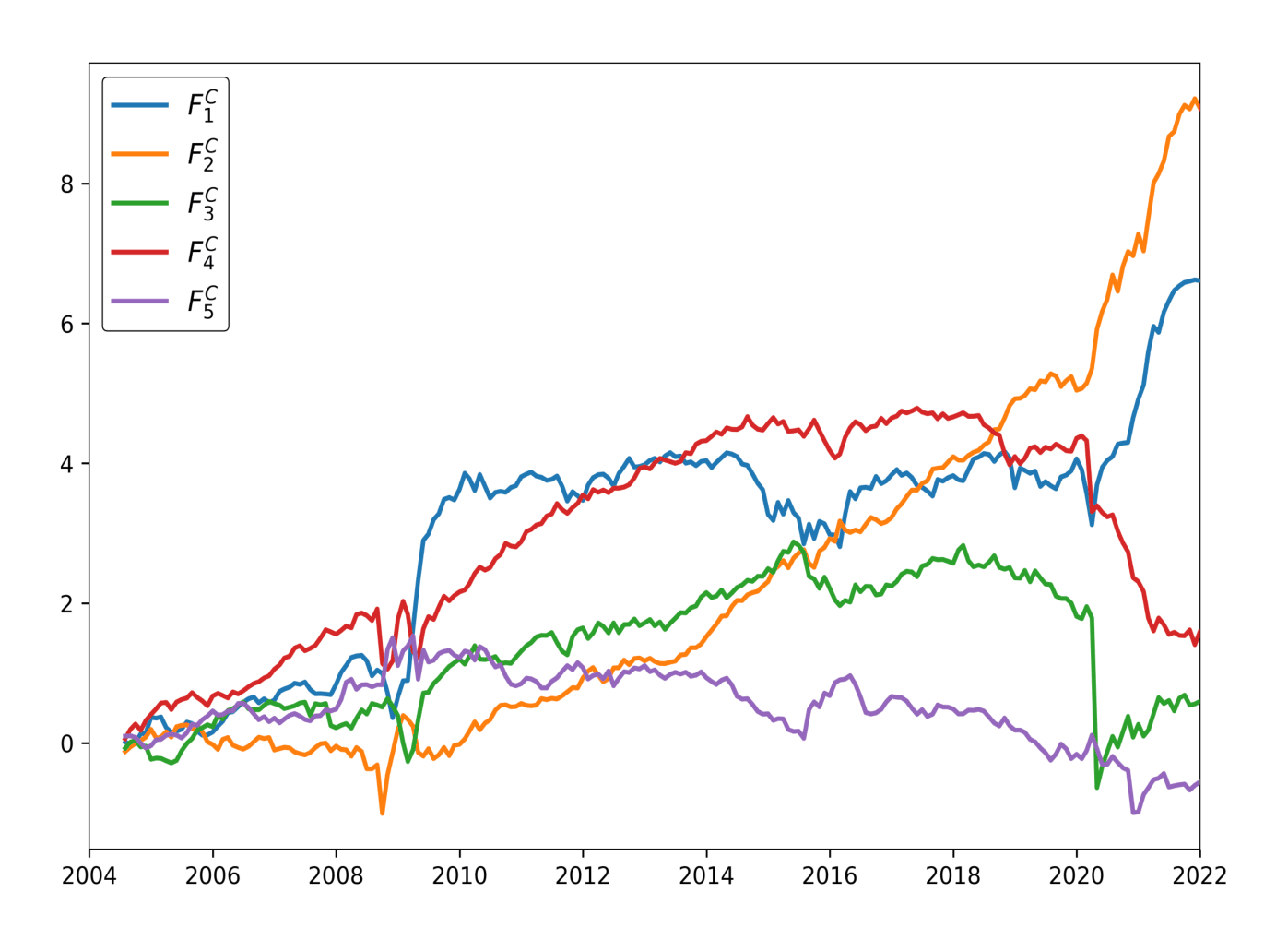
Common Factors Across Stocks, Bonds, Options

The research identifies common risk factors spanning stocks, corporate bonds, and options linked to economic indicators, revealing significant market segmentation and cross-asset hedging opportunities.

Fanfare 2Asset Pricing & FactorsZhongtian Chen et al.PDF

Cumulative returns of the first five common factors (F C)
Figure 1: Cumulative returns of the first five common factors (F C)
25

USDA Reports Anchor Commodity Price Expectations

Traders place 15% weight on USDA crop reports relative to private priors when forming price expectations, with this anchoring weight rising when private analyst disagreement increases.

Fanfare 2Asset Pricing & FactorsHosung Nam et al.PDF

Risk, Credit & Banking10

04

Global Credit Cycle Factor Pricing

A nonlinear factor constructed from credit spreads and equity volatility prices global corporate bond returns, explaining up to 13% of three-month-ahead return variation across markets.

Fanfare 3Risk, Credit & BankingNina Boyarchenko and Leonardo EliasPDF

09

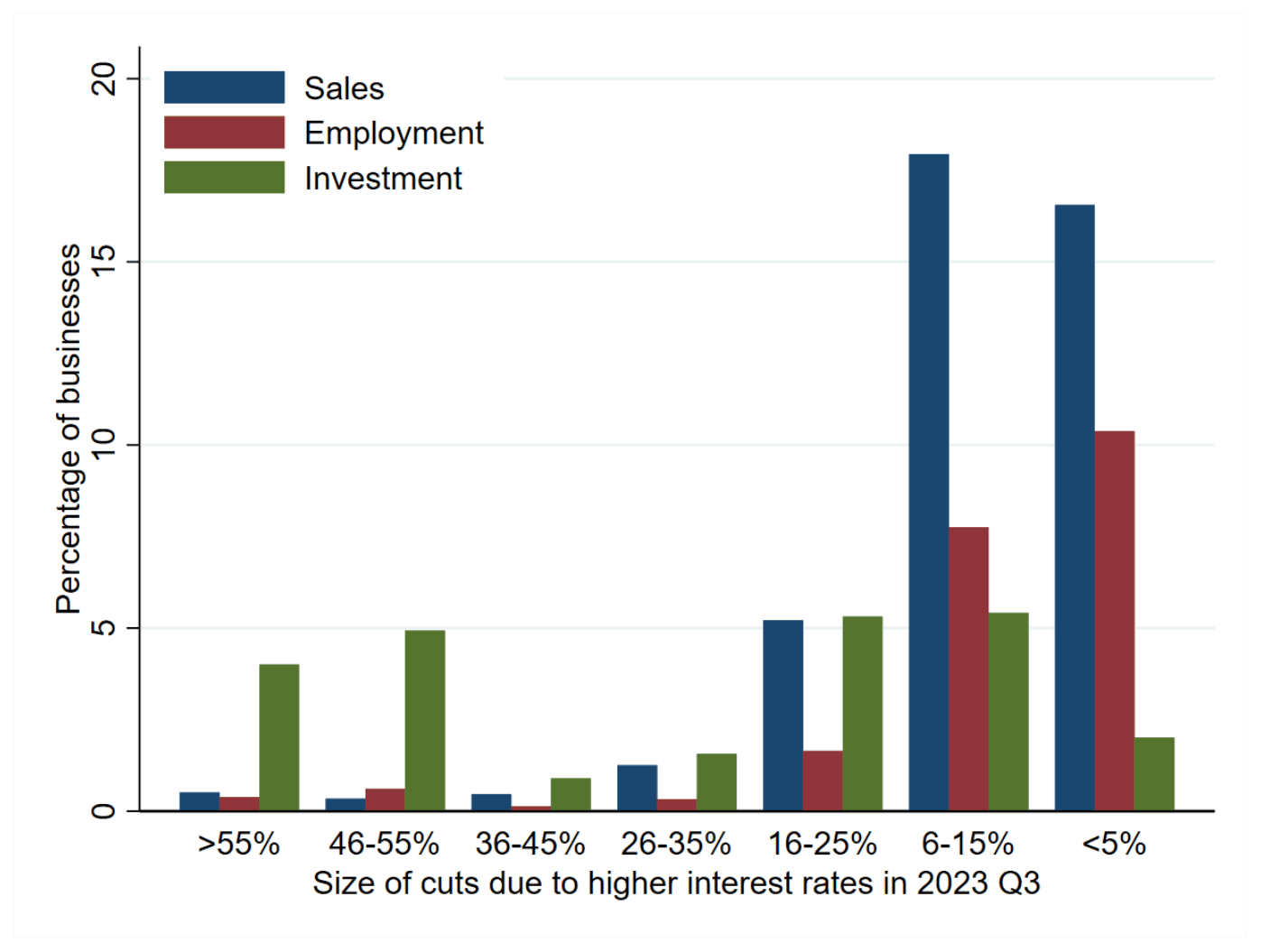
Credit Channel of Monetary Policy in Practice

UK firm survey data validates that external borrowers face larger cost-of-capital increases and cut investment more than internal funders when rates rise, accounting for a quarter of monetary policy's total effect.

Fanfare 3Risk, Credit & BankingKrishan Shah et al.PDF

Distribution of reported impacts of higher interest rates on sales, employment and investment, in 2023 Q3
Figure B6: Distribution of reported impacts of higher interest rates on sales, employment and investment, in 2023 Q3. Firms responses are weighted by industry and size t…
19

Credit Card Banking Economics and Profitability

Analysis of 550 million US credit card accounts shows that despite high charge-off rates, card lenders earn 1.5% alpha and 6.8% return on assets through pricing power and non-interest income.

Fanfare 3Risk, Credit & BankingItamar Drechsler et al.PDF

20

Bank Runs History and Economic Consequences

A database of 3,984 historical US bank runs shows runs are more likely in weak banks but often occur in strong banks; failures concentrate in fundamentally weak institutions.

Fanfare 3Risk, Credit & BankingSergio A. Correia et al.PDF

22

LASH Risk and Interest Rate Movements

The study measures liquidity risk from solvency hedging in sterling repo and swaps, finding that pre-crisis LASH risk predicted pension fund bond sales during the 2022 UK market stress.

Fanfare 2Risk, Credit & BankingLaura Alfaro et al.PDF

23

High-Yield Corporate and Sovereign Bonds Converge

Analysis of 20 years of US junk bonds and emerging market sovereign debt reveals surprisingly similar average returns, Sharpe ratios, default frequencies, and haircuts across the two asset classes.

Fanfare 2Risk, Credit & BankingGita Gopinath et al.PDF

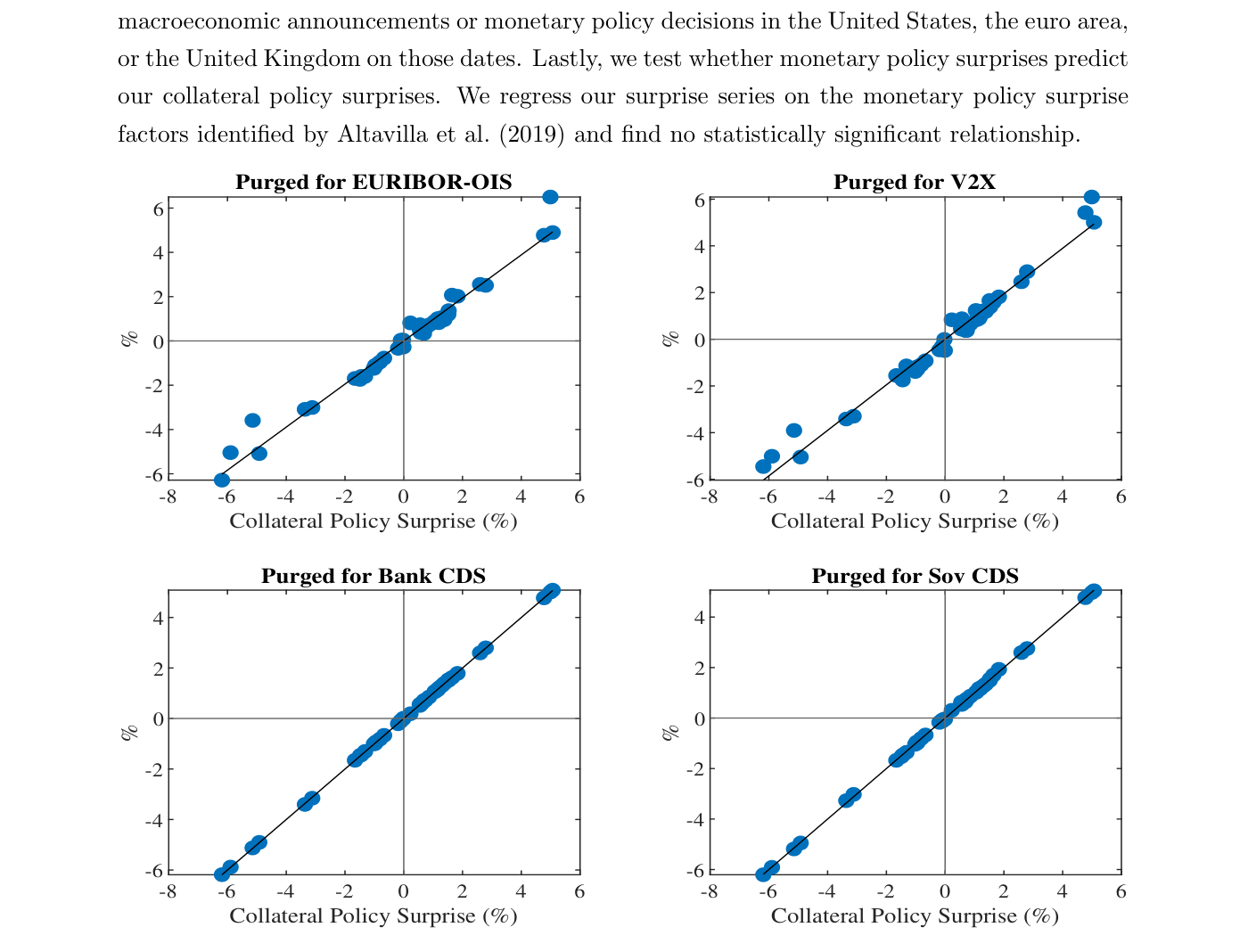
26

Collateral Policy Surprises Stabilize Banking

Expansionary central bank collateral policy surprises reduce bank default risk and volatility while compressing government bond spreads, transmitting effects distinctly from asset purchases.

Fanfare 2Risk, Credit & BankingPia Hüttl et al.PDF
Scatter plots showing collateral policy surprise correlation with CDS spreads across multiple financial indicators.
Figure 4: Purged Collateral Policy Surprises. The left column compares our collateral policy surprise, i.e. the first principal component of all bank stock price reactio…
28

Pension Funds' Swap-Driven Liquidity Risk

Dutch pension funds use interest rate swaps more aggressively when underfunded, exposing themselves to margin calls exceeding 6% of assets and forcing procyclical sales of government bonds.

Fanfare 2Risk, Credit & BankingKristy Jansen et al.PDF
29

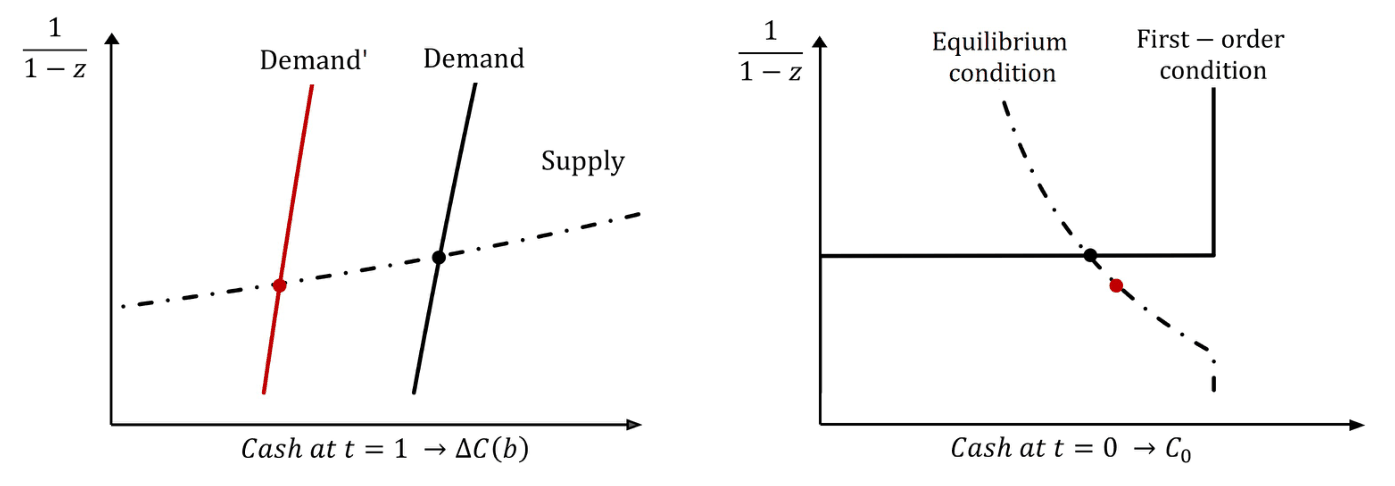
A Theory of Bank Liquidity Requirements

The study develops a general equilibrium model of financial intermediation showing that liquidity regulation alone cannot achieve efficient allocations and requires complementary policies like bank size limits.

Fanfare 2Risk, Credit & BankingMadalen Castells-Jauregui et al.PDF
Supply and demand curves showing equilibrium cash determination in financial markets.
Figure 2: Equilibrium conditional on α
30

Too-Big-to-Fail Premium in European Banking

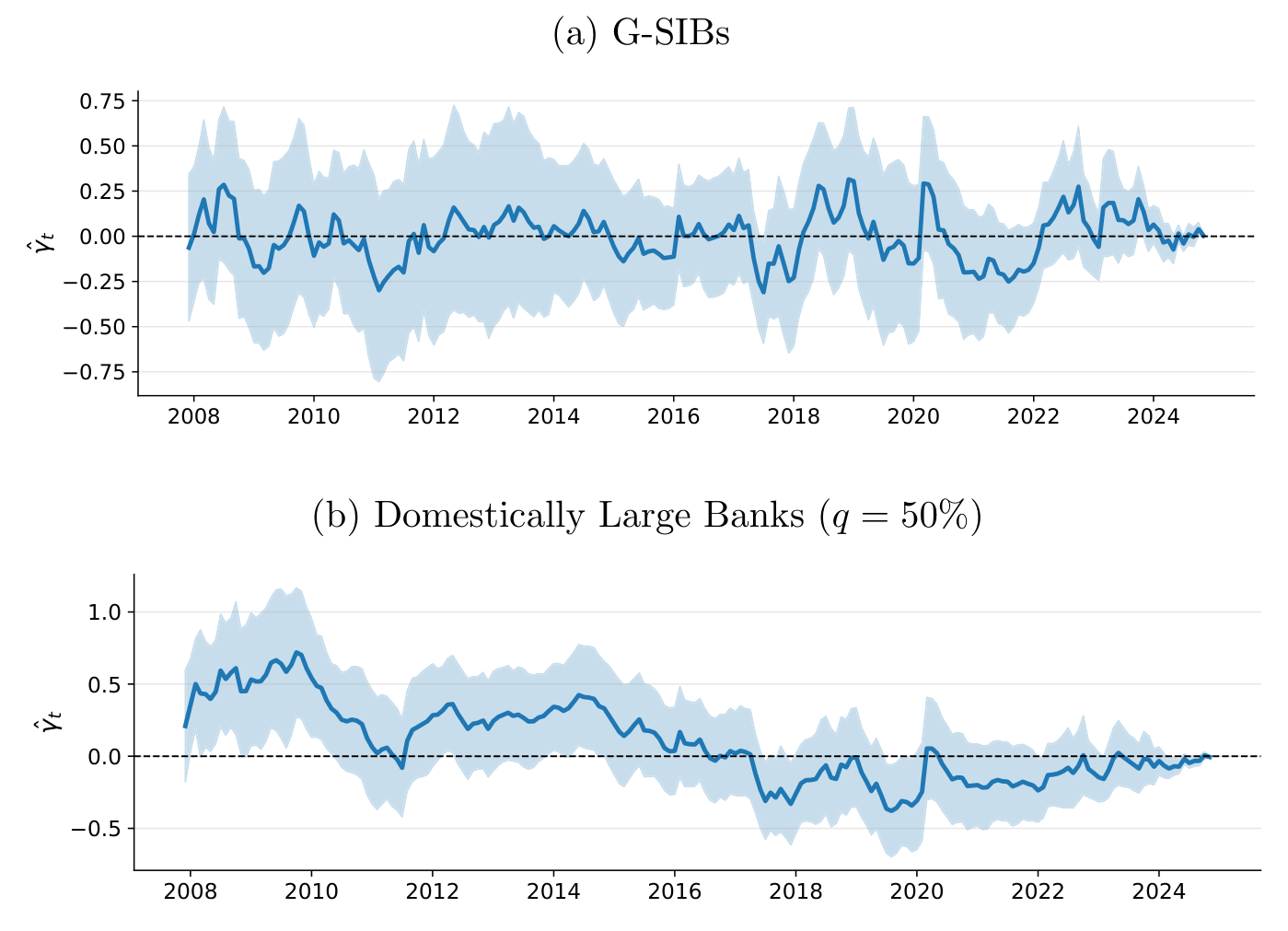
European banks with assets exceeding half of home GDP enjoy at least 30 percent lower credit spreads, and this implicit subsidy persists and depends on sovereign fiscal strength.

Fanfare 2Risk, Credit & BankingLaura Deen and Daniel DimitrovPDF

Time-varying estimate of TBTF wedge, scaled to Dec 2024
Figure 1: Time-varying estimate of TBTF wedge, scaled to Dec 2024

Macro-Finance & Rates3

10

Monetary Policy Shocks Impair Innovation Financing

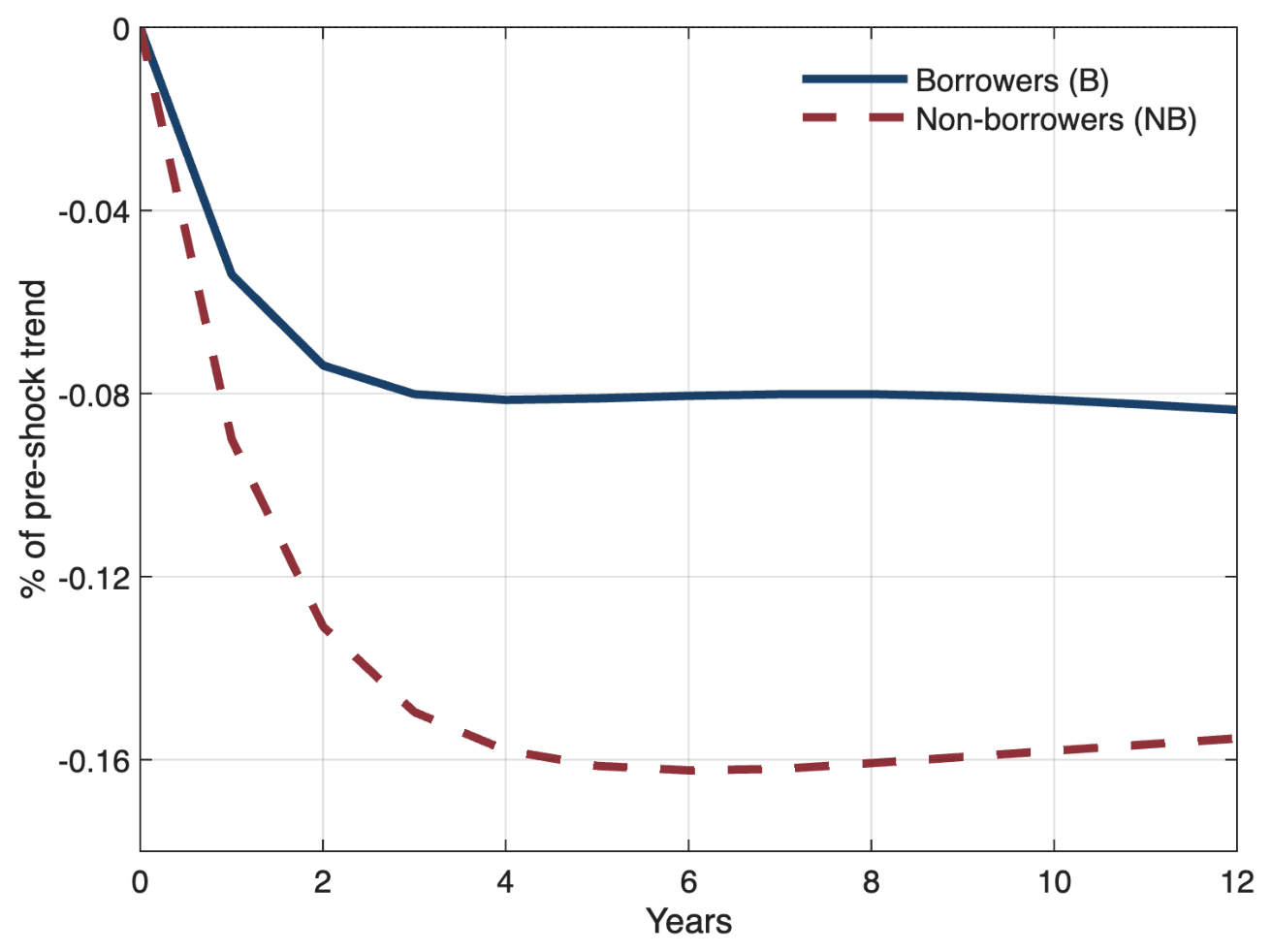
Monetary tightening reduces R&D more sharply among firms lacking cash-flow-based borrowing, generating persistent 0.12% output loss that younger, high-patent firms bear disproportionately.

Fanfare 3Macro-Finance & RatesAydan Dogan and Ozgen OzturkPDF

Persistent productivity loss over 12 years, larger for non-borrowers than borrowers post-shock
Figure 8 Persistent Productivity Loss by Firm Type
14

Financial Constraints and Monetary Price Response

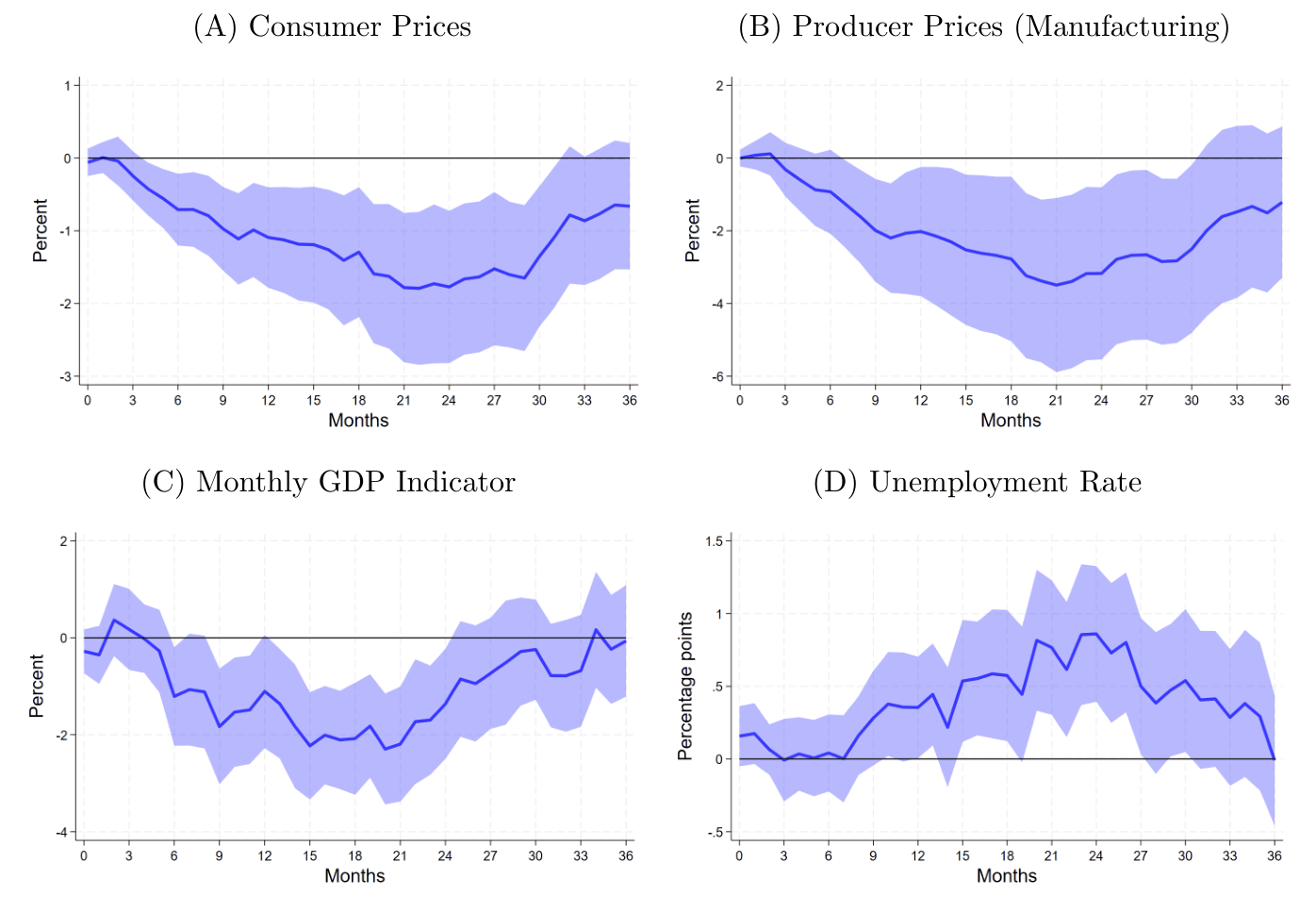
Swedish data reveals that financially constrained firms adjust prices less to monetary shocks, materially dampening aggregate inflation response to policy changes.

Fanfare 3Macro-Finance & RatesMichael Bauer et al.PDF
Impulse Response Functions of Monthly Macro Variables
Figure 1: Impulse Response Functions of Monthly Macro Variables
16

Capital Flows and Exchange Rates Policy

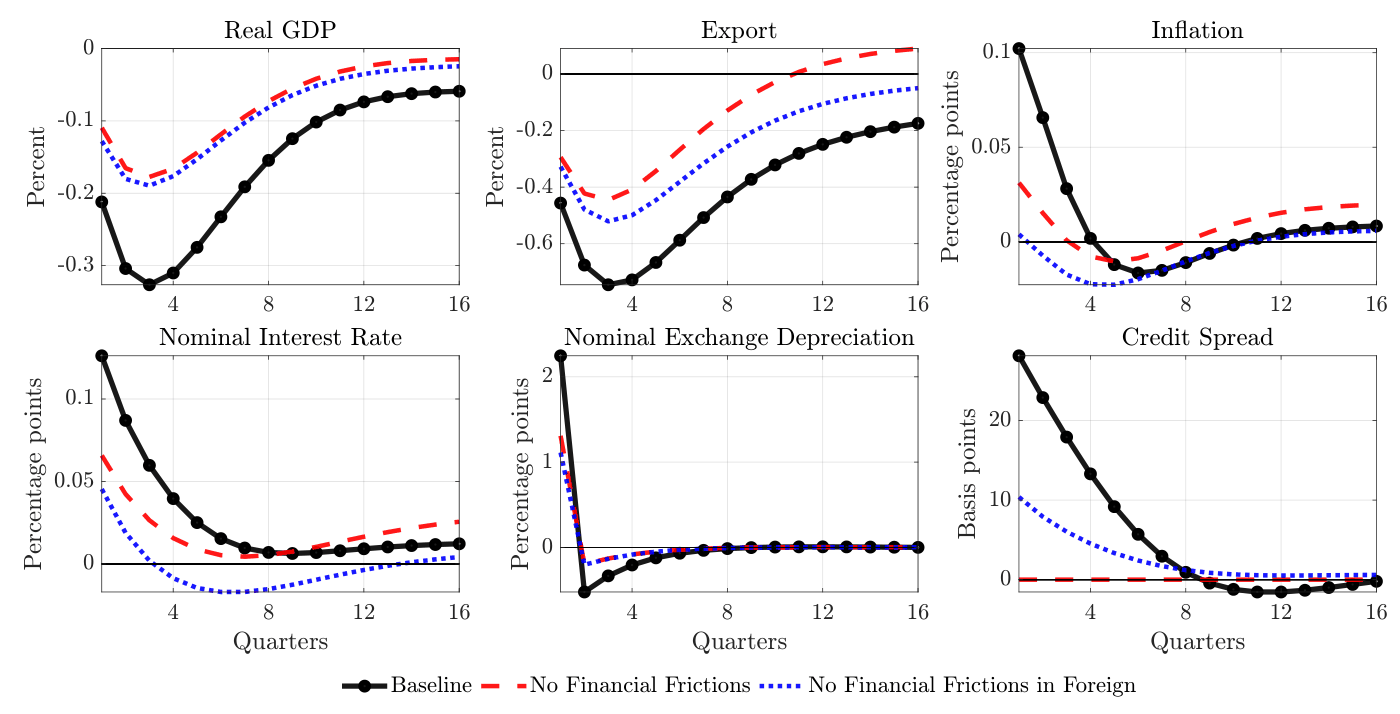
In response to US monetary tightening, financial channels dominate for small open economies: credit spreads widen and output falls despite currency depreciation.

Fanfare 3Macro-Finance & RatesAmbrogio Cesa-Bianchi et al.PDF
Impulse responses showing GDP, exports, exchange rate, and credit spread with and without financial frictions.
Figure 4: The role of financial frictions.

Trading, Microstructure & Execution2

12

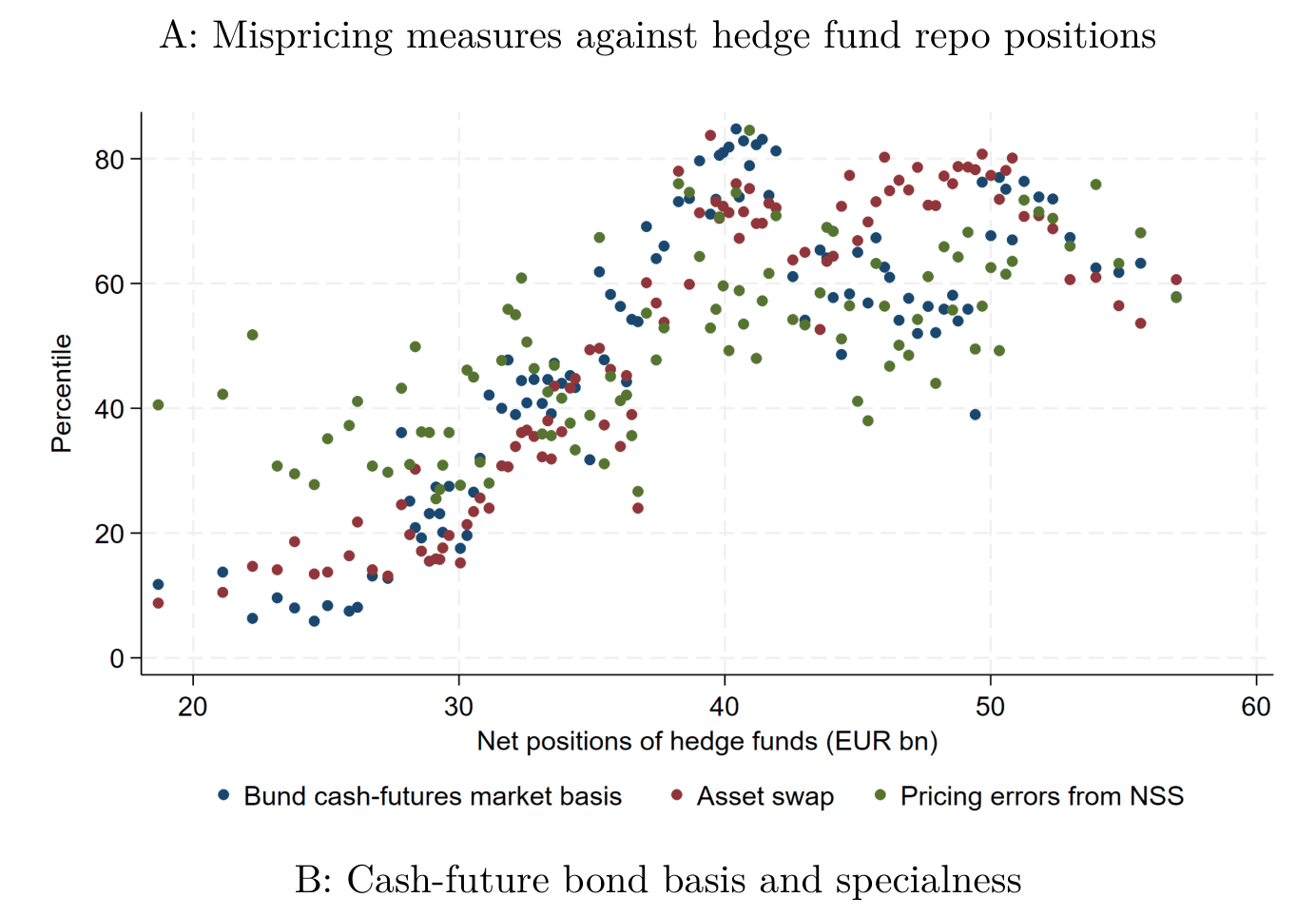
Hedge Fund Demand Inelasticity in Repo

Using German sovereign bond repo data, the research shows hedge funds are price-elastic in cash markets but highly inelastic in repo, inheriting elasticity from their cash-market counterparties.

Fanfare 3Trading, Microstructure & ExecutionAndrea Poinelli et al.PDF
Scatter plot showing relationship between hedge fund repo positions and mispricing measures across market segments.
21

Algorithmic Trading in Agricultural Futures

The study finds that algorithmic trading lowers realized volatility but increases tail co-movement and asymmetry in China's corn and soybean futures markets.

Fanfare 2Trading, Microstructure & ExecutionChenguang Xu and Xinyue HePDF

Derivatives & Volatility3

15

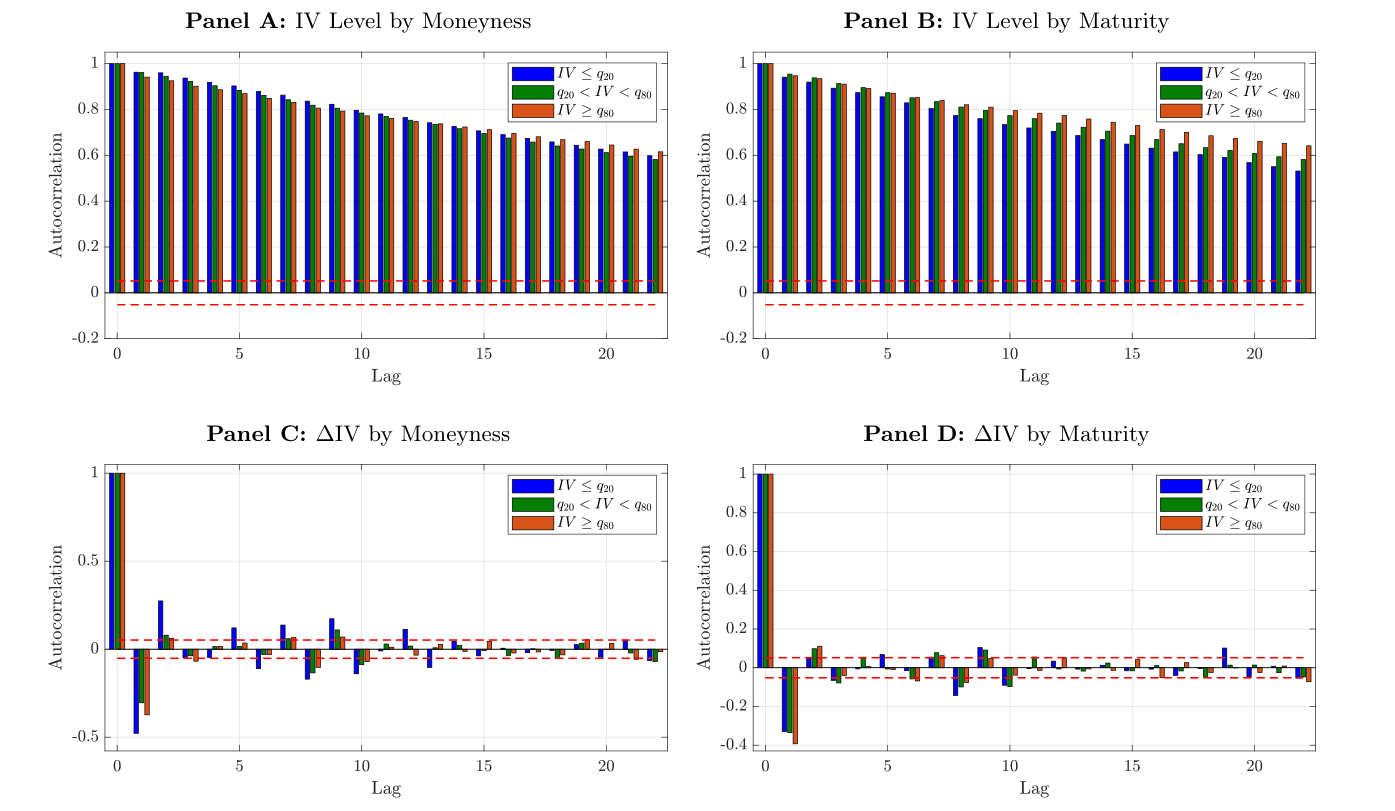
Machine Learning for Implied Volatility Forecasting

Tree-based models partition the option surface by moneyness and maturity to forecast volatility, reducing one-month-ahead errors by 13 percent versus benchmark models.

Fanfare 3Derivatives & VolatilityHyung Joo Kim and Dong Hwan OhPDF

Autocorrelation Function of Implied Volatilities
Figure 2: Autocorrelation Function of Implied Volatilities
24

Economic News Drives Agricultural Volatility

Financial and macroeconomic news topics systematically predict implied volatility in corn and soybean markets, with program trading and 2008 crisis topics most robust at short horizons.

Fanfare 2Derivatives & VolatilityHongqiang Yan et al.PDF
27

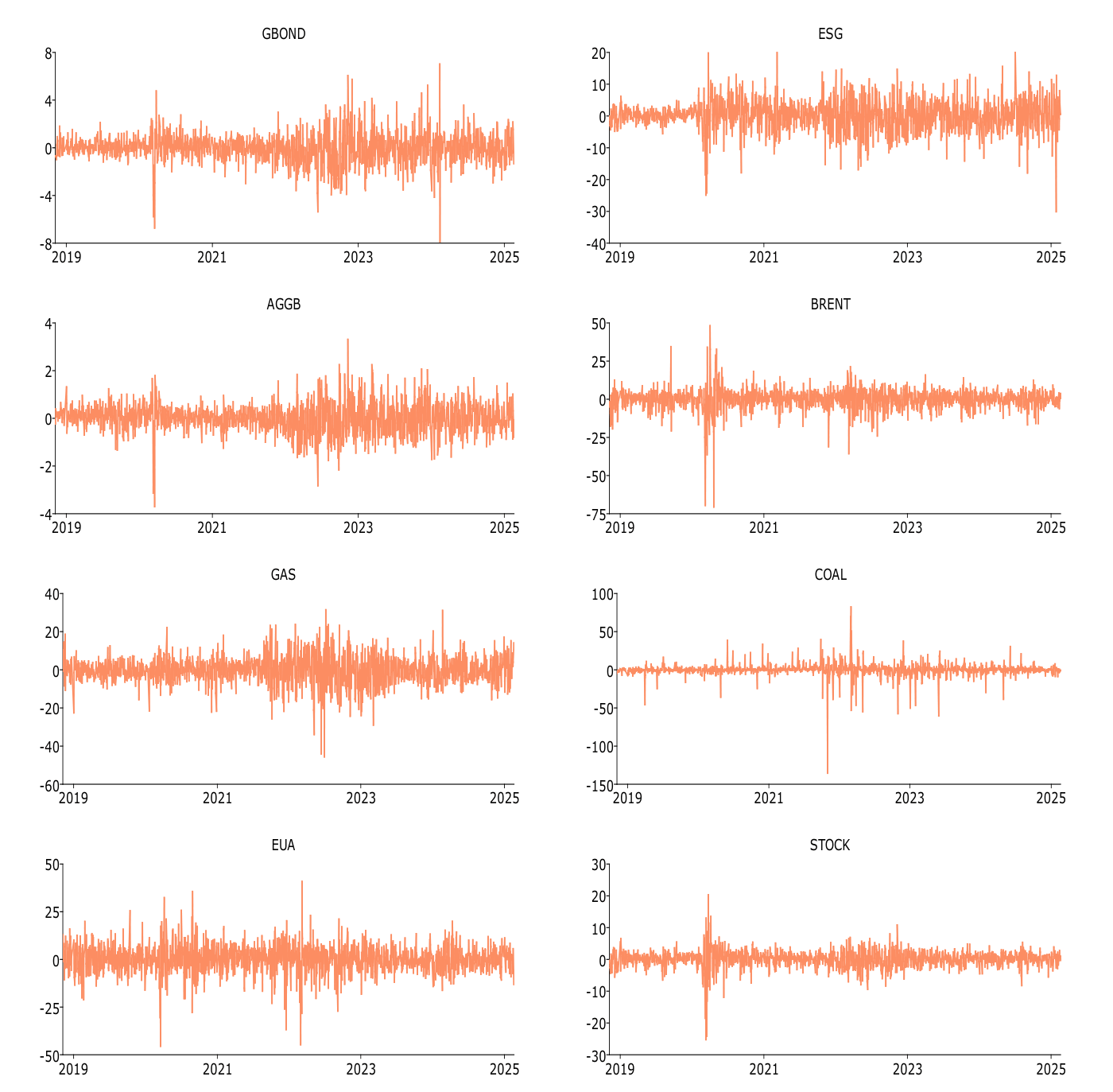
Adaptive LASSO-MGARCH Volatility Forecasting

Introducing coefficient-specific penalization into multivariate GARCH equations reduces complexity and improves out-of-sample covariance forecasts across bonds, equities, and commodities.

Fanfare 2Derivatives & VolatilityYongdeng Xu et al.PDF
Time evolution of returns for the eight assets
Figure 1 – Time evolution of returns for the eight assets

Also notable2

02

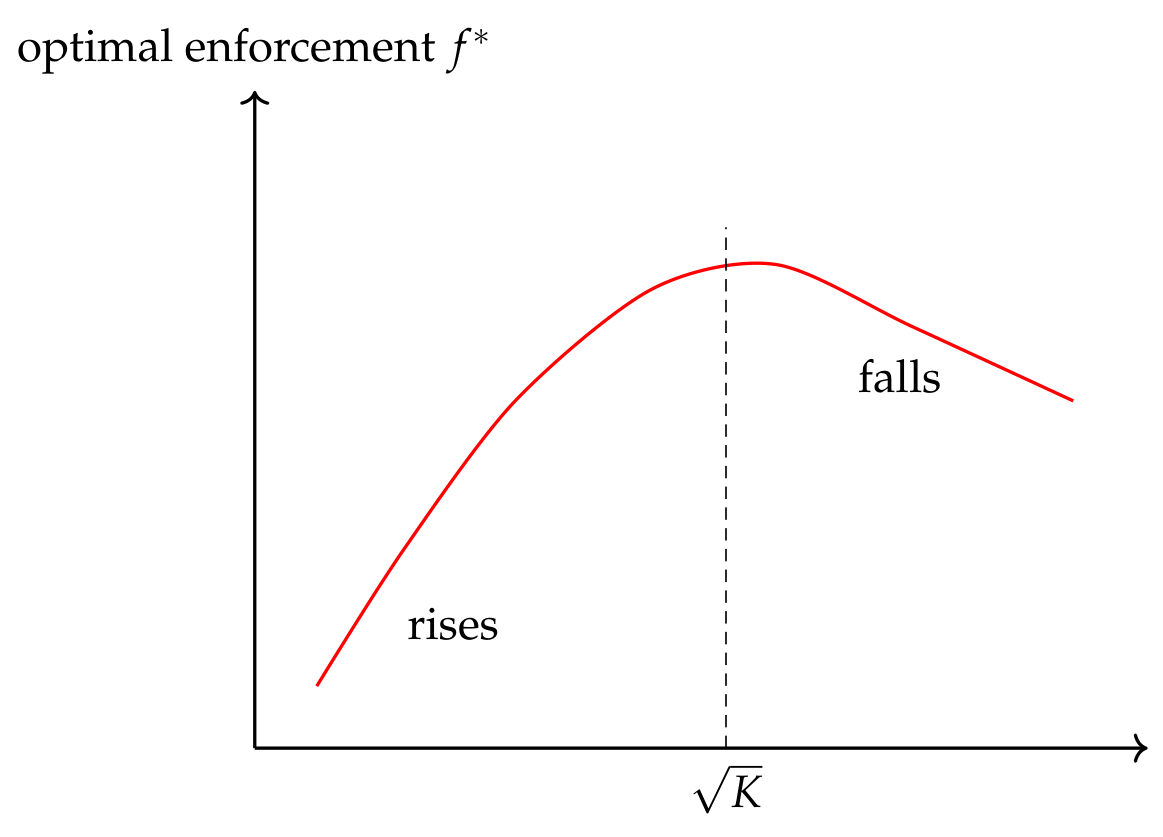
Stablecoins and the Mundell-Fleming Trilemma

Wallet-level stablecoin data shows crisis countries experience inflows during banking restrictions; this endogenizes capital mobility and tightens monetary policy constraints.

Fanfare 4Crypto & DeFiPablo D. Azar et al.PDF
Hump-shaped curve showing equilibrium enforcement rises then falls with stablecoin adoption.
Figure 4: Equilibrium enforcement is hump-shaped in stablecoin adoption.
13

Household Portfolios and Monetary Transmission

Corporate leverage affects how monetary tightening transmits to the real economy: equity holders lose wealth while safe-asset holders are cushioned, raising the sacrifice ratio.

Fanfare 3Portfolio & AllocationCharles Goodhart et al.PDF
Read the paperOpen full-size image

    Type to search. Try rough volatility, LLM agents or FinGPT.

    ↑↓ move↵ openesc closeFull search page